
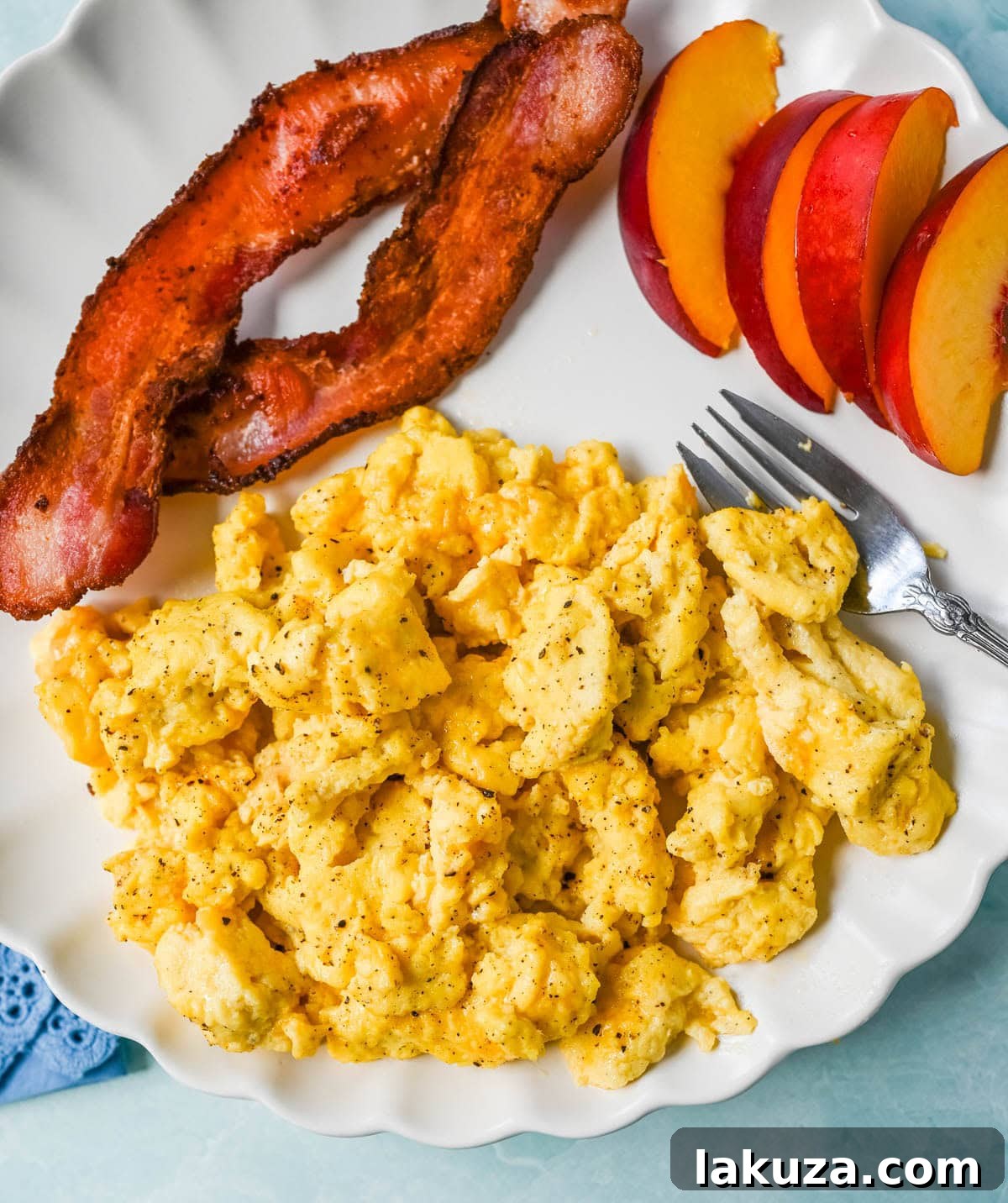
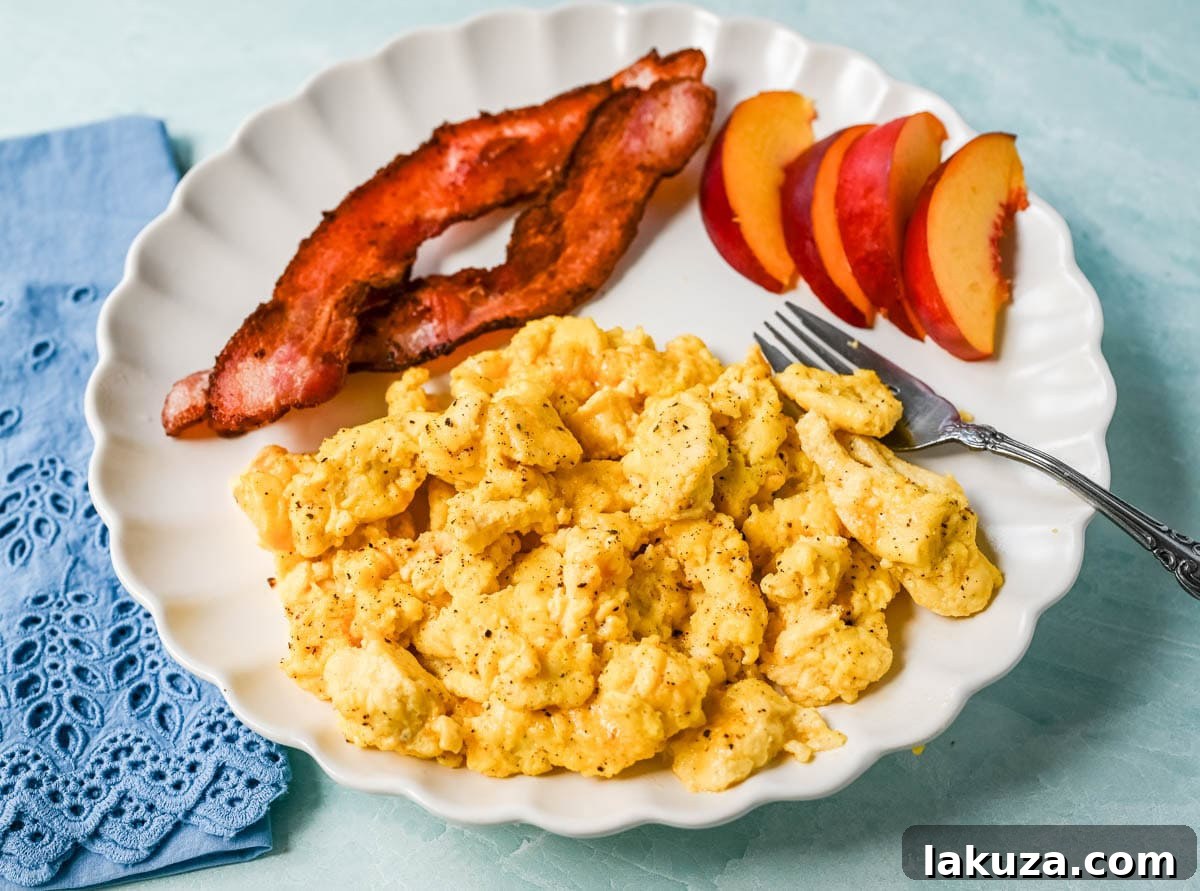
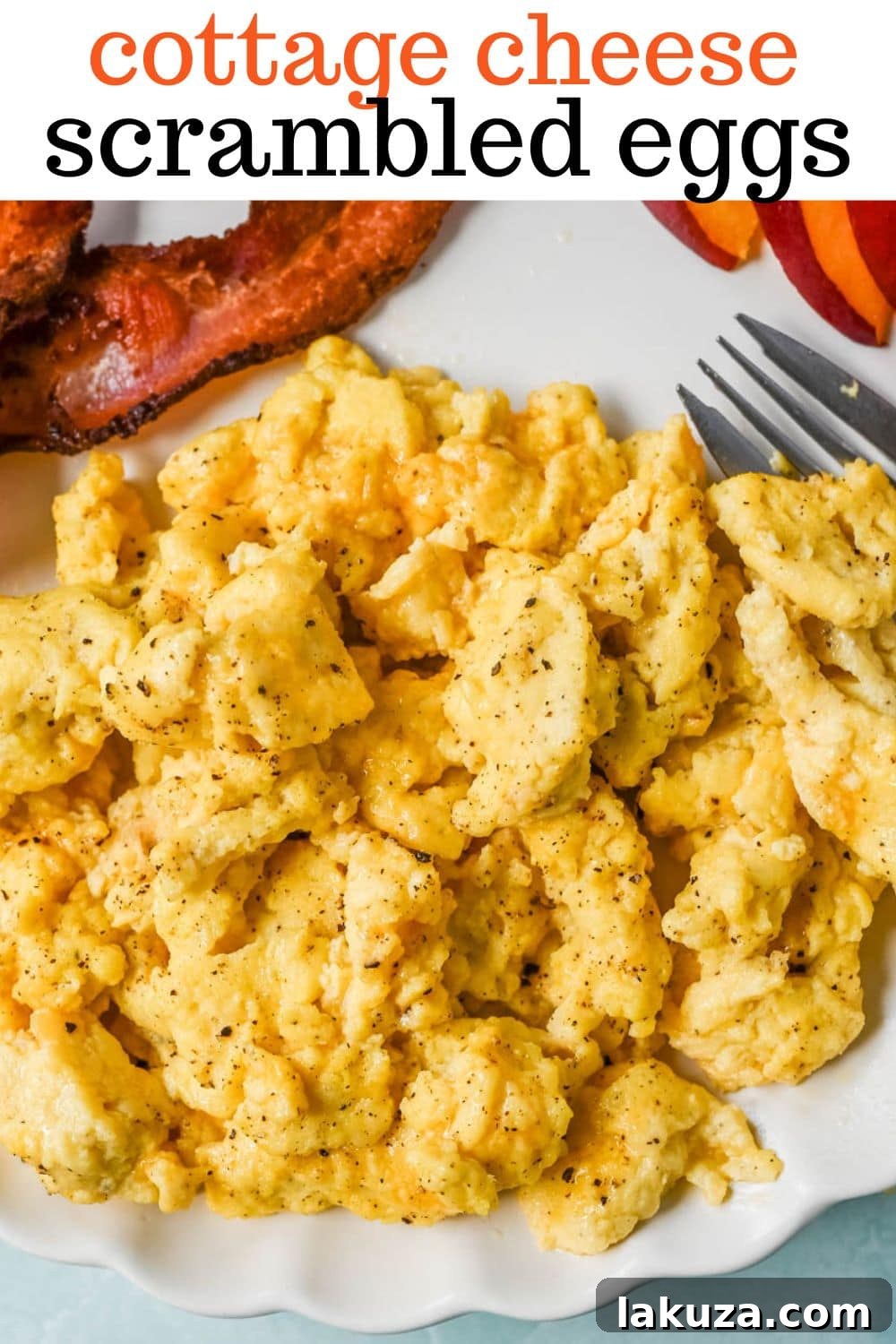
These cottage cheese scrambled eggs are exceptionally creamy and fluffy, delivering over 20 grams of protein per serving. This article explains the simple technique, the best mix-ins, and practical tips to help you make perfectly tender scrambled eggs every time.
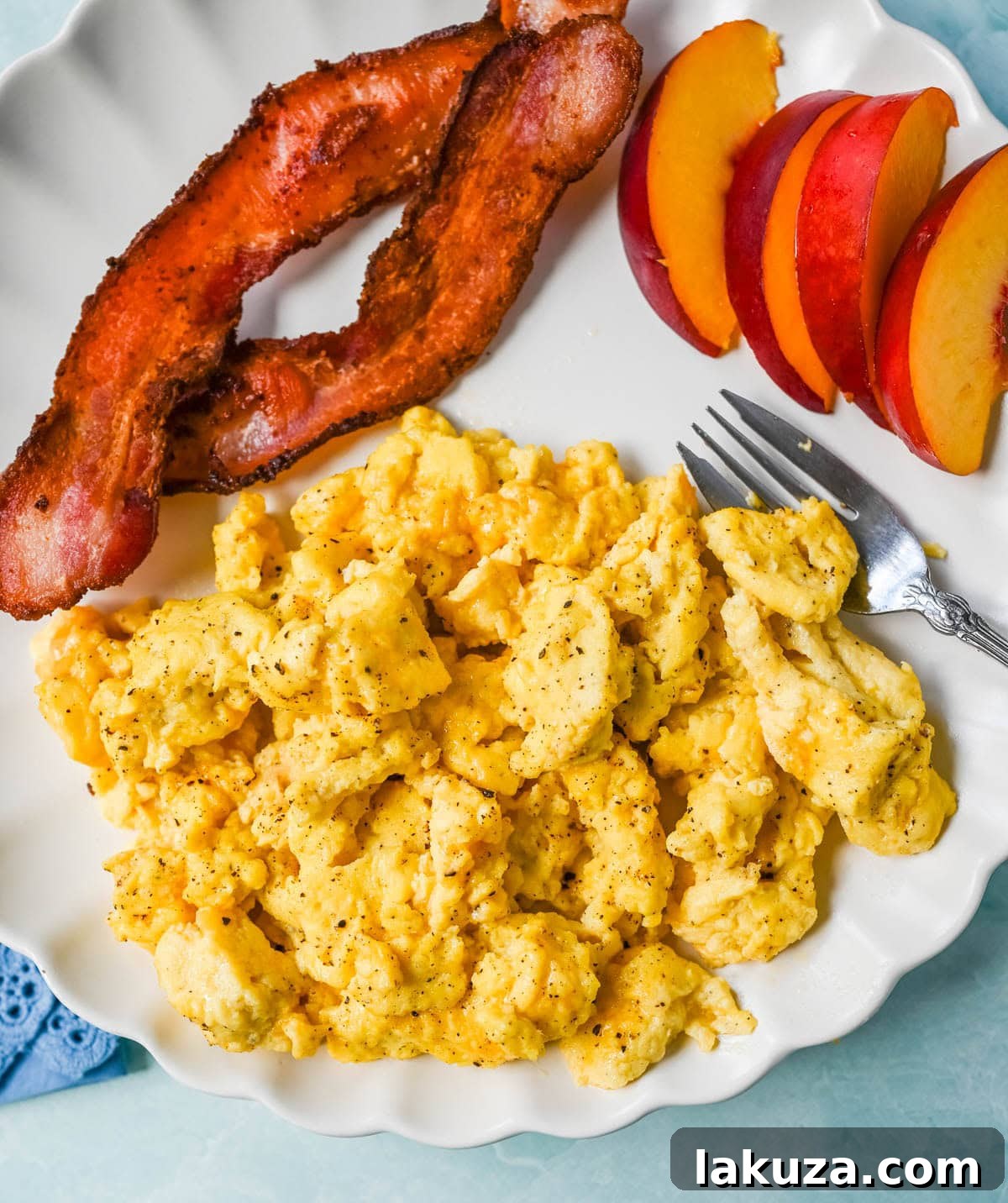
My mother has long been known for a handful of reliable family favorites: soft French bread, buttermilk waffles, bran muffins, and the perfect scrambled eggs. Generations of family breakfasts have included her version of scrambled eggs, and they’re always the first thing the kids ask for.
Long before cottage cheese became trendy, she added it to scrambled eggs. For decades she has mixed in a little Parmesan and sometimes green chiles, producing eggs that are remarkably creamy, light, and flavorful. I’m excited to share this technique because it upgrades everyday scrambled eggs and boosts protein, thanks to the cottage cheese.
Restaurants often rely on a similar trick to achieve especially soft, custardy scrambled eggs: cottage cheese blended with the eggs before cooking. When incorporated properly, the cottage cheese melts into the egg mixture during cooking and leaves no lumps—only a rich, velvety texture and increased protein.
This version turns ordinary scrambled eggs into a high-protein, restaurant-style breakfast. You’ll get a custardy mouthfeel, extra moisture that resists overcooking, and a subtle tang that enhances flavor without tasting like cottage cheese once cooked.
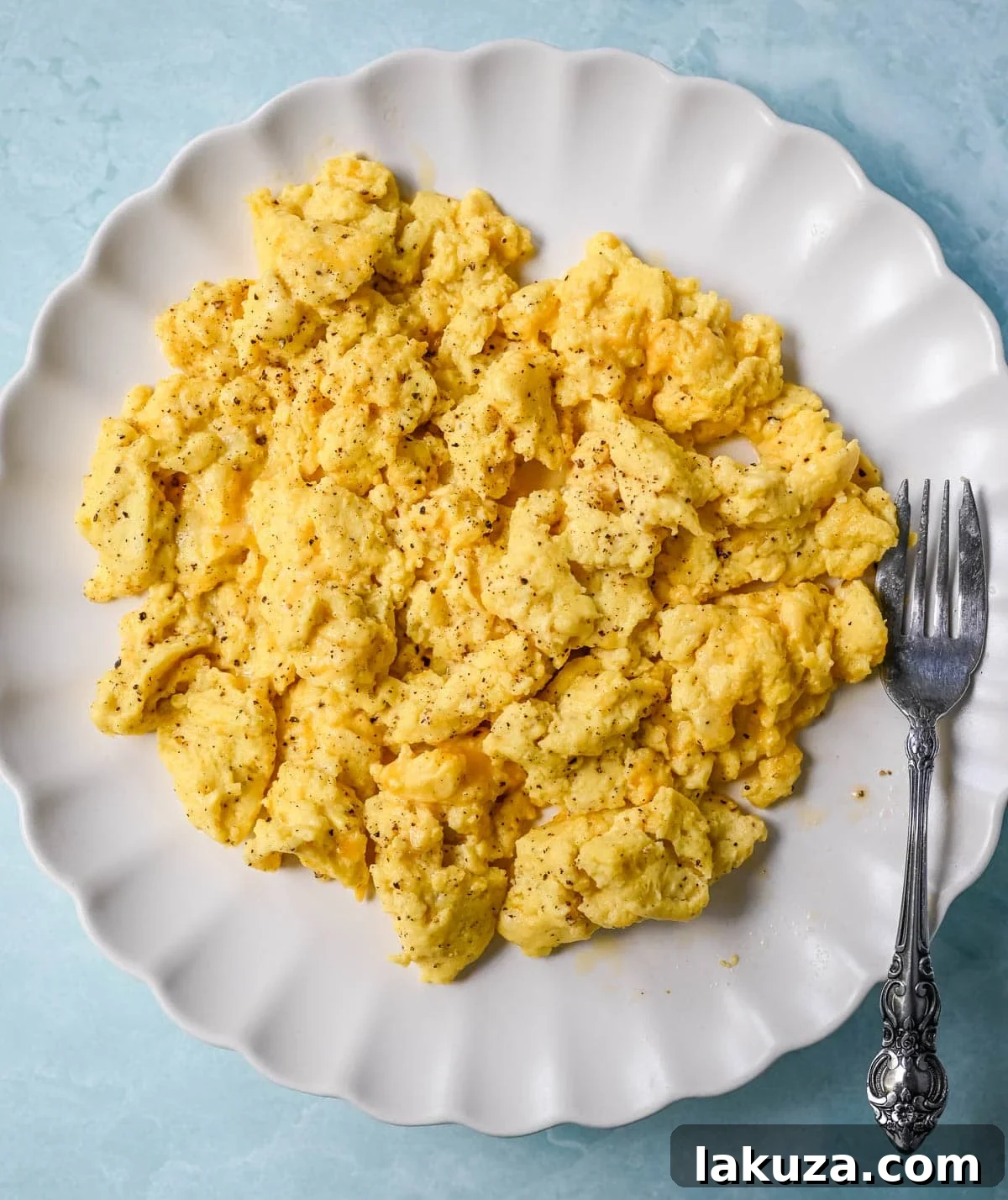
High Protein Scrambled Eggs Ingredients:
- Eggs: Use large whole eggs for the best texture and flavor. The yolks contribute color, richness, and a creamy bite. For extra protein, add an additional egg white.
- Cottage Cheese: The secret ingredient. Choose full-fat cottage cheese for the creamiest result, or 2% if you prefer lighter eggs. Avoid nonfat varieties because they often release excess water, which can make the eggs thin. Thick, low-moisture cottage cheeses blend more predictably into the eggs.
- Butter: Cooking in butter improves flavor, prevents sticking, and contributes to a silky finish. If you prefer, a neutral oil or nonstick spray will also work, but butter is recommended for best taste.
- Salt and Black Pepper: Season generously. Salt brightens the eggs and improves tenderness; add it before cooking so it dissolves evenly. Finish with freshly cracked black pepper to taste.
- Shredded Cheese (optional): Freshly grated cheeses melt more evenly. Parmesan adds savory depth while melty cheeses like cheddar or Colby Jack increase creaminess and stretch.
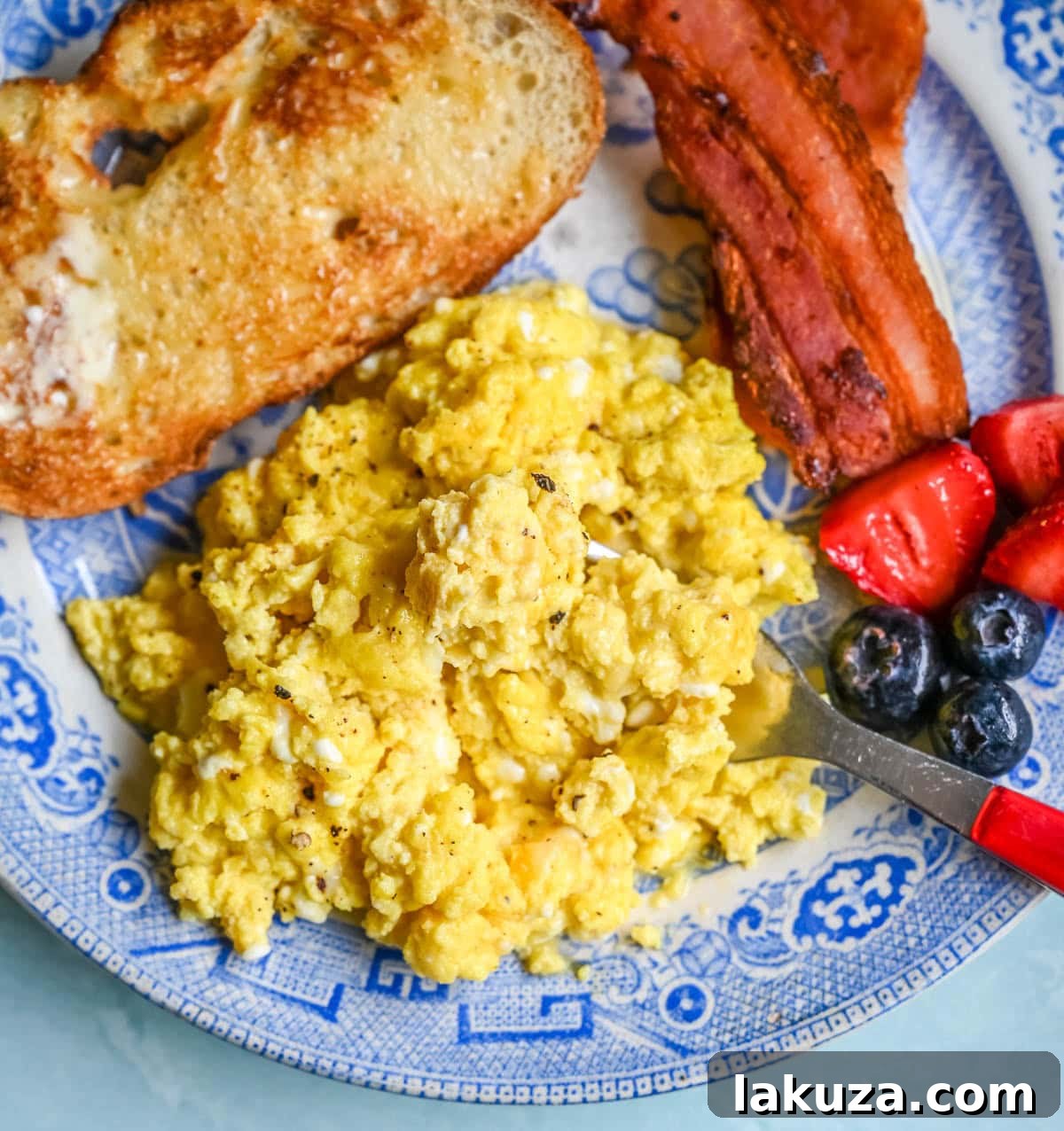
What does cottage cheese do to scrambled eggs?
Cottage cheese changes eggs in several helpful ways beyond adding protein:
- Moisture and creaminess. Cottage cheese contains water and dairy proteins that release moisture during cooking, keeping eggs soft and preventing dryness.
- Extra protein. A small amount of cottage cheese adds meaningful protein—roughly 6–7 grams per quarter cup—so three eggs plus cottage cheese gives a high-protein breakfast.
- Neutral flavor that melts away. When blended and cooked, the curds integrate into the eggs and the distinct cottage cheese taste largely disappears, leaving a custardy texture.
- Buffer against overcooking. The gradual release of moisture helps the eggs stay tender even if they remain on the heat a bit longer than ideal.
Blend or leave curds? Blending the cottage cheese yields a fully smooth, uniform custard texture with no visible curds. Leaving it as curds gives small pockets of extra creaminess and a bit more texture. Either method improves creaminess; choose based on personal preference or your audience.
Recommended cottage cheese brands
Thicker, creamier brands tend to work best because they contain less excess liquid and blend smoothly. Look for full-fat or 2% options with simple ingredient lists. A consistently thick cottage cheese will integrate into scrambled eggs without making them watery and will produce the richest texture.
If you enjoy this approach, similar high-protein recipes using cottage cheese—such as cottage cheese protein bagels or cottage cheese pancakes—also make excellent additions to a weekly breakfast rotation.
How to make the Best Cottage Cheese Scrambled Eggs:
Follow these steps for tender, creamy scrambled eggs with added protein.
1. Prep the cottage cheese — choose a method.
Option A: Whisk it in as-is. Add cottage cheese straight to the beaten eggs and whisk until combined; small curds remain and create texture pockets.
Option B: Blend until smooth. Blend eggs and cottage cheese together for 15–20 seconds until completely smooth for a custardy, uniform result.
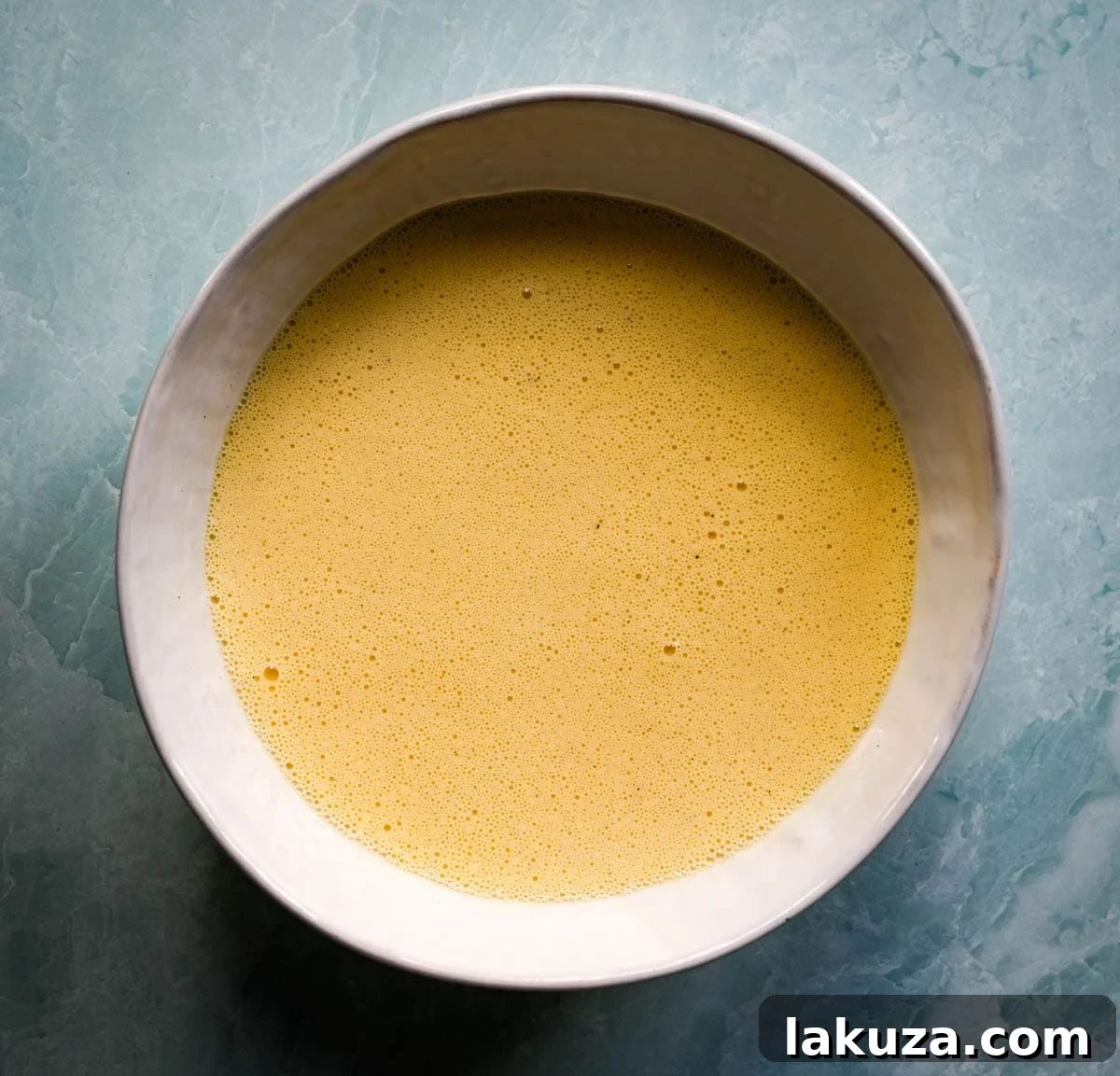
2. Combine and season. Whisk or blend until evenly mixed, then season with a pinch of salt and pepper. Salting before cooking helps eggs stay tender and flavors distribute evenly.
3. Cook low and slow. Use low to medium-low heat and a good nonstick pan or a well-seasoned skillet. High heat creates tough curds; gentle heat yields soft, custardy curds.
4. Attend the pan. Scrambled eggs can go from perfect to overcooked in seconds. Stay with the pan, and use a spatula to gently push set edges toward the center so uncooked egg can flow under and set into large, tender curds.
5. Add cheese at the end. Fold in shredded cheese just before removing the eggs from heat, or turn off the burner and let residual heat melt the cheese. This prevents overcooking while achieving melty, creamy results.
6. Remove early and rest briefly. Pull the pan off the heat while the eggs still look slightly glossy; they will finish cooking from residual heat. Let them rest a few seconds before serving.
Blending is the best choice for picky eaters or new tasters since it hides texture completely. If you prefer a little variety in bite, whisking in intact curds works great and saves a step.
When to add cheese
- Near the end of cooking: Add shredded cheese when eggs are mostly set but still glossy so it melts without changing cooking dynamics.
- Off the heat: Turning off the burner and folding in cheese lets it melt from residual heat without overcooking the eggs.
Combining a small amount of finely grated Parmesan into the egg mixture with a melty cheese like cheddar folded in at the end gives layered flavor and the best texture balance.
Frequently Asked Questions:
- Can you taste the cottage cheese? In most cases, no. Once blended and cooked, the cottage cheese integrates into the eggs and the distinct flavor largely disappears. The result is a richer, creamier scrambled egg rather than a pronounced cottage cheese taste.
- How much protein do these eggs contain? A typical serving made with three eggs and about a half cup of cottage cheese delivers roughly 18–22 grams of protein depending on portion sizes and cottage cheese brand. This makes them a satisfying, protein-forward breakfast.
- Are cottage cheese scrambled eggs helpful for weight loss? They can be. High-protein breakfasts help increase satiety and preserve muscle mass during weight loss. Choosing lower-calorie mix-ins and appropriate portions will support weight-management goals.
Scrambled Eggs Mix-in ideas:
Try cooked crumbled bacon, diced bell peppers, sautéed mushrooms, shredded cheddar, breakfast sausage, green chiles, jalapeños, diced tomatoes, spinach, Parmesan, green onions or chives, diced ham, shredded mozzarella, or chicken sausage.
Once you try cottage cheese in scrambled eggs, it’s hard to go back. A small change yields a big improvement: more protein, creamier texture, and eggs that stay tender rather than dry. Whether you keep it simple or add cheese, vegetables, and herbs, this update elevates a familiar breakfast into something special.
Cottage Cheese Scrambled Eggs
Ingredients
- 6 large eggs
- 1/2 cup cottage cheese
- 1/4 teaspoon salt (plus more to taste)
- 1/4 teaspoon black pepper
- 1/4 cup grated cheddar or Parmesan cheese (optional)
- Butter or non-stick cooking spray
Instructions
- Option A: Add cottage cheese to a bowl with the eggs and whisk until combined, leaving small curds for texture. Option B: Blend eggs and cottage cheese until completely smooth for a uniform custard texture.
- Stir in salt and pepper. Salting before cooking helps season and tenderize the eggs.
- Heat a nonstick skillet over low to medium-low heat and add butter or spray. Pour in the egg mixture.
- Stay at the stove. Use a spatula to gently push set edges toward the center, allowing uncooked egg to flow into the cleared space. This creates large, soft curds.
- When the eggs are almost set but still glossy, fold in shredded cheese if using. Alternatively, turn off the heat and let residual warmth melt the cheese.
- Remove the pan while the eggs appear slightly underdone; they will finish cooking off the heat. Rest a few seconds and serve.
Notes
Suggested mix-ins: cooked crumbled bacon, diced peppers, sautéed mushrooms, shredded cheddar, green chiles, jalapeños, diced tomatoes, spinach, Parmesan, green onions, diced ham, or shredded mozzarella.
Nutrition
Calories: 209 kcal, Carbohydrates: 4 g, Protein: 19 g, Fat: 13 g, Saturated Fat: 5 g, Sodium: 538 mg. Nutrition information is an estimate and will vary by ingredients and portions.
Additional Info
Course: Breakfast
Cuisine: French-inspired
Keyword: cottage cheese scrambled eggs, scrambled eggs with cottage cheese
Jump to Comments