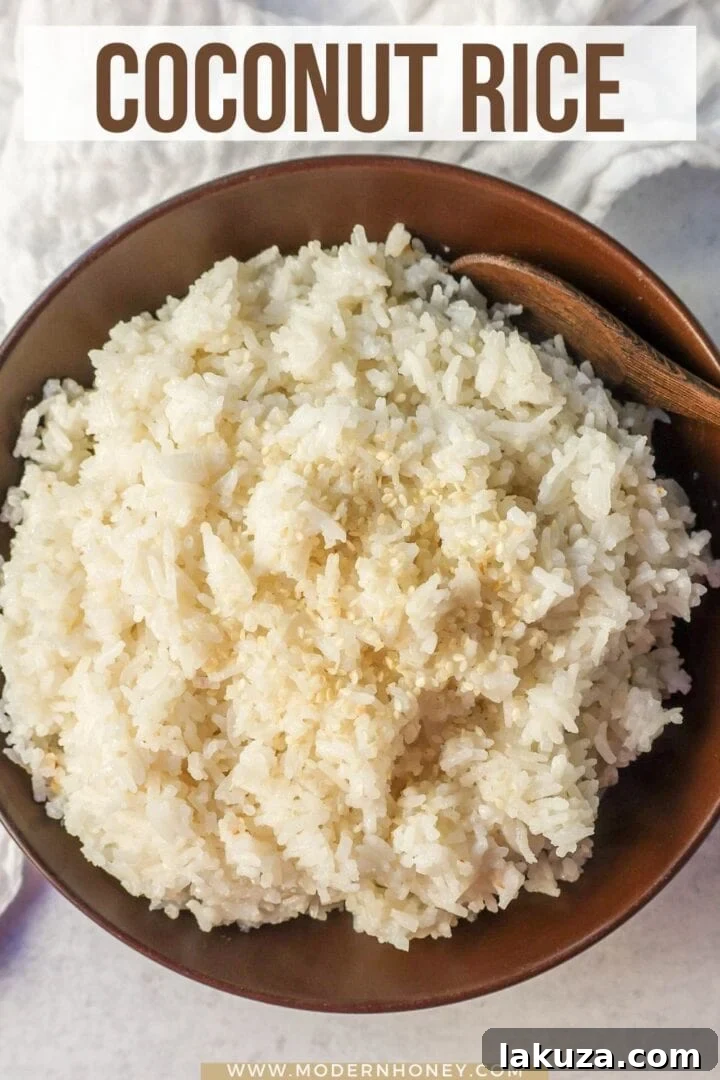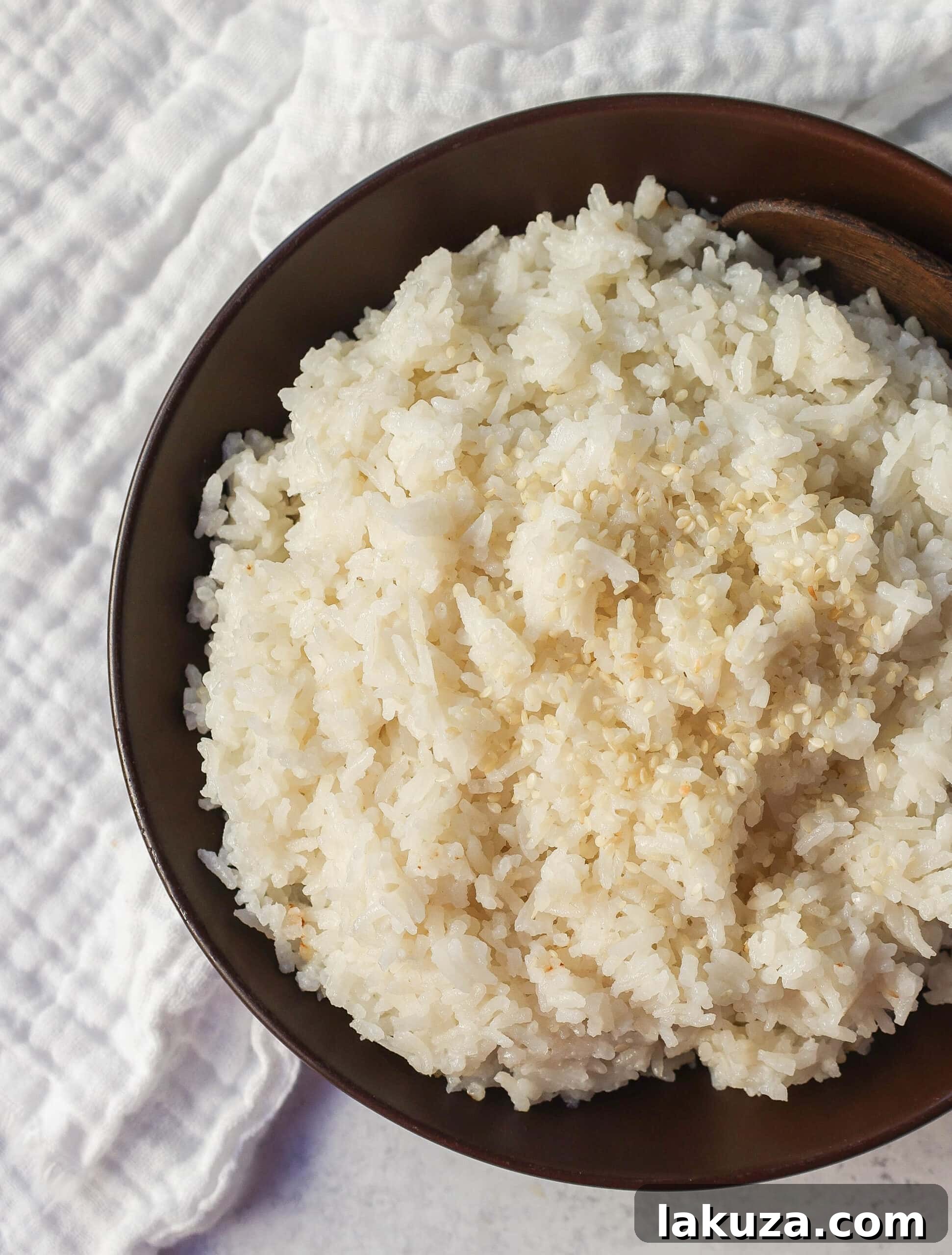
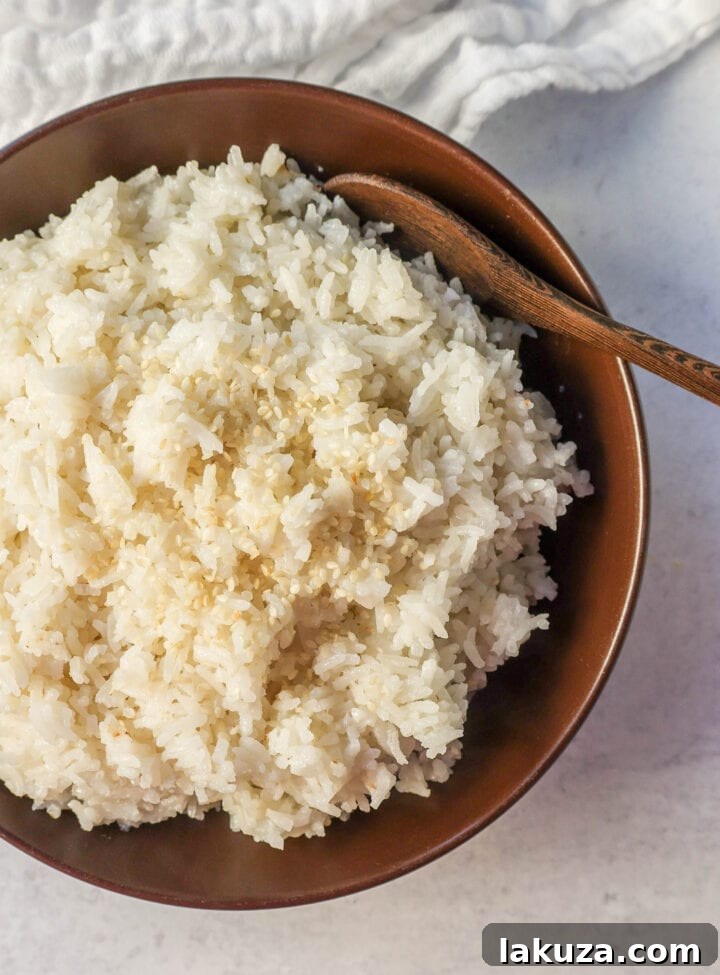
Discover the secret to perfectly fluffy, aromatic Coconut Rice with this incredibly simple 5-ingredient recipe. A staple in many culinary traditions, this sweet and savory side dish elevates any meal with its rich, creamy texture and delicate tropical flavor.
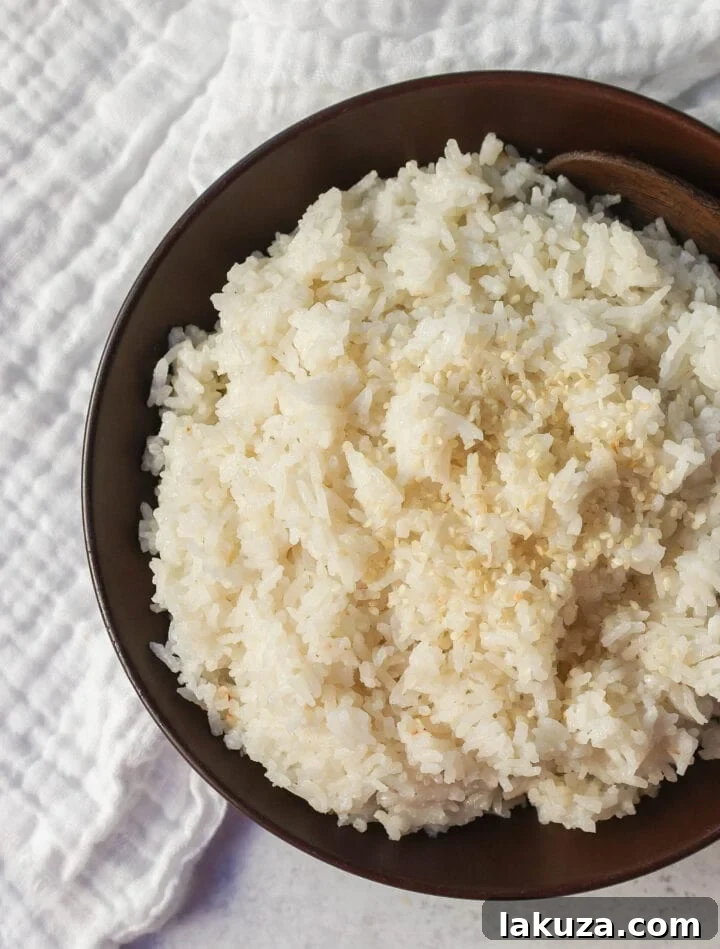
Transform your ordinary meal into an extraordinary culinary experience with the delightful addition of homemade Coconut Rice. This popular side dish, deeply rooted in Southeast Asian and Caribbean cuisines, is renowned for its intoxicating aroma, creamy texture, and subtle sweetness. Far from a complicated endeavor, our recipe simplifies this beloved dish into a mere five-ingredient masterpiece, promising perfect results every time.
Whether you’re new to cooking or a seasoned home chef, this easy Thai coconut rice recipe is designed for success. It infuses humble rice grains with the luxurious essence of coconut milk as it cooks, resulting in a side dish that’s both comforting and exotic. The light coconut flavor and wonderfully creamy texture make it an incredibly versatile accompaniment to a vast array of main courses. Prepare to fall in love with its simplicity and irresistible taste!
Unveiling the Magic: Why This 5-Ingredient Coconut Rice Recipe Stands Out
In a world of complex culinary creations, there’s immense beauty in simplicity. Our 5-ingredient coconut rice recipe embodies this philosophy, proving that you don’t need a lengthy ingredient list or intricate steps to achieve gourmet results. What makes this recipe truly special?
- Minimal Ingredients, Maximum Flavor: With just rice, coconut milk, water, sugar, and salt, you harness the power of core flavors to create a dish that’s surprisingly rich and nuanced. Each ingredient plays a crucial role in developing the signature taste and texture.
- Effortless Preparation: From rinsing the rice to the final fluff, the steps are straightforward and quick, making it an ideal choice for busy weeknights or when you need a reliable, delicious side in a hurry.
- Perfectly Fluffy & Creamy Texture: The careful balance of water and full-fat coconut milk ensures each grain is perfectly cooked, separate yet tender, enveloped in a creamy coconut coating without being mushy or sticky.
- Versatile Pairing: This coconut rice isn’t just a side; it’s a culinary canvas. Its balanced flavor profile makes it a fantastic partner for spicy curries, grilled meats, savory stir-fries, and even some sweet applications.
- Authentic Taste Made Easy: We guide you to achieve that authentic, light coconut flavor often found in traditional Thai and other Asian coconut rice dishes, but with a streamlined process.
The Five Essential Ingredients: A Deeper Dive
Crafting this exceptionally easy, fluffy coconut rice is all about understanding the role of each of its five simple components. Selecting the right type and quality for each ingredient is key to unlocking the best flavor and texture.
- Rice — The foundation of our dish, the type of rice you choose significantly impacts the final outcome. Jasmine rice is highly recommended for this coconut rice recipe, and for good reason. Originating from Thailand, jasmine rice is an aromatic long-grain variety known for its delicate floral scent and soft, slightly sticky texture when cooked. This makes it ideal for absorbing the coconut milk and achieving that signature creamy consistency without becoming mushy. While other long-grain white rices can be used in a pinch, they may not offer the same aromatic depth or tender stickiness. For optimal results, consider a high-quality brand like Golden Star Jasmine Rice. It is absolutely essential to rinse the rice several times to remove excess surface starch. This step is particularly crucial in this coconut rice recipe due to the added fat content from canned coconut milk, which can otherwise lead to a gummy or overly sticky result. Rinsing ensures fluffy, separate grains that are beautifully coated in coconut goodness.
- Canned Coconut Milk — This is the star ingredient that imparts the distinctive coconut flavor and rich creaminess. It is paramount to use canned coconut milk (often found in the international foods aisle), not the refrigerated, carton-based coconut beverage used for drinking. Canned coconut milk, especially full-fat varieties, contains a higher concentration of coconut solids and fats, which are vital for achieving the desired fluffy texture and robust flavor. The fat content contributes to a luscious, velvety mouthfeel and helps prevent the rice from becoming dry. Carton coconut milk, being much thinner and often sweetened, will not yield the same creamy, flavorful results. Always give the can a good shake before opening, as the cream can separate and rise to the top.
- Water — While coconut milk provides the flavor and creaminess, water is equally important for the proper cooking of the rice grains. Think of water as the primary medium for hydration, allowing the rice to fully absorb moisture and expand. Using a combination of water and canned coconut milk ensures that the rice cooks thoroughly without being overwhelmed by the richness of the coconut milk alone. This balance is key to fluffy, individual grains rather than a dense, heavy dish.
- Sugar — A small touch of sugar is what truly defines the classic sweet and savory profile of authentic coconut rice. It doesn’t make the rice overtly sweet but rather enhances the natural sweetness of the coconut milk and balances the salt. A pinch is usually sufficient to elevate the overall flavor profile, creating a more harmonious and satisfying taste experience. You have the flexibility to adjust the amount of sugar to your personal preference, adding a little more for a sweeter rice or slightly less for a more savory focus.
- Salt — Much like sugar, salt is a flavor enhancer that brings out the best in the other ingredients. It balances the sweetness of the sugar and coconut milk, preventing the dish from tasting flat. Adding the salt along with the water and coconut milk ensures it dissolves evenly and infuses into the rice grains as they cook, providing a consistent seasoning throughout.
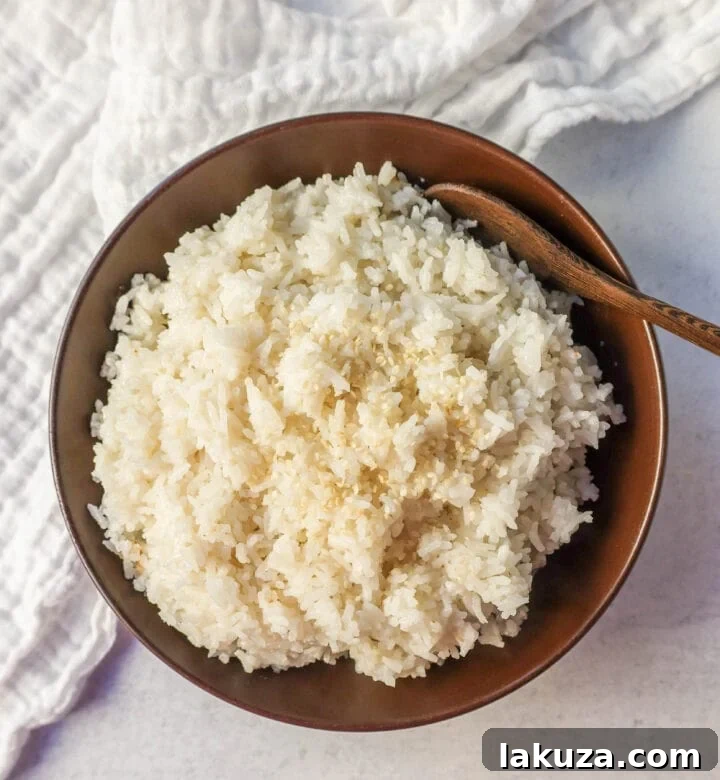
The Essential Step: How to Properly Rinse Rice
Rinsing rice might seem like a small step, but it’s a game-changer for achieving that perfect, fluffy texture in your coconut rice. This process helps to wash away excess surface starch, which is the primary culprit behind sticky, clumpy, or gummy rice. When combined with the rich fat content of canned coconut milk, unrinsed rice can easily become heavy and dense. Here’s how to do it effectively:
- Transfer to a Bowl: Pour your measured jasmine rice into a medium-sized bowl.
- Add Water: Fill the bowl with cool water, ensuring the rice is fully submerged.
- Swish and Agitate: Gently swish the rice around with your hand or a spoon. You’ll notice the water immediately turn milky and opaque – this is the starch dissolving into the water.
- Drain and Repeat: Carefully drain the murky water, being mindful not to lose any rice.
- Repeat until Clear: Refill the bowl with fresh water and repeat the swishing and draining process 3-4 more times. You’ll know the rice is sufficiently rinsed when the water runs mostly clear after swirling, indicating that most of the excess starch has been removed.
- Ready to Cook: Once rinsed, drain the rice thoroughly, and it’s now perfectly prepared for cooking!
Mastering the Method: How to Make Perfect Coconut Milk Rice
Making delicious coconut rice is simpler than you might imagine, whether you prefer a traditional pot on the stovetop or the convenience of a rice cooker. Follow these steps for consistently perfect results:
- Prepare the Rice: Begin by thoroughly rinsing the rice following the detailed instructions above. This crucial step ensures a non-gummy, fluffy texture. Once rinsed, transfer the clean rice to your chosen cooking vessel—either a sturdy pot with a tight-fitting lid or a rice cooker.
- Combine Ingredients: To the rinsed rice, stir in the canned coconut milk, water, sugar, and salt. Ensure all ingredients are well combined before cooking. This helps the salt and sugar dissolve evenly, infusing flavor throughout the rice.
- Stovetop Cooking Method: If you are cooking in a pot, bring the mixture to a gentle boil over medium-high heat. Once bubbles appear and the mixture is boiling, immediately reduce the heat to the lowest setting possible. Cover the pot tightly with its lid. Allow the rice to cook undisturbed for approximately 20 minutes, or according to the specific instructions on your rice package. Resist the urge to lift the lid during cooking, as this releases steam essential for even cooking.
- Rice Cooker Method: If utilizing a rice cooker for ultimate convenience, simply select the “white rice” setting or follow your appliance’s specific instructions. The cooker will automatically manage the cooking time and temperature until most of the coconut milk and water has been absorbed and the rice is perfectly tender.
- Rest and Fluff: Regardless of your cooking method, once the cooking time is complete (and for stovetop, turn off the heat), let the rice rest, covered, for 5-10 minutes. This allows the steam to redistribute and the grains to firm up slightly. After resting, gently fluff the coconut rice with a fork. This separates the grains and enhances its light, airy texture.
- Garnish and Serve: For an extra touch of freshness and flavor, consider topping your freshly made coconut rice with a sprinkle of fresh cilantro, a handful of toasted coconut flakes, or a dash of sesame seeds. These garnishes not only add visual appeal but also complement the coconut flavor beautifully.
Frequently Asked Questions & Expert Tips for Perfect Coconut Rice
Even though this recipe is incredibly simple, a few expert tips can ensure your coconut rice turns out flawlessly every single time. Here are answers to common questions and additional advice:
- Why is Rinsing the Rice So Important? As mentioned, rinsing is paramount! It removes surface starch, which prevents the rice grains from sticking together excessively and becoming gummy. Beyond texture, it also cleans the rice, removing any dust or impurities. Skipping this step often results in a heavy, pasty coconut rice rather than the desired fluffy, individual grains.
- Can I Use Light Coconut Milk? While full-fat canned coconut milk is highly recommended for its rich flavor and creamy texture, you can technically use light coconut milk. However, be aware that it will result in a less rich and less creamy rice, and the coconut flavor might be less pronounced. You might need to adjust the water ratio slightly if using light coconut milk, as it generally has a higher water content.
- Should I Stir the Rice While Cooking? No, absolutely not! Resist the urge to lift the lid or stir the rice while it’s cooking, whether on the stovetop or in a rice cooker. Stirring releases steam, which is crucial for even cooking, and can also break up the delicate rice grains, leading to a mushy texture.
- How to Avoid Sticky or Mushy Rice?
- Rinse thoroughly: This is the first line of defense against stickiness.
- Correct liquid ratio: Stick to the recommended proportions of coconut milk and water.
- Don’t lift the lid: Keep that steam locked in!
- Proper resting time: Allowing the rice to rest after cooking helps it absorb any remaining moisture and firm up, preventing mushiness.
- Why Combine Both Coconut Milk and Water? This combination is essential. Think of coconut milk as the primary flavor enhancer, providing that signature creamy, tropical taste. Water, on the other hand, is the essential liquid for the rice to properly hydrate and cook through. The rice absorbs the water and coconut milk simultaneously, creating a perfectly cooked, creamy textured grain without being overly rich or dense. This balance ensures the rice is fluffy and light, not heavy.
- Adjusting Sweetness: The recipe calls for a balanced amount of sugar, but feel free to tailor it to your palate. For a slightly sweeter rice, add an extra half tablespoon of sugar. If you prefer a more purely savory profile, you can reduce the sugar to just a pinch or even omit it, though a little sugar truly enhances the coconut flavor.
- Storage and Reheating: Allow your coconut rice to cool completely to room temperature before transferring it to an airtight container. It can be refrigerated for up to 3-4 days. To reheat, gently warm in a microwave with a splash of water or broth, or on the stovetop over low heat, adding a little liquid to prevent drying out.
What to Serve with Your Delicious Coconut Rice: Pairing Perfection
One of the greatest joys of coconut rice is its incredible versatility. Its balanced sweet and savory profile, combined with its creamy texture, makes it an ideal accompaniment to a wide variety of dishes, particularly those with bold or spicy flavors. Here are some inspired pairing suggestions:
- Honey Chicken: The sweet and savory glaze of honey chicken finds a perfect counterpart in the subtle sweetness of coconut rice, creating a harmoniously balanced meal.
- Thai Red Chicken Curry: This is a classic pairing for a reason! The cooling, creamy notes of coconut rice beautifully temper the vibrant spice and rich flavors of a Thai red curry, making each bite an exquisite experience.
- Sticky Pineapple Chicken: The tropical tang of pineapple and the savory stickiness of the chicken are wonderfully complemented by the mellow, aromatic coconut rice, enhancing the overall island-inspired theme.
- Chinese Orange Chicken: The zesty, sweet, and slightly tangy sauce of orange chicken is perfectly grounded by the gentle creaminess of coconut rice, offering a delightful contrast in textures and flavors.
- Asian Sticky Chicken: Whether it’s glazed with soy, ginger, or garlic, sticky Asian chicken dishes are a natural fit. The rice helps absorb the luscious sauces, ensuring every drop of flavor is enjoyed.
- Sesame Chicken: The nutty, umami-rich flavors of sesame chicken, often with a hint of sweetness, are beautifully enhanced by the subtle tropical notes of coconut rice, creating a well-rounded and satisfying meal.
- Grilled Fish or Shrimp: For a lighter meal, serve coconut rice alongside perfectly grilled white fish or shrimp. A squeeze of lime over the fish and rice creates a refreshing, beach-inspired dish.
- Vegetarian Curries: Beyond chicken, coconut rice is fantastic with a myriad of vegetarian curries, such as lentil, chickpea, or vegetable curries, providing a rich base to soak up all the flavorful sauces.
For those who love convenience, investing in a good quality rice cooker can elevate your coconut rice game significantly. A reliable rice cooker ensures consistent temperature and cooking times, leading to perfectly fluffy rice with minimal effort. This highly-rated rice cooker is a fantastic choice for home cooks seeking effortless perfection.
Perfect 5-Ingredient Coconut Rice
Equipment
-
Rice Cooker or Medium Pot with Lid
-
Measuring Cups and Spoons
-
Large Bowl for Rinsing
Ingredients
- 1 1/2 cups Jasmine White Rice (rinsed thoroughly)
- 14 ounce can Canned Coconut Milk (full-fat, shaken well before opening)
- 1 3/4 cups Water
- 2 Tablespoons Granulated Sugar (adjust to taste)
- 1 to 1 1/2 teaspoons Fine Sea Salt (or to taste)
Instructions
-
Rinse the Rice: Begin by thoroughly rinsing the jasmine rice under cool running water until the water runs mostly clear. Transfer the rinsed rice to either a rice cooker pot or a medium-sized pot with a tight-fitting lid.
-
Combine Liquids and Seasonings: Add the canned full-fat coconut milk, water, granulated sugar, and fine sea salt to the pot with the rinsed rice. Stir well to combine all ingredients, ensuring the sugar and salt dissolve.
-
Stovetop Cooking: If cooking on the stovetop, bring the mixture to a gentle boil over medium-high heat. Once boiling, immediately reduce the heat to the lowest setting, cover the pot tightly, and let it simmer undisturbed for 20 minutes. Do not lift the lid during this time.
-
Rice Cooker Cooking: If using a rice cooker, simply close the lid and select the appropriate setting (usually “white rice”). Cook according to your rice cooker’s instructions, or until all the liquid is absorbed and the rice is tender.
-
Rest and Fluff: Once cooking is complete (either stovetop or rice cooker), turn off the heat (if applicable) and let the rice rest, still covered, for 5-10 minutes. This resting period allows the grains to steam further and become perfectly fluffy. Finally, gently fluff the coconut rice with a fork before serving.
-
Serve: Garnish with fresh cilantro, toasted coconut flakes, or sesame seeds if desired, and serve immediately as a delightful side dish.
Recipe Notes & Pro Tips
- Choosing Your Rice: For the best texture and aroma, Jasmine rice is highly recommended. Its long grains and fragrant qualities are ideal for absorbing the coconut milk without becoming overly starchy. Always rinse it thoroughly to ensure fluffy, individual grains.
- The Right Coconut Milk: Always use full-fat canned coconut milk. The creaminess and fat content are crucial for achieving the rich flavor and desired fluffy, tender texture. Avoid carton coconut beverages, as their thinner consistency will yield a watery and less flavorful result.
- Balance is Key: Water & Coconut Milk: The combination of water and coconut milk is intentional. While coconut milk imparts the distinct flavor and creaminess, water ensures the rice cooks through properly, preventing it from being too heavy or dense. This careful balance gives you light, fluffy, and flavorful rice.
- Customizing Sweetness: The 2 tablespoons of sugar provide a balanced sweet-savory profile. Feel free to adjust to your preference: reduce to 1 tablespoon for a more savory dish, or increase to 3 tablespoons for a sweeter rice that pairs well with certain desserts or very spicy mains.
- Seasoning Strategy: Adding salt with the liquids ensures it dissolves and is evenly distributed throughout the rice as it cooks, enhancing all the flavors.
- Don’t Peek! When cooking on the stovetop, resist the urge to lift the lid. The trapped steam is essential for evenly cooked rice. Lifting the lid releases this steam, extending cooking time and potentially leading to unevenly cooked or dry grains.
- Resting Period: The 5-10 minute resting period after cooking is vital. It allows the rice to finish absorbing any residual moisture and for the grains to firm up slightly, preventing stickiness and enhancing fluffiness.
How to Ensure Your Rice is Perfectly Rinsed: A Detailed Guide
Properly rinsing rice is a cornerstone of this recipe. It removes excess starch, which would otherwise make your coconut rice gummy and sticky. To do this, place your jasmine rice in a bowl and add cool water. Swirl the rice vigorously with your hand; the water will become cloudy. Drain this murky water, then repeat the process 3-4 more times until the water remains mostly clear. This meticulous rinsing ensures a beautifully fluffy, non-clumping result ready to absorb all that delicious coconut flavor.
Nutrition information is automatically calculated, so should only be used as an approximation. Nutritional values may vary based on specific ingredient brands and preparation methods.
Additional Information