
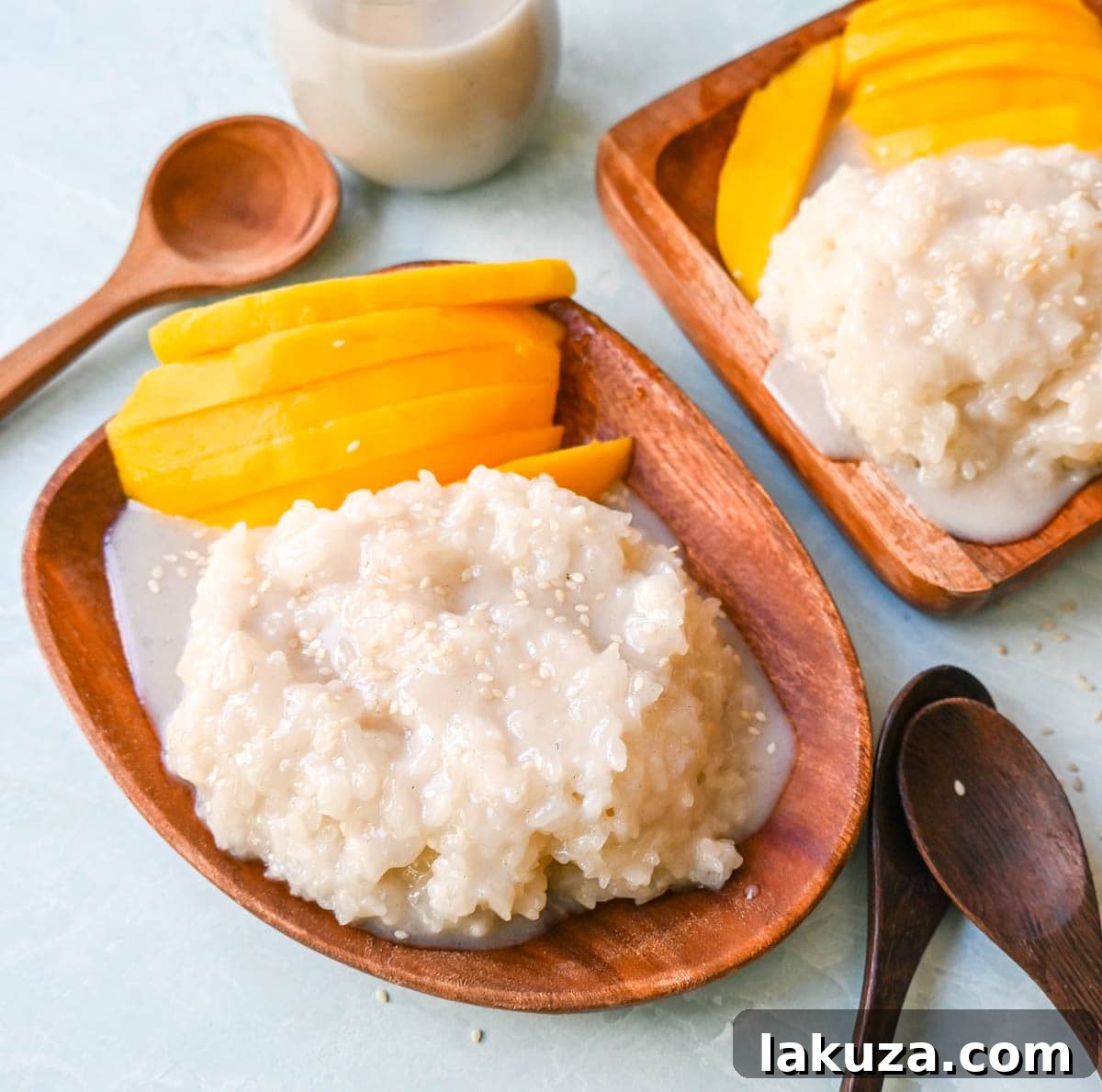
Unlock the secrets to crafting the most exquisite homemade Thai Mango Sticky Rice (Khao Niao Mamuang). This guide will help you create a dessert that is quick, incredibly easy, and perfectly sweet, just like your favorite Thai restaurant, using only a handful of simple ingredients.
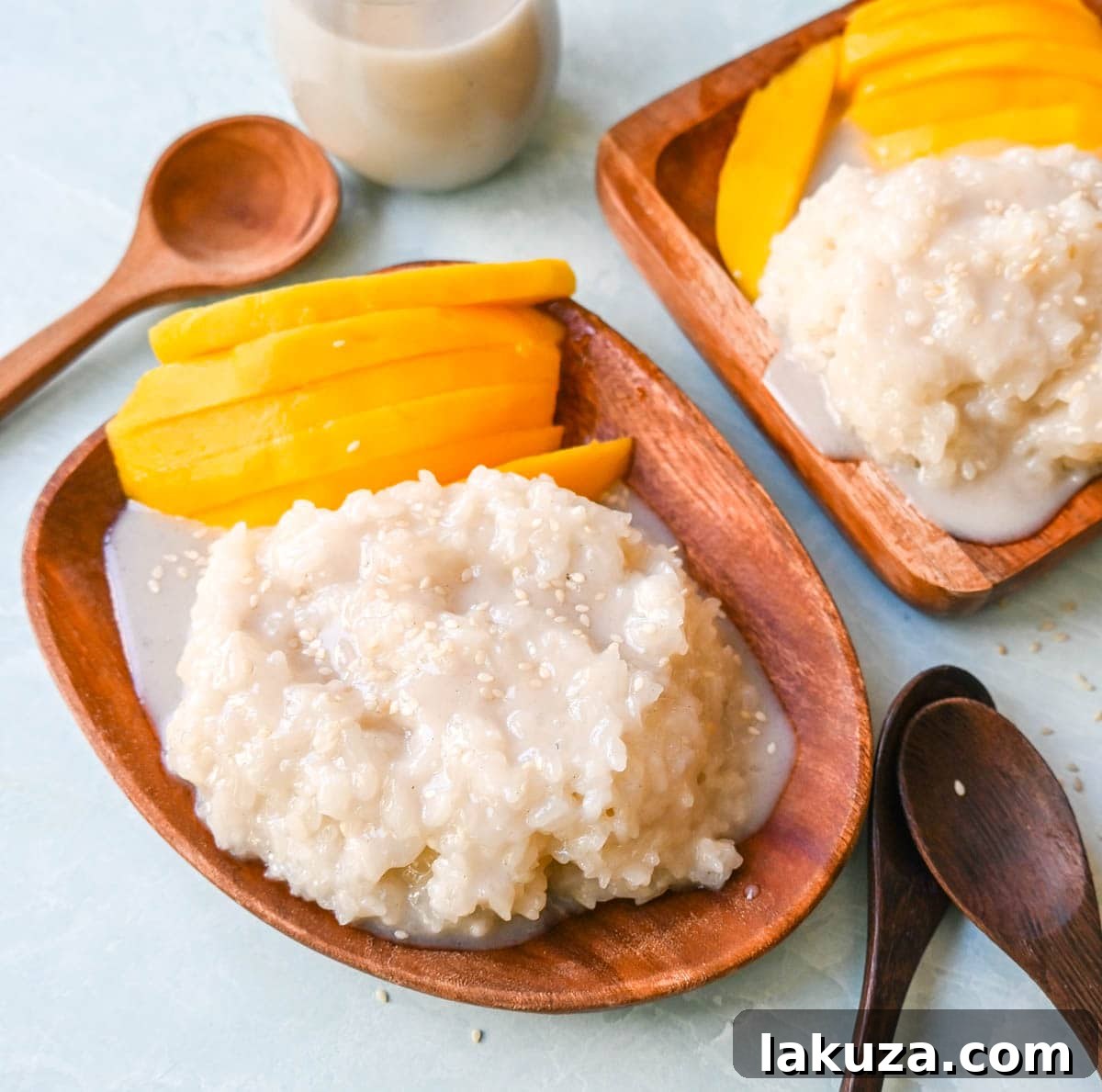
Discover the Enchanting World of Thai Mango Sticky Rice
The first bite of Mango Sticky Rice is an experience many never forget. I vividly recall my initial encounter with this divine Thai dessert over two decades ago at a bustling Thai eatery. It was a revelation – a symphony of textures and flavors that transported me straight to culinary heaven. For years, I believed such a delicacy could only be perfected by seasoned chefs, a dish too complex for a home kitchen.
My early attempts at recreating it at home were often met with lengthy preparation times, requiring hours of soaking rice and elaborate steaming setups. Determined to bring this magic into my own kitchen with less fuss, I embarked on a journey to simplify the process without compromising on that authentic, mouth-watering taste. After much experimentation, I finally cracked the code to a quick and easy mango sticky rice recipe that delivers on all fronts.
This recipe is designed for busy home cooks who crave that authentic Thai flavor without the traditional time commitment. Prepare to impress your family and friends with a dessert that rivals any served in a high-end Thai restaurant, all made effortlessly in your kitchen.
Why This Easy Mango Sticky Rice Recipe Will Become Your Favorite
There are countless reasons to adore Thai Mango Sticky Rice, but this simplified recipe holds a special place in my heart for several key advantages:
- Naturally Inclusive: It is inherently gluten-free and dairy-free, making it a fantastic dessert option for those with dietary sensitivities or preferences. Yet, it sacrifices absolutely nothing in terms of flavor or indulgence, making it a true crowd-pleaser.
- Perfectly Balanced Sweetness: Unlike some desserts that can be overwhelmingly sugary, this dish strikes a harmonious balance. It features prominent notes of sweet, tropical mango and rich, creamy coconut, creating a sophisticated sweetness that is never excessive. Every ingredient plays a crucial role in achieving this delightful equilibrium.
- Irresistible Texture: The star of the show is undeniably the rice itself. This recipe yields a sticky, tender, and incredibly soft glutinous rice that practically melts in your mouth. It’s a deeply comforting and satisfying texture that perfectly complements the luscious mango and silky coconut cream.
- Time-Saving Innovation: Traditional methods often require hours of soaking the rice. Our streamlined approach skips this lengthy step, allowing you to enjoy this delicious dessert much faster, without compromising on the authentic taste and texture.
- Simple, Accessible Ingredients: You won’t need exotic or hard-to-find components. This recipe relies on readily available ingredients, ensuring you can whip up this treat whenever the craving strikes.
Essential Ingredients for Authentic Mango Sticky Rice
Creating this iconic Thai dessert requires just a handful of thoughtfully chosen ingredients. Each one contributes significantly to the overall flavor and texture:
- Glutinous (Sweet) Rice: This is the non-negotiable star of the dish. Also known as sticky rice, it’s a specific type of rice with a unique starch composition that gives it its characteristic chewy, sticky texture when cooked. Do not substitute with regular white rice, as the results will be completely different. You can typically find glutinous rice in Asian markets, specialty grocery stores, or conveniently online through retailers like Amazon.
- Canned Coconut Milk: For an exceptionally creamy and rich sticky rice, opt for full-fat canned coconut milk. The higher fat content is crucial for achieving that decadent, silky texture and robust coconut flavor in both the rice and the accompanying sauce. Look for brands without added thickeners or gums for the purest taste.
- Sugar: Sugar serves a dual purpose in this recipe. It’s incorporated into the rice during cooking to infuse a subtle sweetness, and it’s also a key component of the coconut cream sauce. Adjust the amount to your personal preference for a sweeter or less sweet dessert. Granulated white sugar works perfectly.
- Salt: A pinch of salt is essential to balance the sweetness and truly highlight the nuanced flavors of both the coconut and the mango. It prevents the dish from tasting flat and enhances the overall deliciousness.
- Cornstarch: A small amount of cornstarch is used to lightly thicken the coconut cream sauce, giving it a luscious consistency that clings beautifully to the sticky rice and mango. This ensures the sauce isn’t too watery but still pourable.
- Fresh Mango: The quality of your mangoes can make or break this dessert. Choose fresh, ripe mangoes that are plump, fragrant, and yield slightly to gentle pressure. Varieties like Ataulfo (honey mango), Alphonso, or Carabao are often preferred for their sweetness and minimal fibrous texture, but any sweet, ripe mango will be delicious.
- Toasted Sesame Seeds: While optional, a sprinkle of toasted sesame seeds adds a lovely nutty flavor and a delicate crunch, providing a delightful contrast to the soft rice and mango. They also add an appealing visual touch.
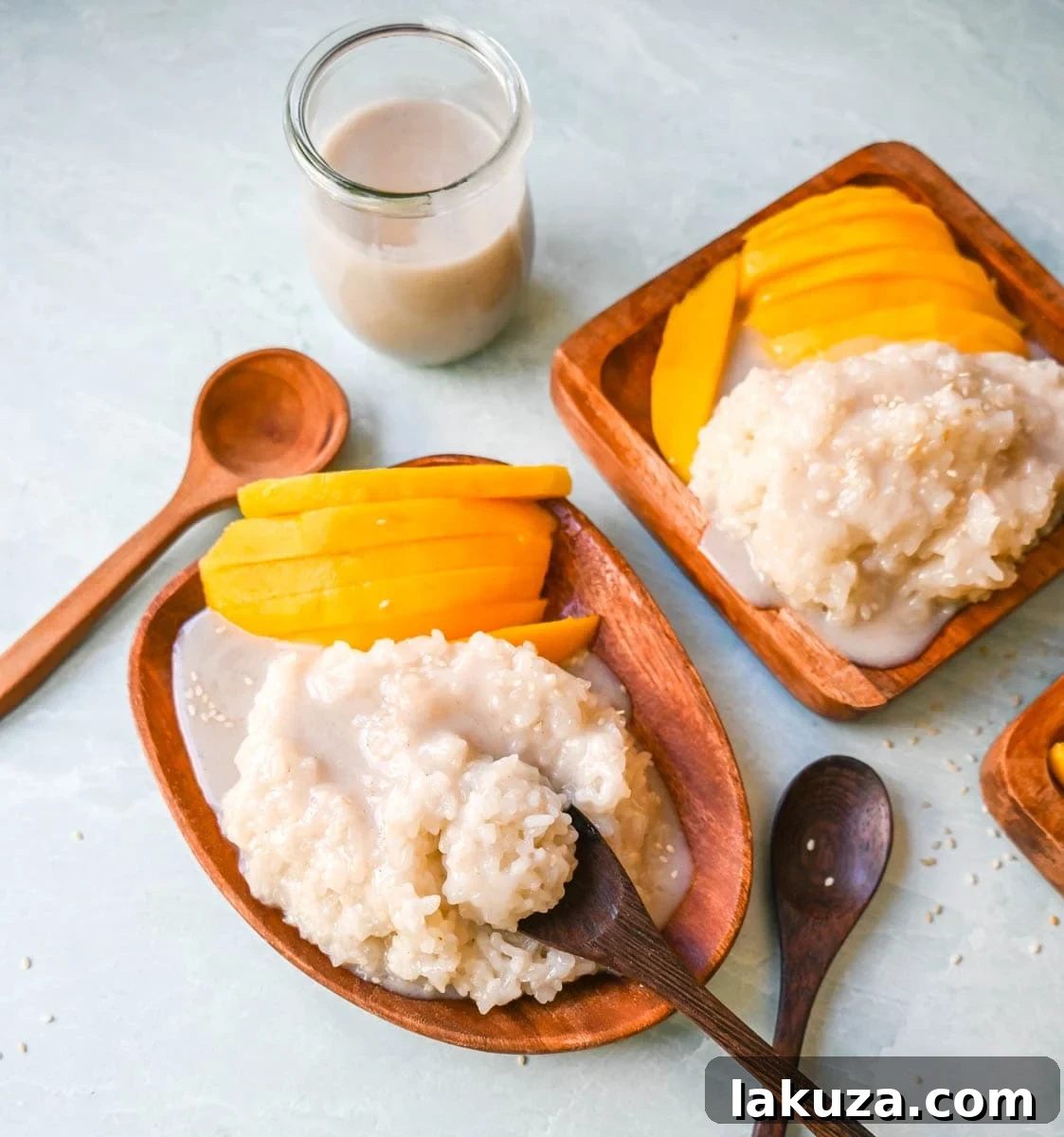
Step-by-Step Guide: How to Make Mango Sticky Rice at Home
Our goal is to make this process as quick and straightforward as possible, ensuring a delicious outcome every time. Follow these steps for an authentic-tasting dessert in record time!
- Prepare the Glutinous Rice: Begin by placing your glutinous rice in a medium-sized bowl. Rinse the rice thoroughly under cold running water, stirring and draining it about 6 to 7 times. Continue this process until the water runs mostly clear, rather than milky. This crucial step helps remove excess starch, preventing the rice from becoming overly gummy and ensuring a perfect sticky yet distinct texture. Drain well after the final rinse.
- Cook the Sticky Rice: Transfer the rinsed and drained rice to a rice cooker. Add 1/2 cup of the canned coconut milk, 1 cup of fresh water, 1/4 cup of sugar, and a generous pinch of salt. Stir everything together gently to combine. Cook the rice according to your rice cooker’s instructions until most of the liquid has been absorbed and the rice is tender and sticky. While many traditional recipes suggest soaking the rice for 8 hours or even overnight, and steaming rather than direct cooking, our method in a rice cooker achieves a very similar, delightful texture without the extensive waiting time. Just be careful not to overcook the rice, which can make it mushy.
- Craft the Coconut Cream Sauce: In a small saucepan, combine the remaining heaping 1 cup of full-fat coconut milk with the remaining 1/4 cup of sugar. Heat the mixture over medium-low heat, stirring constantly until the sugar dissolves and the mixture begins to gently simmer and bubble around the edges. Whisk in 1/2 teaspoon of cornstarch, ensuring there are no lumps, to slightly thicken the sauce. Continue to whisk for another minute or two until the sauce reaches a pourable, creamy consistency. Remove from heat and set aside to cool slightly. The sauce will thicken a bit more as it cools.
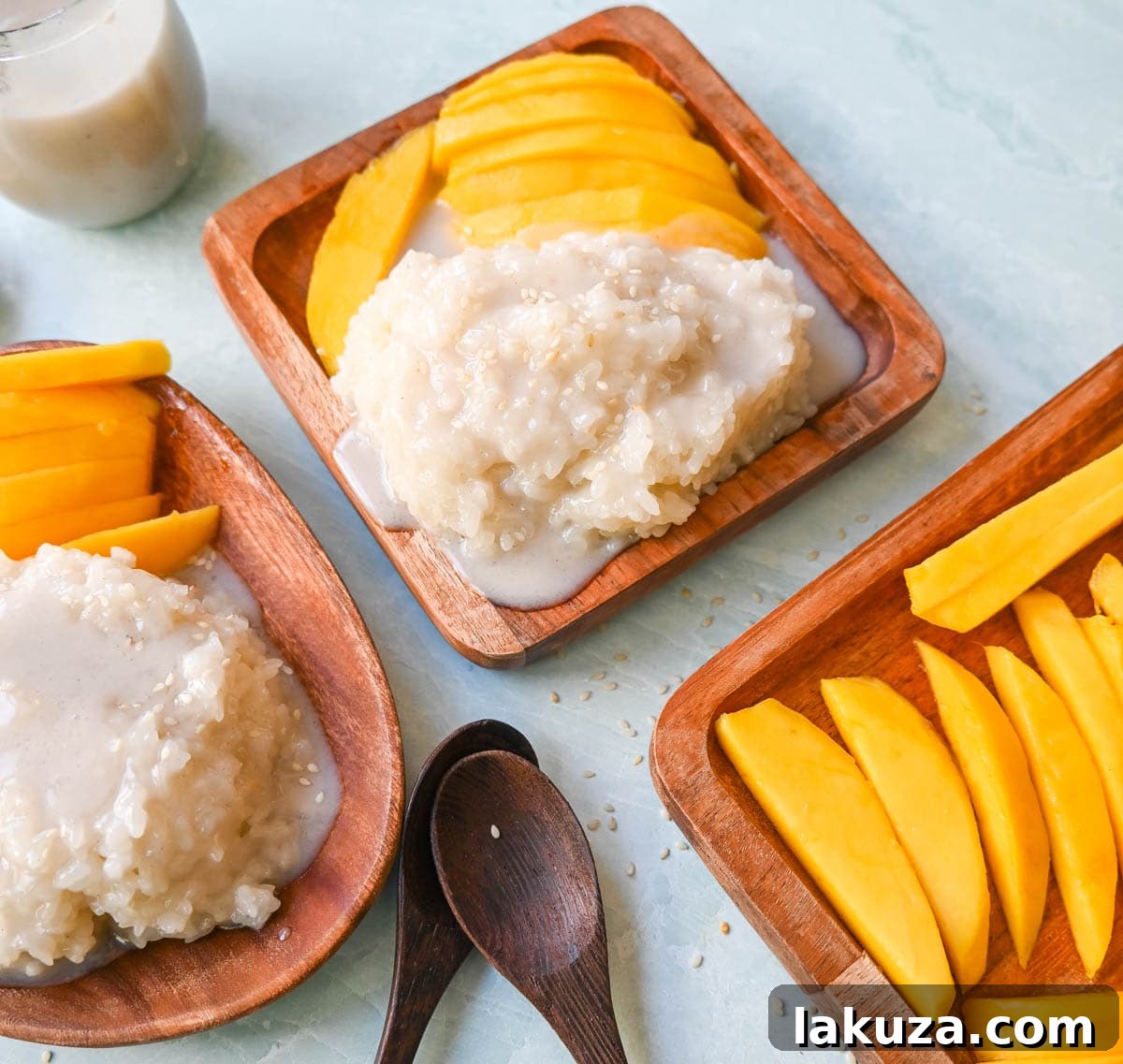
- Prepare the Mangoes: Carefully peel your ripe mangoes. Once peeled, stand each mango upright and slice along the flatter sides, working around the large, central pit. Lay the mango cheek flat on your cutting surface and cut into even slices or dice them, depending on your preferred presentation. Aim for attractive, uniform pieces.
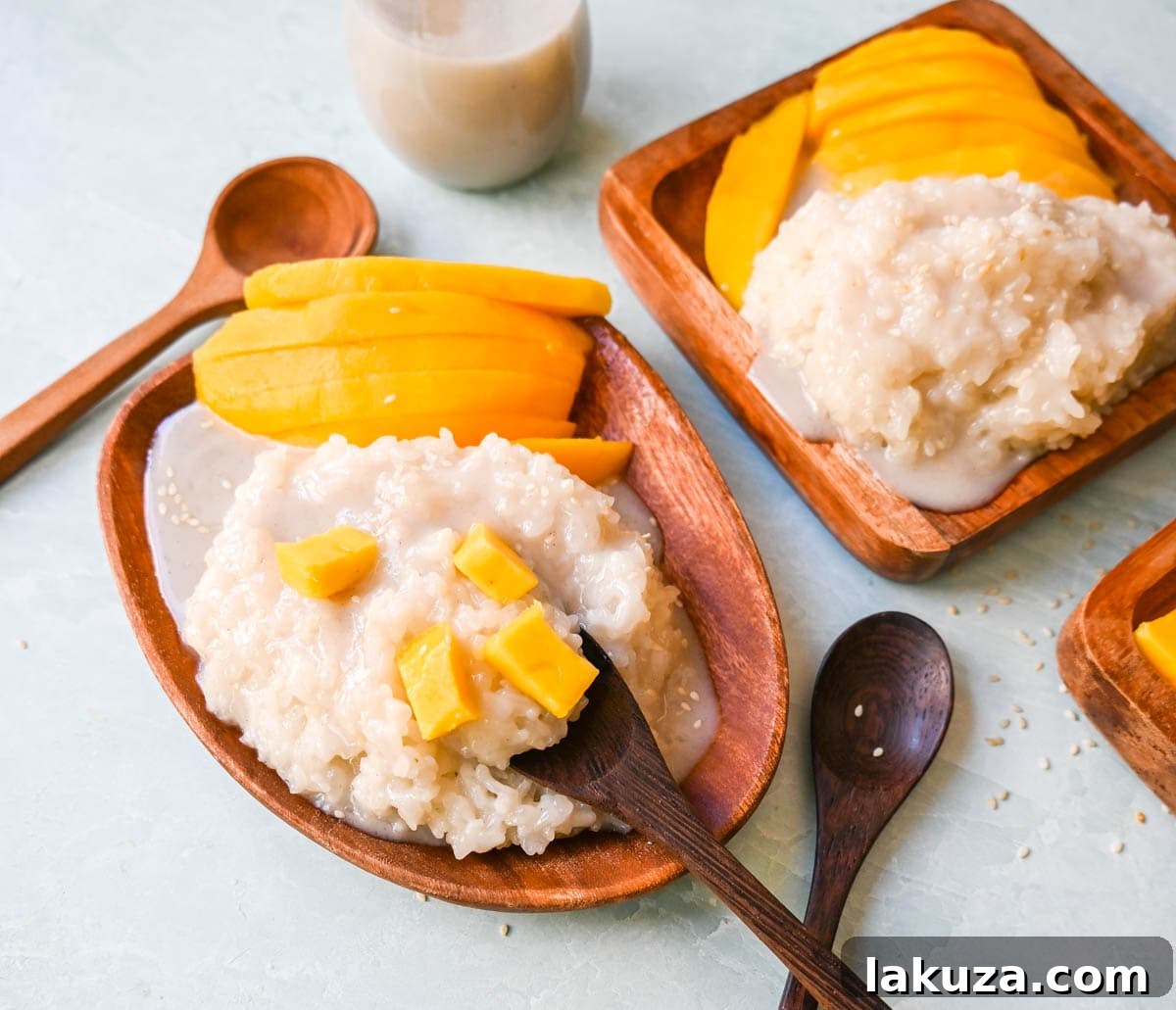
- Assemble and Serve: To present this beautiful Thai dessert, scoop a generous portion of the warm sticky rice onto a plate or into a bowl. Arrange the freshly sliced mango pieces artfully alongside the rice. Drizzle a generous amount of the warm, luscious coconut cream sauce over both the rice and the mango. For an optional, yet recommended, textural contrast and nutty flavor, sprinkle a pinch of toasted sesame seeds over the top.
- Enjoy Immediately: This dessert is best served warm or at room temperature, ideally as soon as it’s prepared. The rice will absorb the coconut cream over time, altering its texture and the sauce’s consistency. If you prefer it chilled, place it in the refrigerator for 25-30 minutes before serving, but don’t let it sit too long.
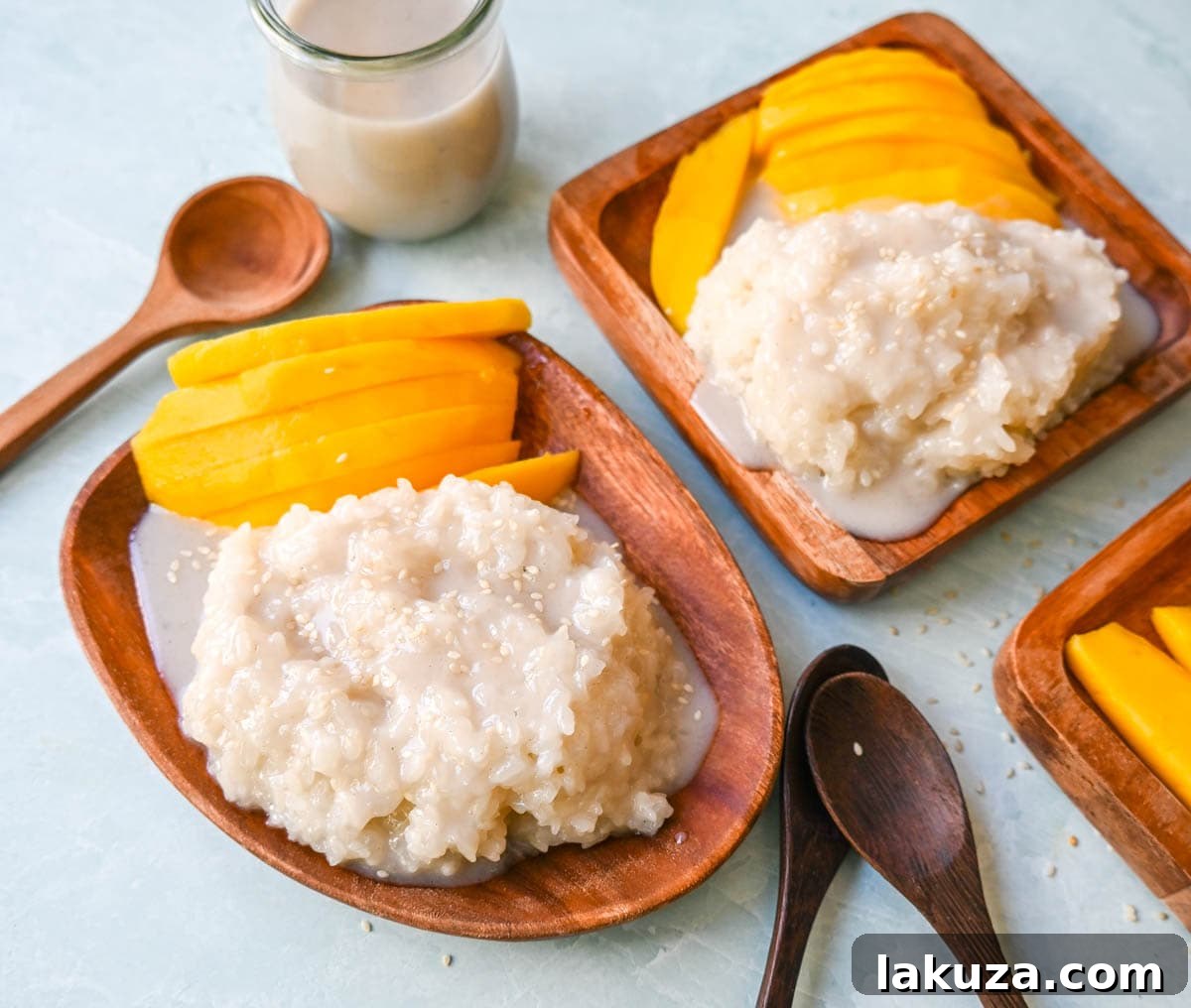
Tips for Perfect Mango Sticky Rice Every Time
Achieving restaurant-quality mango sticky rice at home is simpler than you think with these additional tips:
Choosing the Best Mangoes
- Ripeness is Key: Always select mangoes that are fully ripe. They should have a fragrant, sweet aroma, and the flesh should yield slightly to gentle pressure. Avoid hard, green mangoes as they lack the sweetness and soft texture essential for this dessert.
- Variety Matters: While any sweet, ripe mango works, certain varieties like Ataulfo (honey mango), Alphonso, or Hayden are renowned for their intense sweetness and smooth, non-fibrous flesh, which is ideal for pairing with sticky rice.
Perfecting Your Rice
- Rinse Thoroughly: Don’t skip the rinsing step! It removes excess starch, which is crucial for preventing the rice from becoming a gummy, unappetizing mass. Clear water is your sign of success.
- Do Not Overcook: Glutinous rice cooks relatively quickly. Keep an eye on it in the rice cooker. Overcooked rice will be mushy, while undercooked rice will be too hard. The goal is tender yet chewy.
The Coconut Sauce Secret
- Full-Fat is a Must: For the richest, most luxurious coconut cream sauce, full-fat canned coconut milk is non-negotiable. Light coconut milk will result in a thin, watery sauce lacking in flavor.
- Whisk for Smoothness: When adding cornstarch to the sauce, whisk vigorously to prevent lumps. A smooth sauce is key for that professional finish.
Serving Suggestions
- Presentation Matters: Arrange the mango slices elegantly around or on top of the sticky rice. A visually appealing dish enhances the dining experience.
- Optional Garnishes: Beyond sesame seeds, consider a few sprigs of fresh mint or a scattering of crispy fried mung beans for an extra layer of texture and freshness.
Storage and Make-Ahead
- Best Fresh: Mango sticky rice is truly best enjoyed fresh, shortly after assembly. The rice tends to absorb the coconut sauce and can lose its distinct texture if left too long.
- Short-Term Storage: If you must store leftovers, keep the rice, mango, and sauce separate. Store them in airtight containers in the refrigerator for up to 1-2 days. Reheat the rice gently in the microwave or steamer before serving, and warm the sauce if desired. Add fresh mango just before serving.
Frequently Asked Questions (Q&A)
Here are answers to some common questions about making mango sticky rice:
Can I use another type of rice?
No, for an authentic and satisfying mango sticky rice experience, you absolutely must use glutinous sweet rice. Regular long-grain, short-grain, or jasmine rice will not achieve the unique sticky, chewy, and tender texture that defines this dessert. Glutinous rice has a different starch composition that is essential for its characteristic stickiness.
Should I soak the rice overnight in water?
While many traditional Thai recipes do call for soaking glutinous rice overnight (or for at least 8 hours) before cooking, this recipe offers a convenient shortcut by skipping that step. Our method still yields fantastic results in a rice cooker. If you have the time and prefer to follow a more traditional approach, you can certainly soak the rice overnight. Just adjust the cooking liquid accordingly as soaked rice will require less water.
How do I serve mango sticky rice – warm or cold?
I personally find mango sticky rice most delightful when served warm or at room temperature, immediately after preparation. This allows you to experience the optimal soft, sticky texture of the rice and the fresh, vibrant flavors of the mango and coconut sauce. If you prefer it chilled, place the assembled dessert in the refrigerator for about 25-30 minutes before serving. However, avoid chilling for too long, as the rice will continue to absorb the coconut cream, potentially becoming a bit too dense.
Can I use frozen mango?
While fresh, ripe mangoes are highly recommended for the best flavor and texture, you can use frozen mango slices if fresh ones are unavailable. Thaw the frozen mango completely and pat them dry to remove any excess moisture. Be aware that frozen mangoes might have a slightly softer texture and less vibrant flavor compared to fresh ones.
How do I store leftovers?
To best preserve the integrity of the dish, store the components separately if possible. Keep the sticky rice and coconut sauce in separate airtight containers in the refrigerator for up to 1-2 days. The mango should also be stored separately or used fresh. When ready to eat, gently warm the rice and sauce (if desired) and then combine with freshly sliced mango.
Explore More Thai-Inspired Delights
If you’ve fallen in love with the flavors of Thailand through this mango sticky rice, you’ll be thrilled to discover more incredible Thai recipes. Expand your culinary repertoire with these popular and flavorful dishes:
- Thai Red Chicken Curry — Experience a richly flavored, red curry-spiced chicken curry that surpasses any restaurant version, offering significant savings by making it fresh at home!
- Thai Chicken Noodles — A wholesome and delicious Thai chicken dish featuring vibrant fresh vegetables sautéed in a savory and slightly spicy peanut sauce.
- Thai Chicken Noodle Soup — Warm your soul with a flavorful Thai soup, brimming with aromatic spices, creamy coconut milk, wholesome vegetables, gluten-free rice noodles, and tender chicken.
- Coconut Rice — This simple yet satisfying Coconut Rice recipe requires only five ingredients – rice, coconut milk, water, sugar, and salt. It’s the perfect subtly sweet and savory side dish to complement any meal.
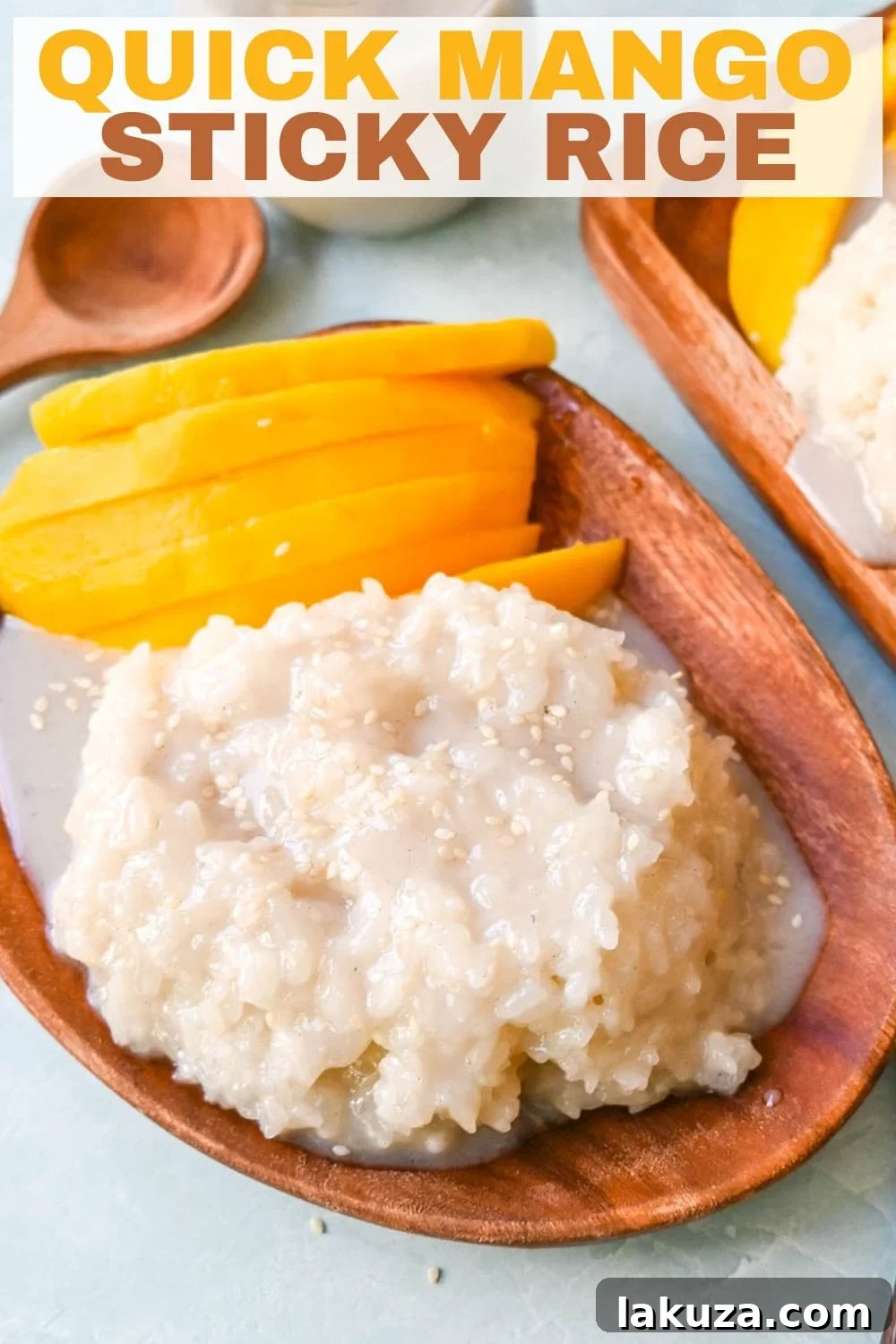
Easy Mango Sticky Rice Recipe Card
Mango Sticky Rice
By: Modern Honey® – www.modernhoney.com
Quick, easy, and perfectly sweet homemade sticky rice with fresh mango. This recipe guides you on how to make this famous Thai mango sticky rice dessert with simple ingredients.
Prep Time: 15 minutes
Cook Time: 20 minutes
Servings: 4
Ingredients
- 1 1/4 cup Glutinous (Sweet) Rice
- 1 (14-ounce) can Full-Fat Canned Coconut Milk (divided)
- 1 cup Water
- 1/2 cup Sugar (divided)
- 1/4 to 1/2 teaspoon Salt
- 1/2 teaspoon Cornstarch
- 2 ripe Mangoes (sliced)
- Sesame Seeds (optional, for garnish)
Instructions
- Rinse the Rice: Place the glutinous rice in a bowl and rinse under cold water 6 or 7 times until the water runs clear, not milky. Drain the rice thoroughly. This step helps remove excess starch.
- Cook the Rice: In a rice cooker, combine the rinsed rice, 1/2 cup of canned coconut milk, 1 cup of water, 1/4 cup of sugar, and a pinch of salt. Cook until most of the liquid is absorbed and the rice is tender and sticky. Do not overcook.
- Prepare the Coconut Cream Sauce: In a saucepan, heat the remaining heaping 1 cup of coconut milk and 1/4 cup of sugar over medium-low heat. Stir until sugar dissolves and the mixture begins to simmer. Whisk in 1/2 teaspoon of cornstarch to thicken slightly. Continue to whisk for a minute, then remove from heat and let cool.
- Slice the Mangoes: Peel the ripe mangoes and carefully slice along the central pit. Cut the mango flesh into desired slices.
- Serve: Place the warm sticky rice on a plate or in a bowl. Drizzle generously with the prepared coconut cream sauce. Arrange the sliced mangoes alongside the rice. If desired, sprinkle with toasted sesame seeds for extra flavor and crunch.
- Enjoy: Serve immediately while warm or at room temperature for the best texture and flavor.
Notes
For best results, use fresh, ripe mangoes. Glutinous rice is essential for the correct texture; no substitutions. This dessert is best served fresh, as the rice will continue to absorb the coconut cream over time.
Nutrition
Calories: 312kcal, Carbohydrates: 72g, Protein: 4g, Fat: 0.5g, Saturated Fat: 0.1g, Polyunsaturated Fat: 0.1g, Monounsaturated Fat: 0.1g, Sodium: 153mg, Potassium: 47mg, Fiber: 2g, Sugar: 25g, Vitamin A: 5IU, Vitamin C: 0.2mg, Calcium: 9mg, Iron: 1mg
Nutrition information is automatically calculated and should be used as an approximation.
Additional Info
Course: Dessert
Cuisine: Thai
Servings: 4
Calories: 312
Keyword: mango sticky rice, sticky rice with mango, Thai dessert
Like this recipe? We’d love to hear from you! Leave a comment below!
Jump to Comments