
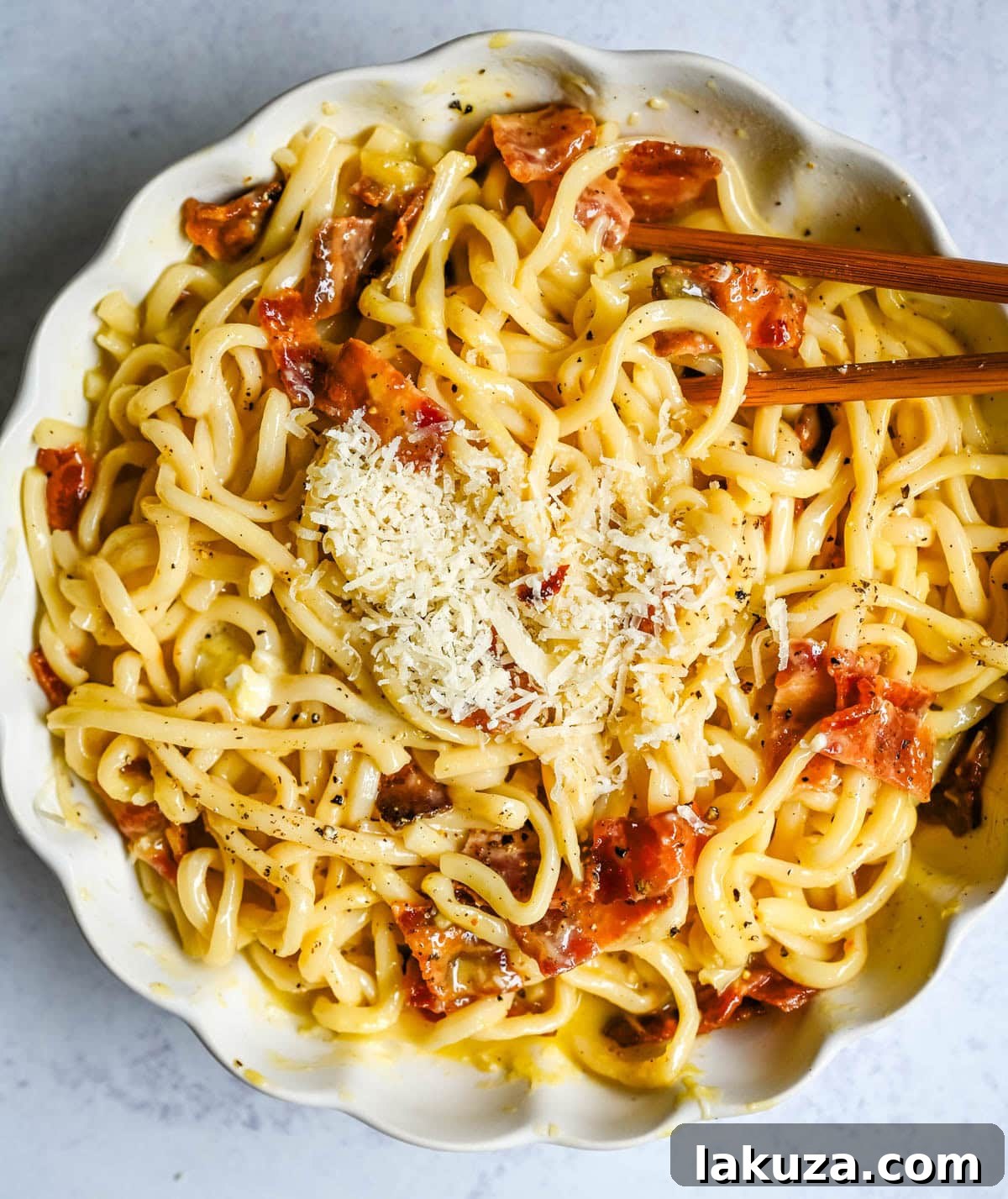
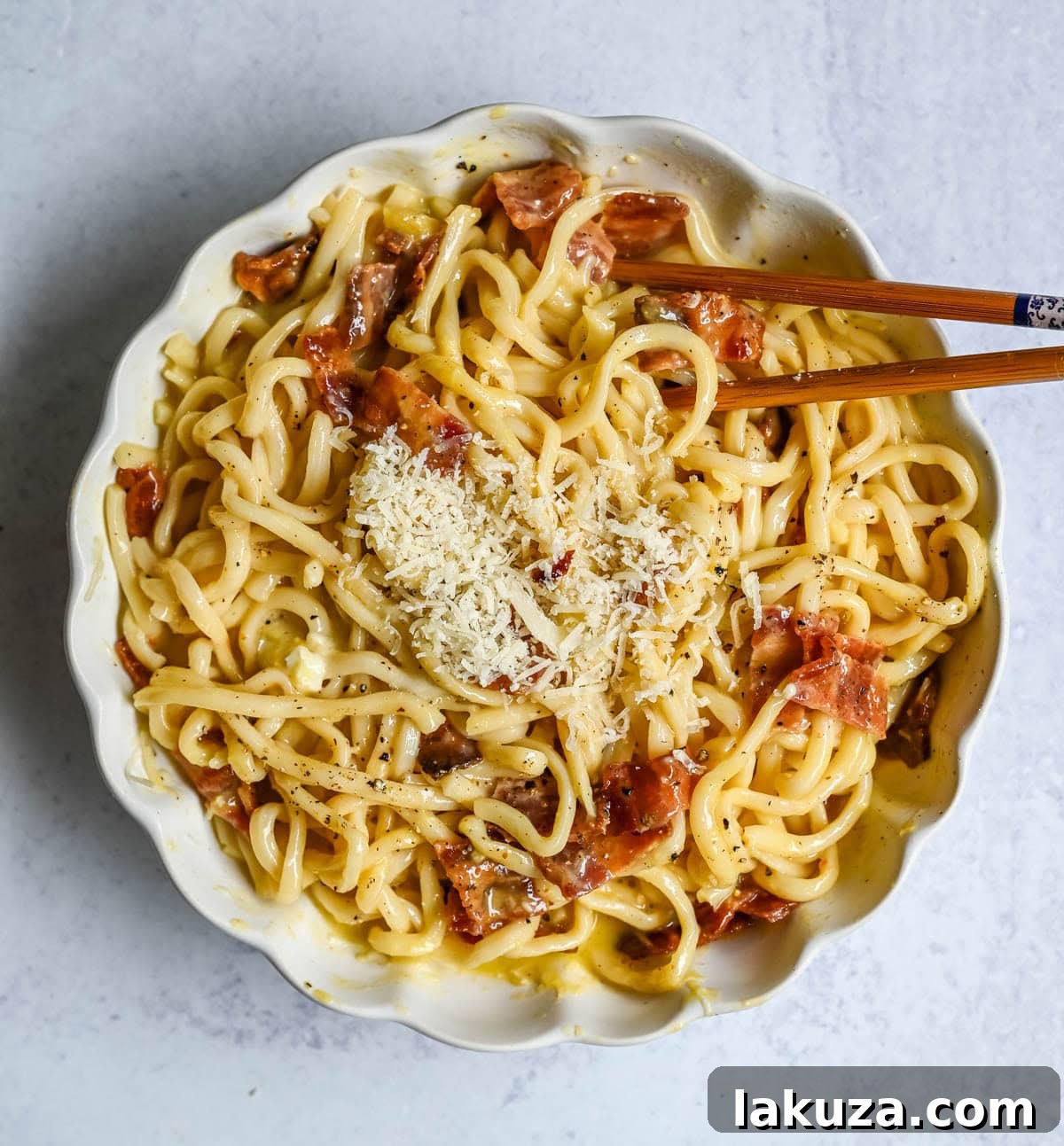
This Carbonara Udon recipe is creamy, cheesy, and surprisingly simple. Inspired by the viral Tokyo noodle dish, it makes a quick 20-minute weeknight dinner featuring thick udon noodles coated in a silky egg yolk and parmesan sauce, crispy bacon, and plenty of freshly cracked black pepper. You can recreate the popular Japanese-Italian fusion dish at home with minimal effort.
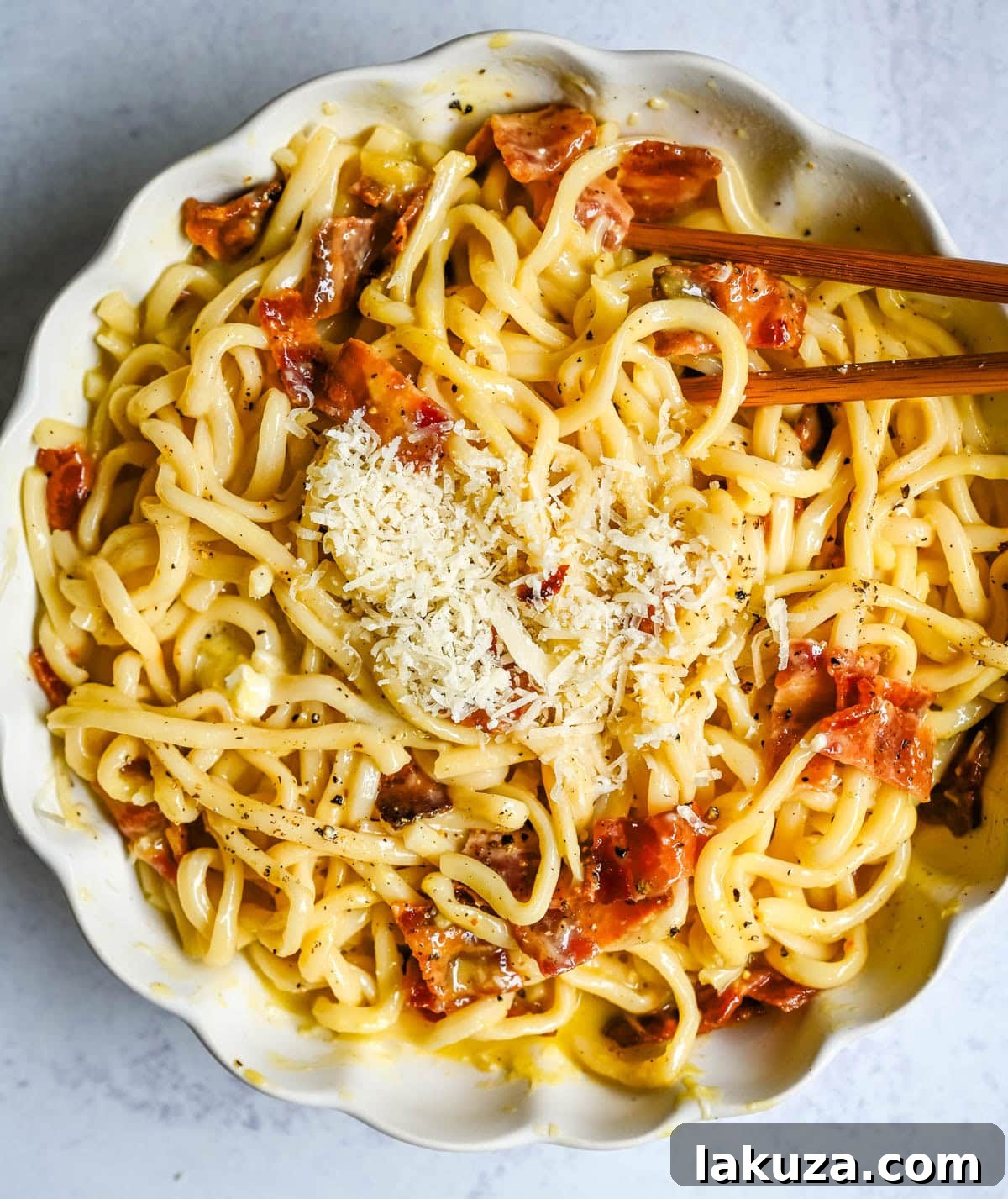
Carbonara Udon has been popping up across social media and the food scene in Tokyo. It originated from a few standout shops in Japan and blends classic Italian carbonara technique with chewy Japanese udon. The noodles are tossed in an egg yolk and parmesan mixture, then finished with rendered pork, butter, and starchy pasta water to form a glossy, clingy sauce. The result is indulgent, comforting, and different from a traditional spaghetti carbonara thanks to the satisfying chew of udon.
What is Carbonara Udon?
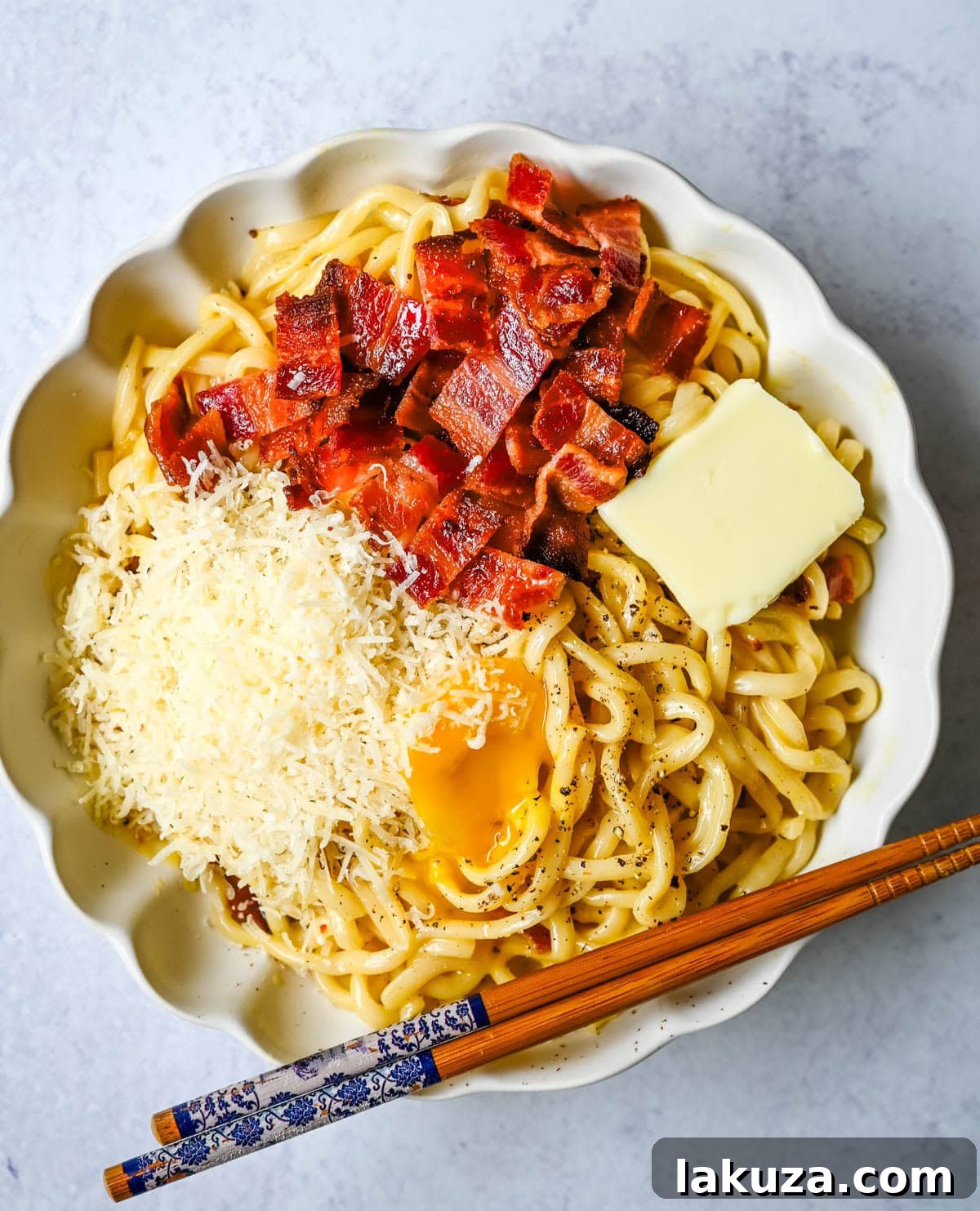
Carbonara Udon is a Japanese-Italian fusion dish that swaps spaghetti for thick udon noodles while using the same egg yolk and cheese technique that makes carbonara silky and rich. Instead of cream, the sauce relies on egg yolks, grated hard cheese, butter, rendered bacon fat, and a little reserved pasta water to emulsify everything into a smooth coating. A raw or slightly warmed egg yolk on top and a generous crack of black pepper finish the dish.
Ingredients
- Udon Noodles (14–16 ounces) — fresh, frozen, or dried. Fresh cooks in 1–2 minutes; frozen and dried take longer per package directions.
- Salted pasta water — reserve at least 1/2 cup before draining. The starchy water is essential for emulsifying the sauce.
- Butter — 2 tablespoons of salted butter for richness and a velvety finish.
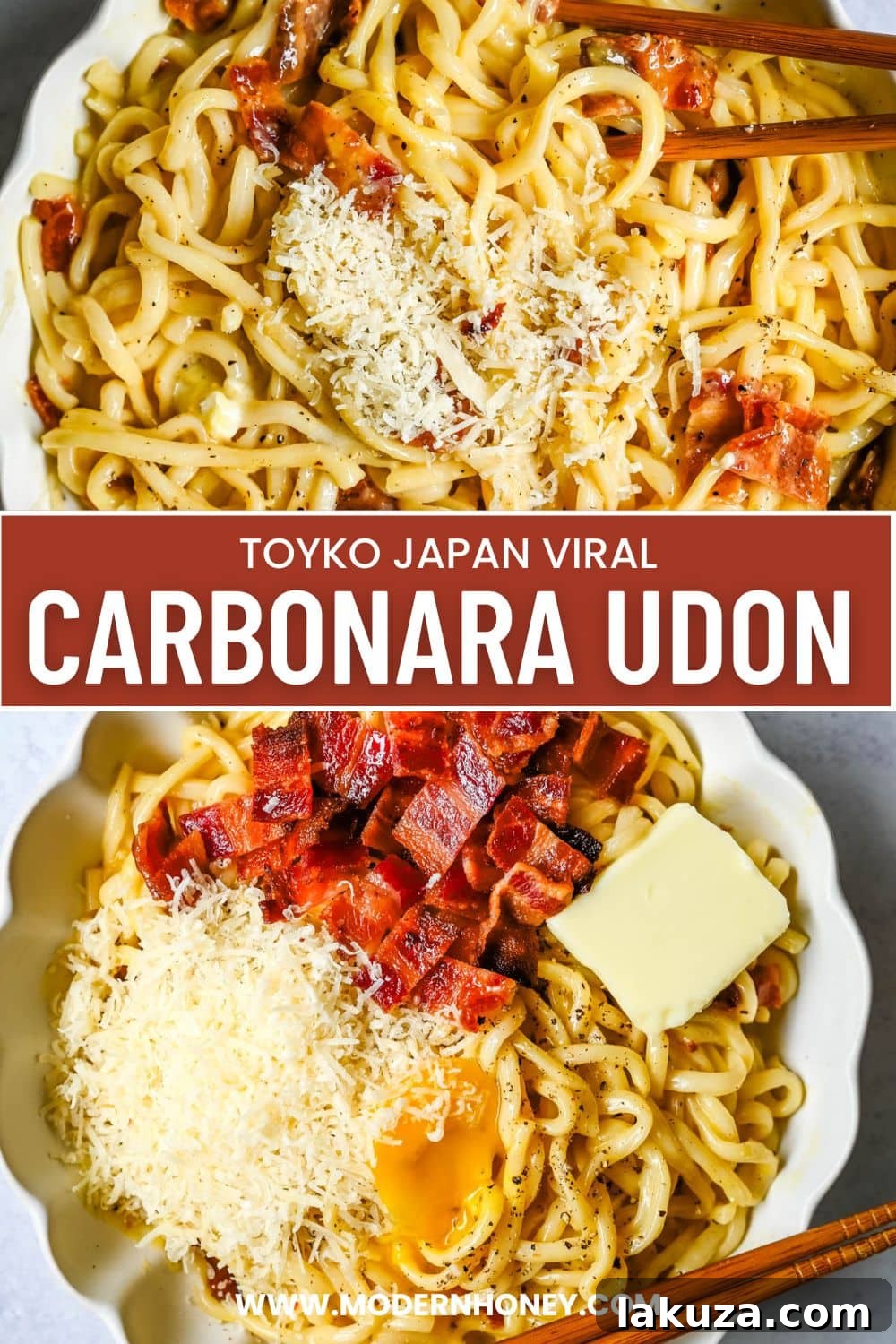
- Egg yolks — 4 large (3 mixed into the sauce, 1 reserved per serving as a topping).
- Parmesan cheese — 1 cup freshly grated for smooth melting and bright flavor.
- Black pepper — freshly cracked, used generously to cut the richness.
- Bacon — 4–6 slices, sliced and cooked until crispy. Pancetta or guanciale may be used as alternatives.
Which udon to use
Not all udon is the same. Frozen udon tends to be thicker and chewier and is closest to what you’ll find in Tokyo. Fresh refrigerated udon is also great and cooks fast. Dried udon is convenient and shelf-stable but can be thinner. Sanuki-style udon from a Japanese grocery store is an excellent choice if you want an authentic texture.
How to make the best Carbonara Udon
- Cook the bacon. Slice the bacon into strips and cook in a large skillet over medium heat until crispy and the fat has rendered, about 5–7 minutes. Remove the bacon and keep the rendered fat in the pan.
- Cook the udon. Bring a large pot of well-salted water to a boil and cook udon according to the package. Reserve at least 1/2 cup of the starchy pasta water just before draining.
- Whisk the egg mixture. While the noodles cook, whisk together 3 egg yolks and the grated parmesan until smooth. Save the fourth yolk for topping the bowls.
- Finish off the pan. Remove the skillet from direct heat. Add butter to the warm pan and add the drained udon, tossing to coat in the butter and bacon fat. Add reserved pasta water gradually while tossing to help emulsify.
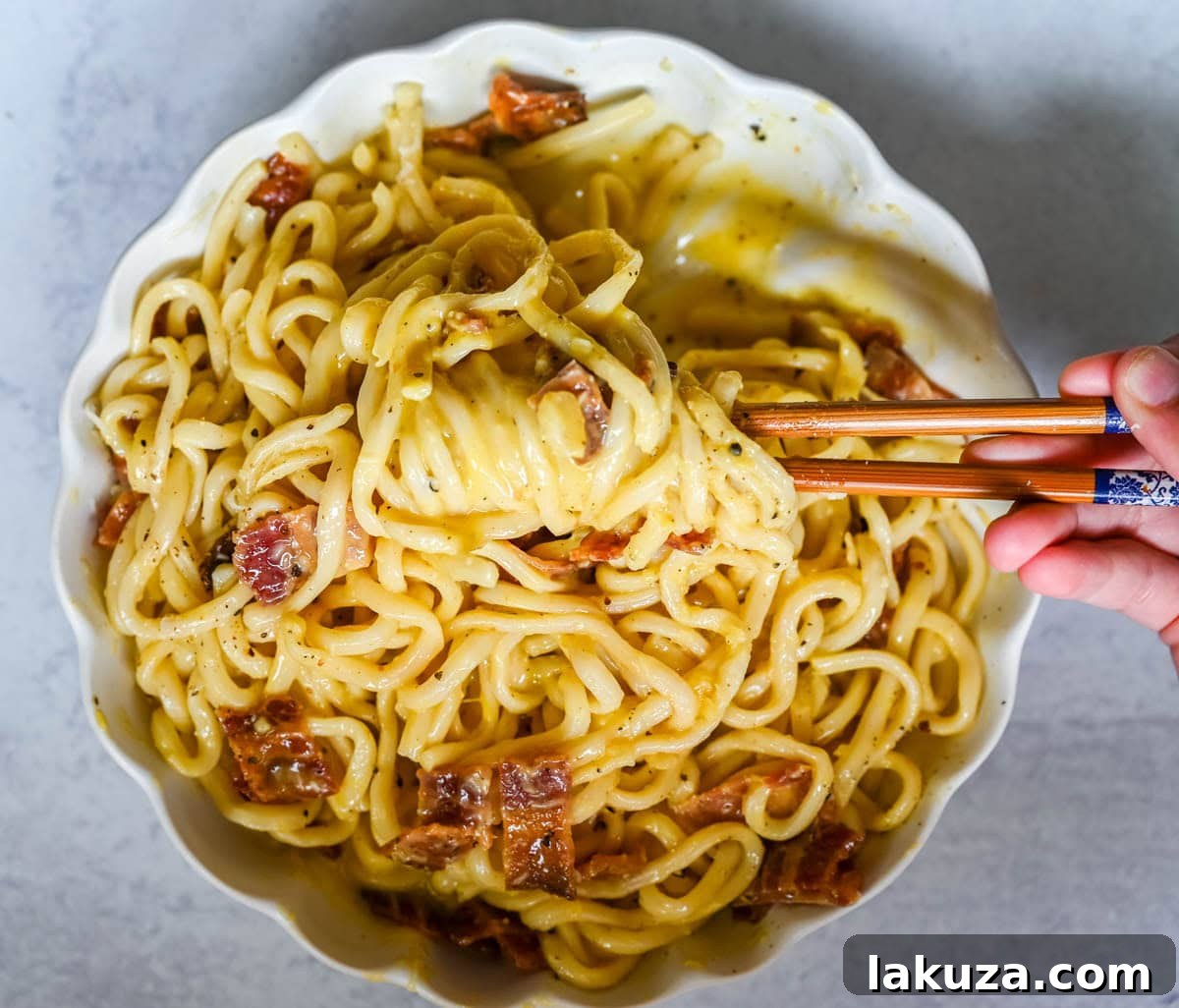
- Add the egg mixture. Pour the egg and cheese mixture over the warm noodles and toss quickly and continuously. The residual heat will gently cook the yolks into a silky sauce—avoid direct heat to prevent scrambling. Add additional pasta water if needed to reach the right consistency.
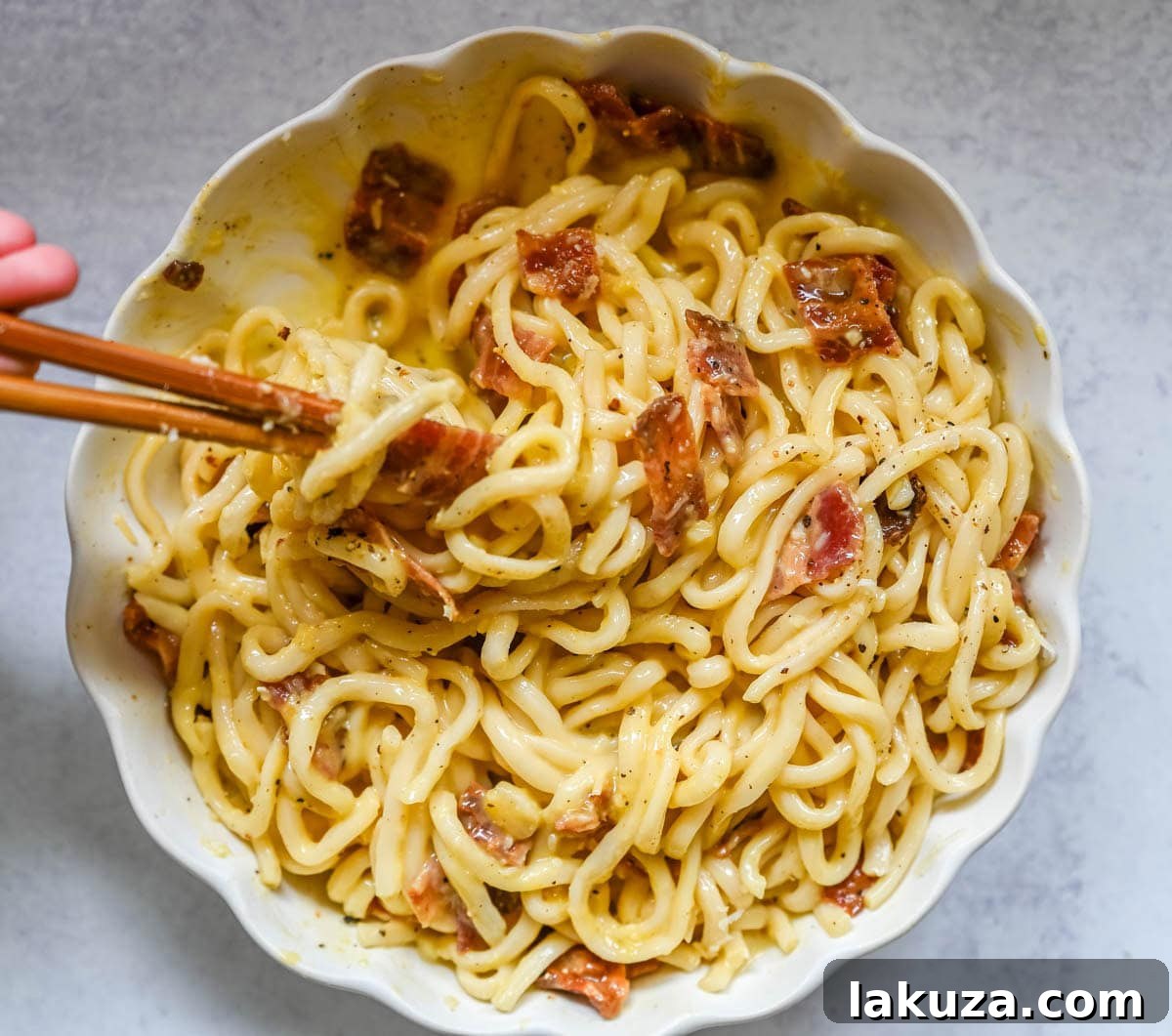
- Serve immediately. Fold the crispy bacon back into the noodles. Divide into bowls, place a raw egg yolk in the center of each bowl if desired, top with extra parmesan and a generous crack of black pepper, and serve hot.
Tips and common questions
Can I use other noodles?
Yes. If you can’t find udon, thick spaghetti, bucatini, or even ramen will work. That said, udon’s thick chewy texture is what makes this version distinctive, so try frozen or fresh udon when possible.
Pancetta or bacon?
Pancetta or guanciale are traditional Italian choices and add depth of flavor. Bacon offers a smoky alternative that pairs nicely with udon. Use what you prefer or have on hand.
Will the eggs scramble?
Not if you remove the pan from the heat before adding the egg mixture and keep tossing. The residual heat from the noodles should gently thicken the yolks into a smooth, glossy sauce rather than scrambling them.
Substitutions and variations
- Swap udon for thick spaghetti, bucatini, or ramen if necessary.
- Use Pecorino Romano in place of parmesan for a saltier, sharper flavor closer to classic carbonara.
- Add a spoonful of chili crisp for heat, or stir in a small amount of soy sauce or white miso for extra umami.
Storage and reheating
Refrigerator: Store leftovers in an airtight container for up to 2 days. The sauce will thicken as it cools and so the texture won’t be as silky as freshly made.
Reheating: Reheat gently in a skillet over low heat, adding a splash of water or broth to loosen the sauce and tossing continuously. Avoid high heat or microwaving when possible to prevent the egg from scrambling and to preserve texture.
Recipe at a glance
- Prep time: 5 minutes
- Cook time: 15 minutes
- Servings: 4
- Calories (approx.): 660 kcal per serving
This Carbonara Udon recipe captures the viral Tokyo favorite with an easy-to-follow method and accessible ingredients. With a few simple steps—crispy bacon, well-salted pasta water, melted butter, and careful temperature control—you’ll end up with glossy, indulgent noodles that taste like the real thing.