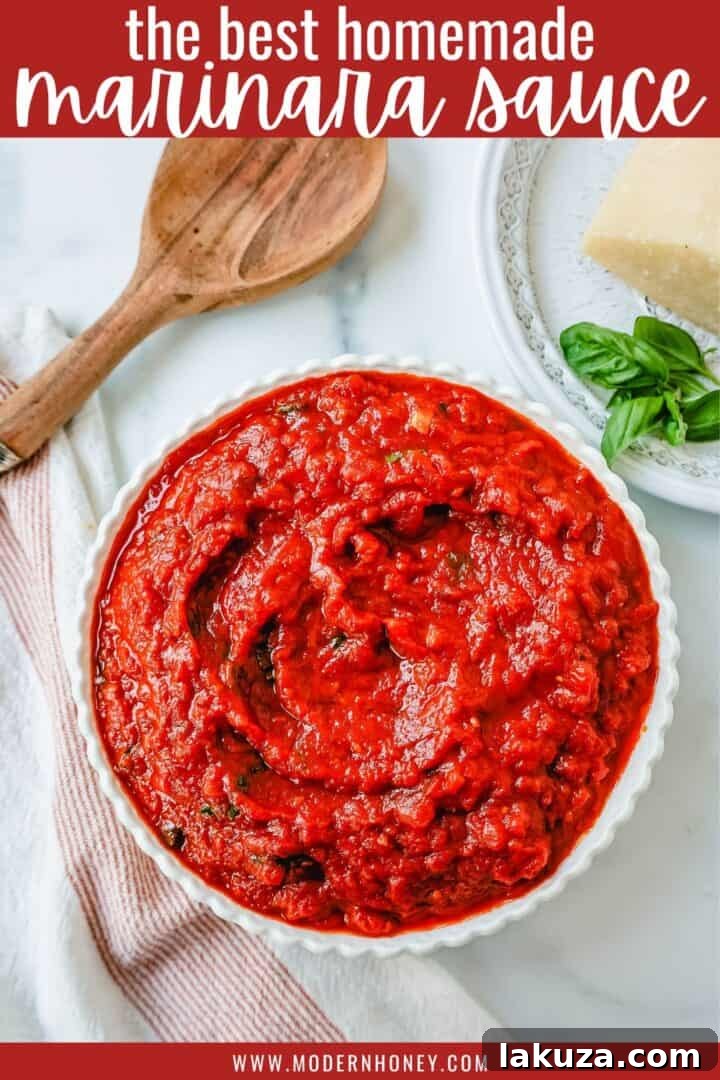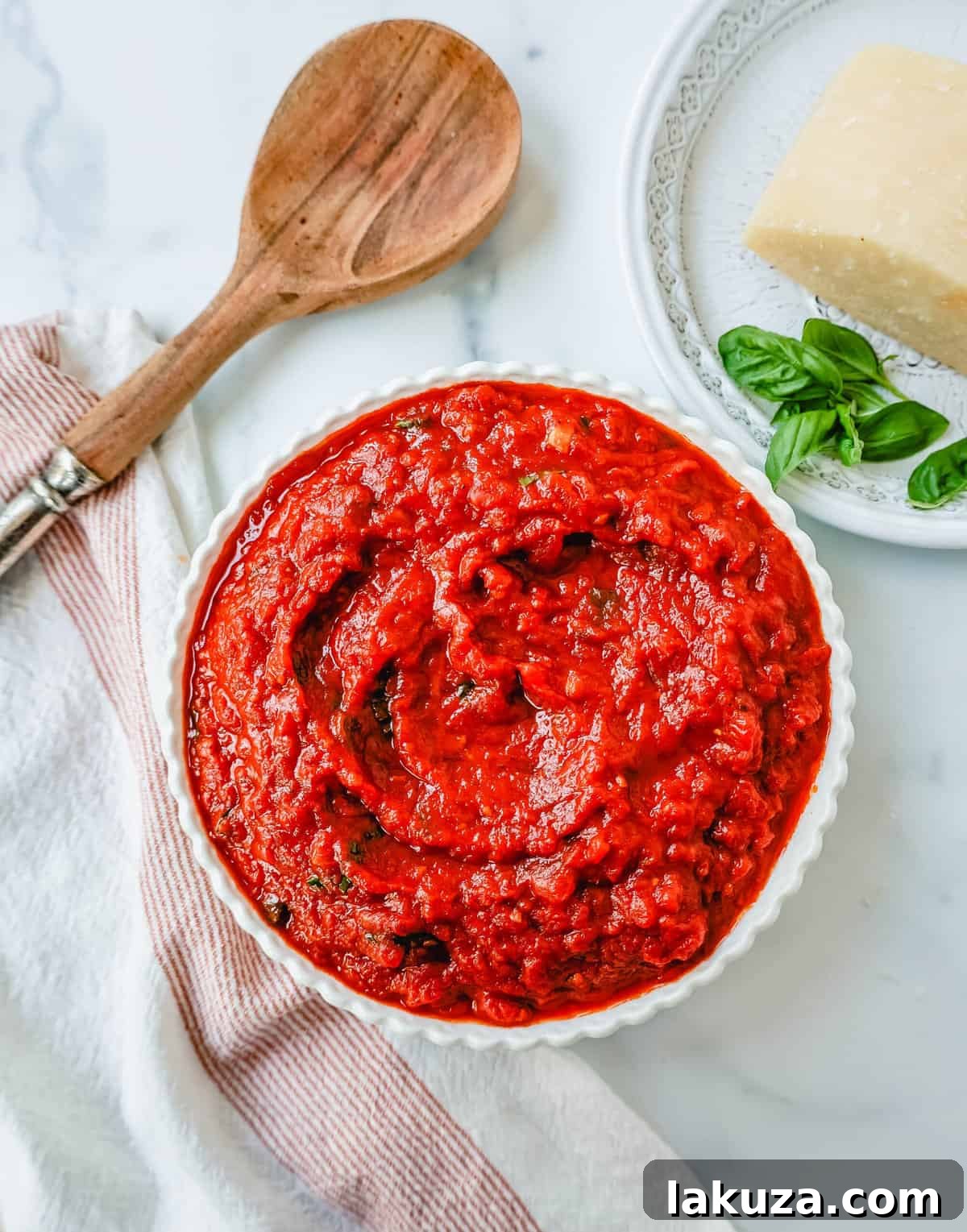
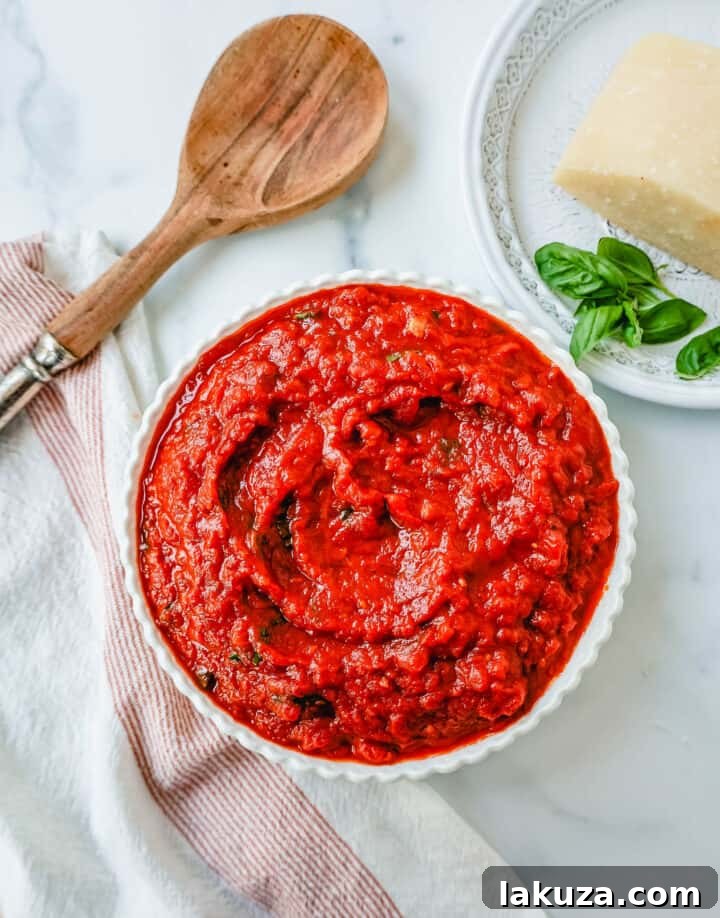
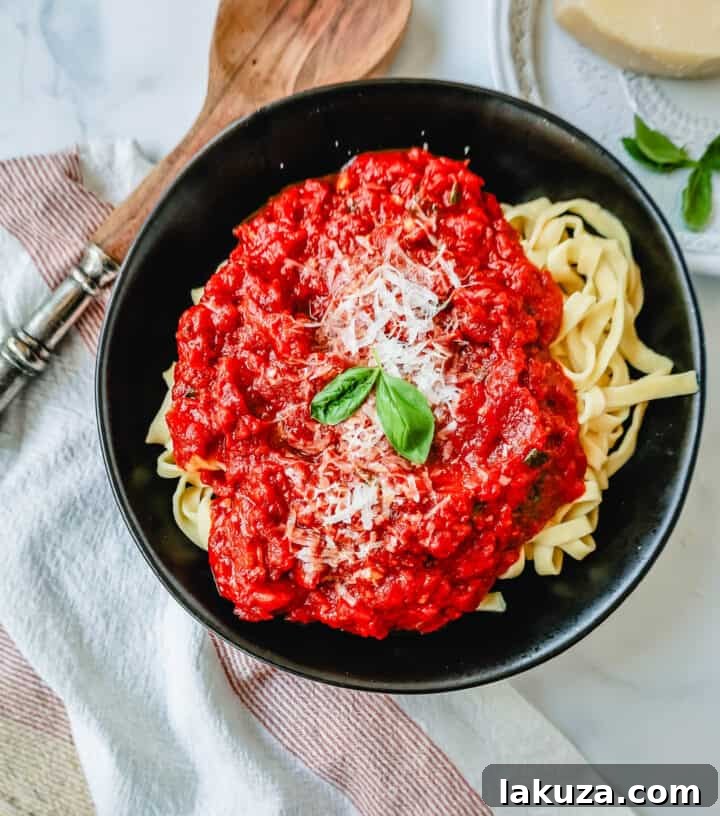
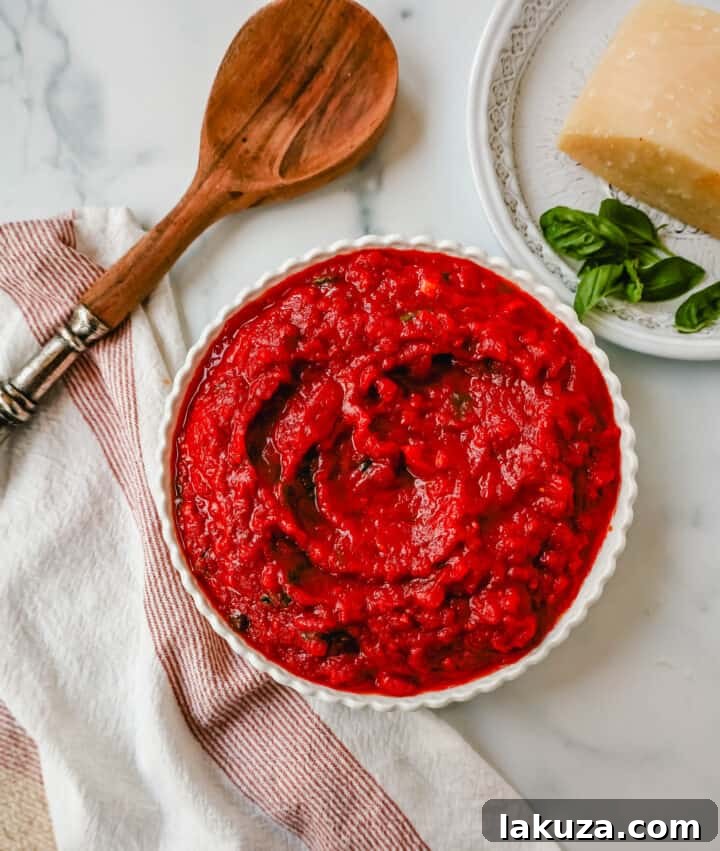
This Marinara Sauce is the best tomato sauce recipe! This San Marzano Tomato Sauce is made with extra-virgin olive oil, garlic, San Marzano canned tomatoes, tomato paste, fresh herbs, and spices. This homemade marinara sauce simmers for hours to create the most robust and flavorful easy marinara sauce.
The Ultimate Homemade San Marzano Marinara Sauce: An Authentic Italian Recipe
Prepare to elevate your culinary experience with this exceptional **homemade San Marzano Marinara Sauce** recipe. This isn’t just any ordinary tomato sauce; it’s a labor of love, a cherished family tradition, and undeniably the **best marinara sauce recipe** you’ll ever encounter. Crafted with the finest **San Marzano canned tomatoes**, fragrant extra-virgin olive oil, pungent garlic, concentrated tomato paste, and a delicate medley of fresh herbs and spices, this sauce is designed for profound, complex flavors. The secret to its unparalleled richness lies in its slow, patient simmer, meticulously transforming simple, high-quality ingredients into a robust, rich, and utterly unforgettable **authentic Italian tomato sauce**.
From the moment you begin sautéing the garlic, your kitchen will fill with an irresistible aroma, signaling the start of something truly special. This versatile and **easy marinara sauce** is the perfect foundation for countless Italian dishes, whether you’re planning a classic spaghetti night, indulging in spaghetti and meatballs, preparing a comforting lasagna, or assembling a hearty chicken parmesan. Beyond the classics, it’s superb for dipping crusty artisan bread, topping homemade pizzas, or enhancing other savory recipes like calzones and meatball subs. Get ready to impress your family and friends with a sauce that tastes like it’s straight from a nonna’s kitchen in Italy. We’re confident this **slow-simmered marinara** recipe will become a cherished staple in your home.
Why Opt for Homemade Marinara Sauce?
While the convenience of store-bought marinara sauces is undeniable, nothing truly compares to the rich, authentic, and nuanced flavor profile of a homemade version. When you commit to making **homemade marinara** from scratch, you gain complete control over every single ingredient, ensuring freshness, quality, and purity. You can confidently avoid artificial preservatives, excessive sodium, and hidden sugars often found in commercial brands. More importantly, the deliberate and gentle slow simmering process allows the flavors to truly meld, deepen, and evolve in a way no quick-fix sauce can ever achieve. This investment of time results in a sauce that transcends being just a condiment; it becomes a star ingredient, a vibrant foundation that elevates any dish it graces, offering a taste of true Italian culinary tradition.
The Essential Ingredients for Your Best Marinara Sauce
To craft a truly memorable and authentic **San Marzano tomato sauce**, selecting high-quality ingredients is not just a recommendation—it’s paramount. Each component plays a vital role in building the layered flavors of this exceptional recipe. Here’s a breakdown of what you’ll need and why each element is crucial:
- Extra-Virgin Olive Oil: This is the liquid gold of Italian cooking and the quintessential foundation of any good Italian sauce. Use a high-quality, cold-pressed, and ideally robust or fruity extra-virgin olive oil. It’s used for both sautéing the aromatics and contributes a subtle, peppery richness to the overall flavor profile.
- Fresh Garlic Cloves: Freshly minced garlic is an absolute non-negotiable. It provides a warm, intensely aromatic base that infuses the entire sauce with its delightful, pungent essence. Avoid pre-minced garlic for the best flavor.
- San Marzano Whole Peeled Canned Tomatoes: The undisputed king of canning tomatoes for sauce-making. Their unique characteristics are the absolute key to this sauce’s superior and authentic taste. Look for “D.O.P.” (Denominazione d’Origine Protetta) certification for genuine quality.
- Tomato Paste: A small but mighty ingredient, tomato paste adds a concentrated blast of deep, umami-rich tomato flavor. It enhances the overall richness and complexity, providing a savory backbone that elevates the sauce beyond mere fresh tomatoes.
- Salt and Freshly Ground Black Pepper: These are the essential seasonings. They don’t just add saltiness or spice; they bring out and perfectly balance all the other flavors. Always taste and adjust as the sauce simmers and develops.
- Granulated Sugar: A modest pinch of sugar serves a crucial role: it helps to naturally balance the inherent acidity of the tomatoes. This creates a smoother, more harmonized, and wonderfully rounded flavor profile, allowing the natural sweetness of the tomatoes to shine without making the sauce overtly sweet.
- Fresh Basil Leaves: The sweet, peppery, and intensely aromatic notes of fresh basil are absolutely crucial for an authentic Italian flavor. Adding it towards the end of the cooking process helps to preserve its delicate essence and bright aroma.
- Fresh Oregano: Earthy, slightly peppery, and warmly aromatic, fresh oregano complements the robust tomato base beautifully. Like basil, it’s best added later in the cooking process to maintain its vibrant flavor.
- Red Chili Flakes: For those who appreciate a subtle warmth and a gentle kick that awakens the palate without overpowering the delicate tomato and herb flavors. Adjust the quantity to your preferred spice level, from a faint whisper to a noticeable zing.
Unlocking Flavor: The Unparalleled Qualities of San Marzano Tomatoes
For an unparalleled rich, deep, and authentically Italian tomato flavor, I wholeheartedly recommend using **San Marzano tomatoes**. These prized tomatoes are distinct and superior to common varieties like Roma tomatoes, making them the gold standard for pasta sauces. Originating from the fertile volcanic plains near Mount Vesuvius in the small town of San Marzano sul Sarno, Italy, they boast unique characteristics that directly impact the quality of your sauce:
- Distinct Shape and Texture: San Marzano tomatoes are typically thinner and more elongated than standard Roma tomatoes, with a more pointed end. Their flesh is notably thicker and more substantial, yet they contain significantly fewer seeds, which contributes to a smoother, less watery sauce texture.
- Superior Flavor Profile: They are renowned globally for their incredibly robust, naturally sweeter taste, and significantly lower acidity compared to other tomato varieties. This natural sweetness means you often require less or no added sugar to balance the sauce, allowing the pure tomato flavor to shine through.
- Geographical and Quality Certification: Authentic San Marzano tomatoes are often protected by a “DOP” (Denominazione d’Origine Protetta) certification. This designation guarantees that the tomatoes were grown and processed according to strict traditional methods within their designated region of Agro Sarnese-Nocerino, Italy. Always look for this label to ensure you’re getting the true, high-quality San Marzano experience.
Using authentic San Marzano tomatoes truly makes a noticeable and remarkable difference, imparting an authentic depth, balanced sweetness, and a vibrant flavor that forms the very backbone of the **best marinara sauce**. It’s an investment that pays off in every delicious bite.
Crafting Your Perfect San Marzano Tomato Marinara Sauce: A Detailed Step-by-Step Guide
Making this **simple marinara recipe** is a deeply rewarding experience, culminating in a sauce that’s bursting with rich, authentic flavor. Follow these steps meticulously to achieve a sauce that will quickly become your culinary pride:
- Infuse the Oil with Garlic: Begin by heating the generous amount of extra-virgin olive oil in a large, heavy-bottomed pot or a sturdy Dutch oven over a controlled medium-low heat. Add your freshly minced garlic and sauté gently for a mere 1-2 minutes. This initial step is absolutely crucial for building the foundational flavor of your sauce. Exercise extreme caution here: garlic can burn very easily, and burnt garlic turns intensely bitter, which can unfortunately compromise the entire sauce. Keep the heat low and stir constantly until the garlic becomes fragrant and lightly golden, but not brown.
- Introduce the Tomatoes and Flavor Enhancers: Carefully pour the San Marzano canned tomatoes, along with their precious juices, into the pot with the aromatic sautéed garlic. If you’re using whole tomatoes (which is often preferred for texture), you can crush them by hand directly into the pot for a rustic, uneven texture, or use a potato masher for a slightly finer consistency. Next, stir in the concentrated tomato paste, a dash of salt, freshly ground black pepper, and the pinch of sugar. The tomato paste will add significant depth and umami, while the sugar is there to harmoniously balance the tomatoes’ natural acidity.
- Initiate the Slow Simmer: Bring the entire mixture to a gentle, bubbling simmer. Once achieved, immediately reduce the heat to its lowest possible setting. Partially cover the pot with a lid. It’s important not to cover it completely, as this strategic partial covering allows some steam to escape. This controlled evaporation is key to preventing too much condensation from forming and, more importantly, permits the sauce to slowly reduce and gradually thicken, concentrating its flavors without becoming watery.
- Embrace Patience: The Hours-Long Simmer: This extended simmering time is the absolute cornerstone and the true secret to developing the deep, complex, and profound flavors that define an exceptional marinara. Allow the sauce to gently simmer on low heat for a minimum of 2 hours, and ideally up to 4 hours. During this period, stir the sauce frequently—at least every 15-20 minutes, or even more often during the first hour to prevent any sticking or scorching on the bottom of the pan. The longer it simmers, the more beautifully the flavors will meld, creating a naturally thicker, richer consistency and an intensely concentrated tomato taste.
- Introduce Fresh Herbs for Brightness: After the sauce has simmered for the desired duration and its flavors have fully developed and deepened, gently stir in the chopped fresh basil, fresh oregano, and the red chili flakes. Adding these fresh herbs at this later stage is strategic; it ensures their vibrant, delicate flavors and bright aromas are preserved, adding a fresh, fragrant dimension that beautifully complements the slow-cooked, rich base.
- Perform the Final Seasoning Adjustment: This is your moment to perfect the sauce. Carefully taste a spoonful and adjust the seasonings as needed. You might find it benefits from a little more salt to enhance its savory notes, an extra grind of black pepper for a subtle kick, or even a tiny pinch more sugar if your specific batch of tomatoes proves to be particularly acidic. This final adjustment ensures your **garlic marinara** is perfectly balanced and utterly delicious.
Essential Tips for Crafting the Perfect Homemade Marinara
- Crush Tomatoes by Hand for Texture: For a truly rustic and authentic texture that shows character, take a moment to crush the whole San Marzano tomatoes with your hands before adding them to the pot. This creates a delightful, uneven chunkiness.
- Never Rush the Garlic: When cooking garlic, the mantra is “low and slow.” It should turn fragrant and a very light golden color, never brown or crispy, which indicates bitterness.
- Invest in a Quality Pot: A heavy-bottomed pot or a well-made Dutch oven is your best friend here. It distributes heat exceptionally evenly, which is crucial for preventing scorching and sticking during the long simmering process.
- The Golden Rule: Taste, Taste, Taste: Seasoning is not a one-time step. Make it a habit to taste your sauce at different stages—especially before and after the long simmer, and crucially, at the very end. Your palate is the ultimate judge!
Unleashing the Versatility: Serving Suggestions for Your Marinara Sauce
This **slow-simmered marinara** is incredibly versatile and can be used in a myriad of ways that extend far beyond simply tossing it with pasta. Here are some inspiring ideas to make the absolute most of your delicious, homemade creation:
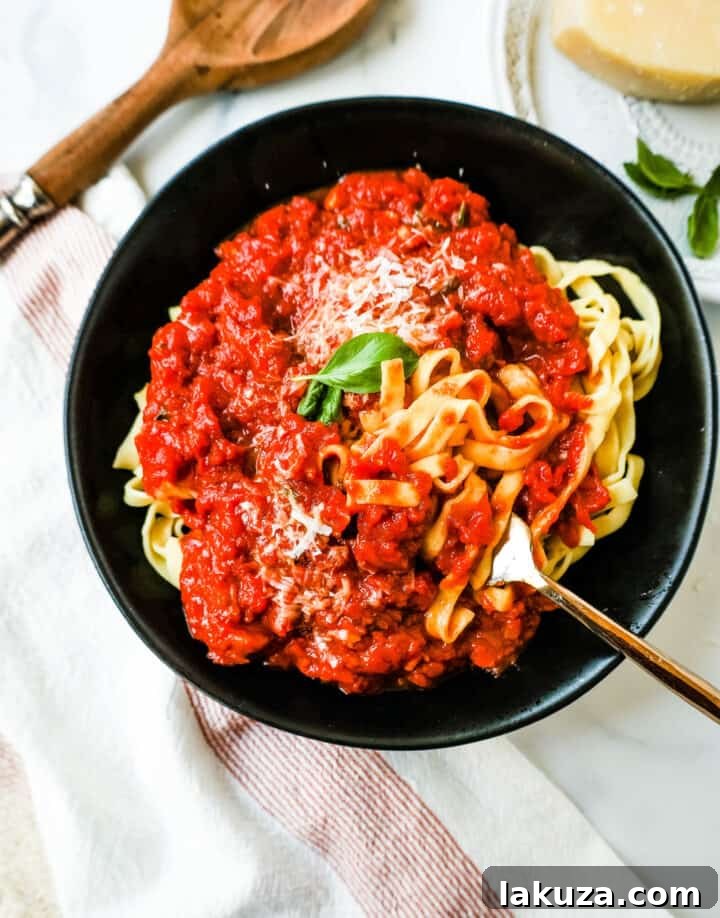
- Classic Pasta Dishes: The quintessential pairing! Generously toss with your favorite pasta shapes – think spaghetti, penne, fettuccine, or linguine – and finish with a liberal sprinkle of freshly grated Parmesan or Pecorino Romano cheese and perhaps a few more fresh basil leaves.
- Hearty Baked Dishes: This rich sauce forms the perfect, flavorful base for beloved Italian baked casseroles like classic lasagna, comforting baked ziti, elegant manicotti, or robust stuffed shells.
- Chicken & Meat Dishes: Transform weeknight dinners by using it for show-stopping chicken parmesan, tender veal parmesan, wholesome eggplant parmesan, or as a succulent simmering sauce for perfectly cooked meatballs and Italian sausage.
- Pizza & Calzones: Say goodbye to bland pizza sauce! This **San Marzano tomato sauce** makes an absolutely fantastic base for homemade pizzas and calzones. Its deep, rich flavor will undoubtedly make your creations stand out from any takeout.
- Appetizers & Dipping: Serve it warm as an irresistible dipping sauce for crispy mozzarella sticks, golden arancini, or alongside warm, crusty garlic bread. It’s also excellent with fried zucchini or calamari.
- Soups & Stews: Introduce a vibrant, savory depth to your soups and stews. It’s a great addition to a hearty minestrone, a comforting Italian wedding soup, or as a rich base for slow-cooked meat stews.
- Unique Breakfasts: Venture into something new with eggs in purgatory (also known as shakshuka-style eggs poached directly in hot marinara) for a truly unique and incredibly flavorful breakfast or brunch experience.
Common Questions & Smart Substitutions for Homemade Marinara
While this recipe champions specific ingredients for optimal flavor and authenticity, don’t hesitate to adapt it based on what you have on hand, regional availability, or your specific dietary preferences. Flexibility is key in the kitchen!
Can I Substitute San Marzano Tomatoes in This Recipe?
Absolutely. While authentic San Marzano tomatoes truly offer a superior flavor profile due to their balanced sweetness and low acidity, you can certainly achieve an excellent sauce using other types of high-quality canned whole, peeled tomatoes. Look for other D.O.P. certified whole peeled tomatoes from regions like Puglia or Campania, or simply choose the best quality generic whole peeled tomatoes you can find. Just be aware that if you use different varieties, you might need to adjust the amount of sugar to effectively balance their potentially higher acidity.
Fresh vs. Dried Herbs: What’s the Best Choice?
Fresh herbs, particularly basil and oregano, lend a remarkably vibrant, bright, and fragrant flavor to the sauce that dried herbs, while convenient, often struggle to fully replicate. However, if fresh herbs are not readily available or in season, you can certainly use their dried counterparts:
- For Fresh Basil: Substitute with approximately 1 to 1 1/2 teaspoons of dried basil.
- For Fresh Oregano: Use about 3/4 teaspoon of dried oregano.
A good rule of thumb to remember is that dried herbs are generally much more concentrated in flavor than fresh herbs, so you typically use about one-third the amount of fresh herbs. When using dried herbs, it’s beneficial to add them earlier in the simmering process, allowing their flavors ample time to fully rehydrate and bloom into the sauce.
Understanding the Role of Sugar in Marinara Sauce
The small amount of sugar included in this recipe isn’t about making your sauce overtly sweet; rather, it’s about achieving perfect balance. Tomatoes inherently contain some natural acidity, and a carefully measured touch of sugar helps to counteract and mellow this acidity. This creates a smoother, more harmonious, and wonderfully well-rounded flavor profile that allows the natural, subtle sweetness of the tomatoes themselves to truly shine through. You can certainly adjust this amount to your personal taste, or even omit it entirely if you find your chosen tomatoes are naturally very sweet and balanced on their own.
The Culinary Magic: Why Simmering Marinara Sauce for Hours is Essential
The extended simmering time is not just a suggestion; it is the non-negotiable cornerstone for achieving a truly exceptional and deeply flavorful **homemade marinara**. Here’s a detailed explanation of why patience in simmering is so vital:
- Profound Flavor Integration: As the sauce gently simmers on low heat for an extended period, all the individual ingredients—the rich tomatoes, aromatic garlic, luscious olive oil, and fragrant spices—are given ample time to integrate their distinct flavors. This slow, deliberate process allows the individual components to seamlessly meld and transform into a complex, cohesive, and deeply satisfying whole.
- Effective Acidity Reduction: Prolonged, gentle cooking is a natural and effective way to break down the tomatoes and mellow their inherent acidity. This process results in a sauce that is naturally sweeter, less sharp, and much more palatable, creating a smooth experience on the tongue.
- Concentration and Luxurious Reduction: Gentle and sustained simmering allows the excess water content within the tomatoes and juices to slowly evaporate. This gradual reduction process concentrates the flavors dramatically, intensifying the taste of the tomatoes and herbs. The result is a thicker, more luxurious consistency and an incredibly potent, rich tomato essence.
- Unlocking Umami: The low and slow cooking process plays a significant role in developing and enhancing umami—the savory fifth taste. This deeply satisfying savory quality adds incredible depth, complexity, and overall satisfaction to the sauce, making it irresistibly delicious.
What Flavorful Additions Can I Include in My Marinara Sauce?
This basic **San Marzano tomato sauce** recipe is perfect and delicious as is, but it also serves as an outstanding and versatile canvas for a variety of flavorful additions, allowing you to customize it to your heart’s content:
- Hearty Meaty Delights: For a more substantial and satisfying sauce, consider adding browned ground beef, flavorful Italian sausage (whether sweet, mild, or spicy), or even a combination of ground pork and beef. Be sure to properly brown the meat before adding it to the sauce to develop rich, caramelized flavors.
- Boosting with Vegetables: To add extra layers of sweetness, complexity, and nutritional value, finely diced onions, carrots, or celery (the classic soffritto base) can be sautéed with the garlic at the beginning. Sautéing bell peppers (red, yellow, or green) will also infuse the sauce with a deeper, earthier, and slightly sweet note.
- Dialing Up the Spice: If you truly love heat and crave a spicier kick, feel free to generously increase the amount of red chili flakes. For an even more intense heat, you could also add a tiny pinch of cayenne pepper, exercising caution to avoid overpowering the other delicate flavors.
- Exploring Other Fresh Herbs: Don’t limit yourself to basil and oregano! Experiment with other fresh herbs like fresh marjoram, which offers a slightly sweeter, milder flavor, or even a small sprig of fresh rosemary for a more robust and piney aromatic profile. Remember to use rosemary sparingly as its flavor is quite strong.
Storing and Freezing Your Homemade Marinara: Maximize Flavor, Minimize Waste
Making a large batch of this **best marinara sauce** is not only highly recommended but also incredibly practical, as it freezes beautifully. By doing so, you’ll always have a quick, delicious, and homemade meal starter readily available for those busy weeknights!
- Refrigeration: Any leftover marinara sauce can be safely stored in an airtight container in the refrigerator for a period of up to 5-7 days. Ensure the container is sealed tightly to maintain freshness.
- Freezing for Longevity: For significantly longer storage, first allow the freshly made sauce to cool completely to room temperature. Then, transfer it to freezer-safe containers, sturdy zip-top freezer bags, or even ice cube trays for smaller portions. If using freezer bags, lay them flat on a baking sheet to freeze; once solid, they can be stacked vertically to save valuable freezer space. Properly frozen marinara can last for an impressive 3-4 months without any significant loss of quality or flavor.
- Thawing and Reheating: To thaw frozen sauce, simply transfer it from the freezer to the refrigerator overnight. For quicker thawing, you can gently reheat the frozen sauce directly on the stovetop over low heat, stirring occasionally to prevent sticking, until it is fully thawed and heated through.
Pin
Homemade San Marzano Marinara Sauce
Equipment
-
Large Heavy-Bottomed Pot or Dutch Oven
-
Measuring Cups and Spoons
-
Wooden Spoon or Spatula
Ingredients
- 2 Tablespoons Extra-Virgin Olive Oil
- 4 Garlic Cloves (minced)
- (2) 28-ounce cans Whole Peeled San Marzano Tomatoes, with juices
- 1 Tablespoon Tomato Paste
- 1/2 teaspoon Salt
- 1/2 teaspoon Freshly Ground Black Pepper
- 1 teaspoon Granulated Sugar
- 1/4 to 1/2 teaspoon Red Chili Flakes (adjust to taste)
- 2 Tablespoons Fresh Basil Leaves (chopped)
- 1 Tablespoon Fresh Oregano (chopped)
Instructions
-
In a large, heavy-bottomed pot or Dutch oven, heat the extra-virgin olive oil over medium-low heat. Add the minced garlic and sauté gently for 1-2 minutes until fragrant and lightly golden. Be careful not to burn the garlic, as it will turn bitter.
-
Add the San Marzano canned tomatoes (crushing them by hand if whole) and their juices into the pot with the sautéed garlic. Stir in the tomato paste, salt, freshly ground black pepper, and granulated sugar. Mix well to combine all ingredients thoroughly.
-
Reduce the heat to its lowest setting and let the sauce gently simmer. Partially cover the pot with a lid, allowing some steam to escape. Simmer for a minimum of 2 hours, and up to 4 hours, stirring often (every 15-20 minutes) to prevent the sauce from sticking to the bottom of the pan and ensure even flavor development. The longer it simmers, the richer and more complex the flavor will become.
-
After simmering for the desired time, stir in the chopped fresh basil leaves, fresh oregano, and red chili flakes. Taste the sauce and adjust seasonings as needed, adding more salt, pepper, or sugar to achieve your perfect balance.
-
Serve your delicious homemade San Marzano Marinara Sauce warm with your favorite pasta, a generous sprinkle of freshly grated Parmesan cheese, and a garnish of fresh basil. Enjoy the true taste of Italy!
Notes
Fresh vs. Dried Herbs: If fresh basil or oregano are unavailable, you can substitute with dried herbs. For fresh basil, use 1 to 1 1/2 teaspoons of dried basil. For fresh oregano, use 3/4 teaspoon of dried oregano. Add dried herbs earlier in the simmering process to allow their flavors to fully develop.
Balancing Acidity: The small amount of granulated sugar helps to balance the natural acidity of the tomatoes, creating a smoother flavor profile. Adjust or omit to your preference and the natural sweetness of your tomatoes.
The Importance of Simmering: Simmering on low heat for several hours is crucial for allowing the flavors to integrate deeply, mellowing the tomatoes’ acidity, and enabling the sauce to reduce and intensify, resulting in a richer, more profound flavor profile.
Optional Additions: For a heartier sauce, consider adding browned ground beef, Italian sausage, or other favorite meats. To enhance freshness or spice, feel free to add extra fresh herbs or red chili flakes to taste during the final stages of cooking.
Nutrition
Nutrition information is automatically calculated, so should only be used as an approximation.
Additional Info