
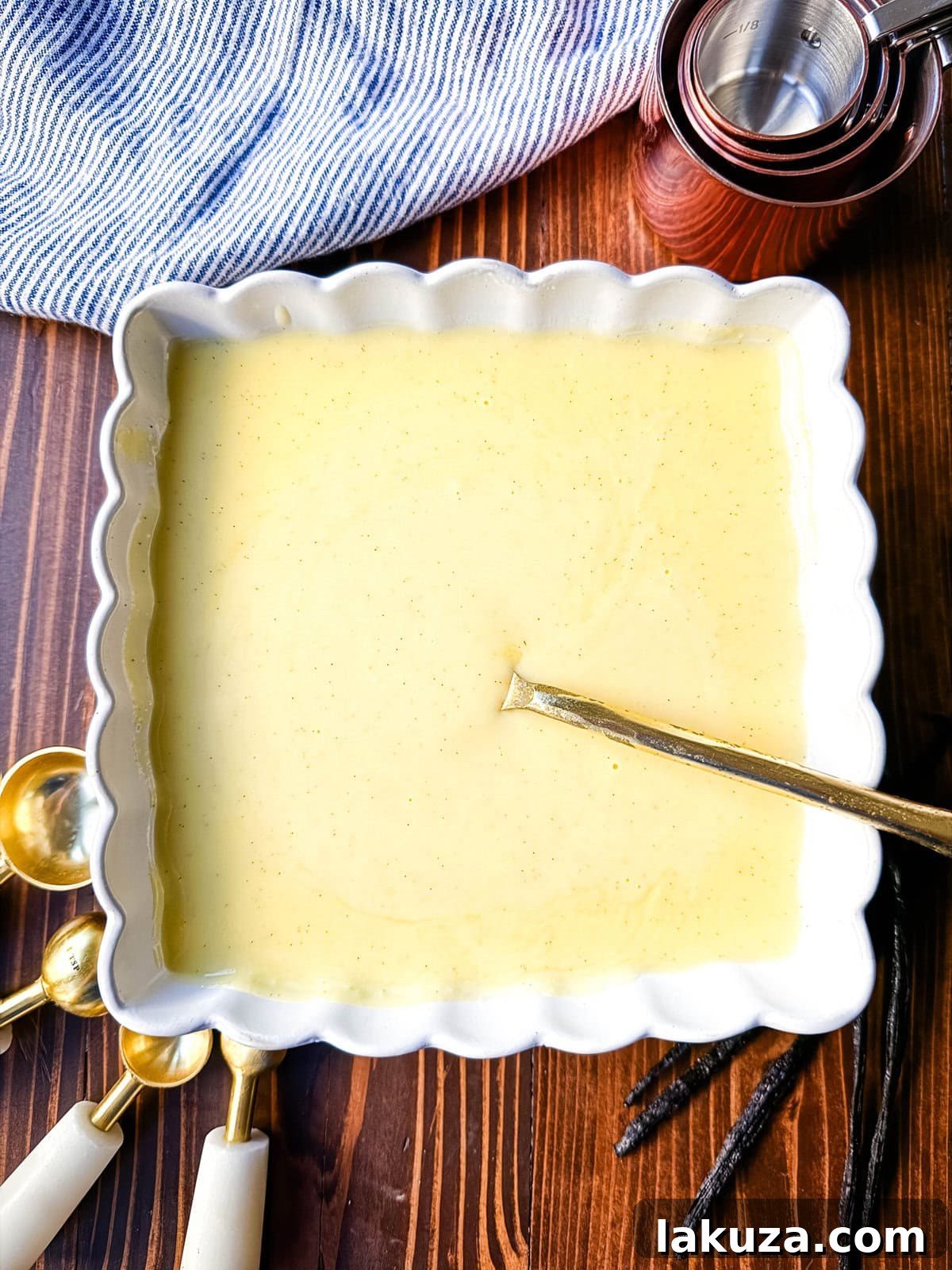
Unlock the secret to an exquisite culinary experience with the perfect vanilla sauce. This rich, velvety crème anglaise, a classic French custard sauce, is deceptively simple to prepare and transforms ordinary desserts into extraordinary indulgences. Crafted from basic ingredients like cream, milk, egg yolks, sugar, and, most importantly, high-quality vanilla, this easy vanilla sauce recipe promises a creamy decadence that’s unrivaled. Whether you’re topping a warm bread pudding, drizzling it over fresh berries, or accompanying a slice of cake, homemade vanilla sauce is the ultimate enhancement.
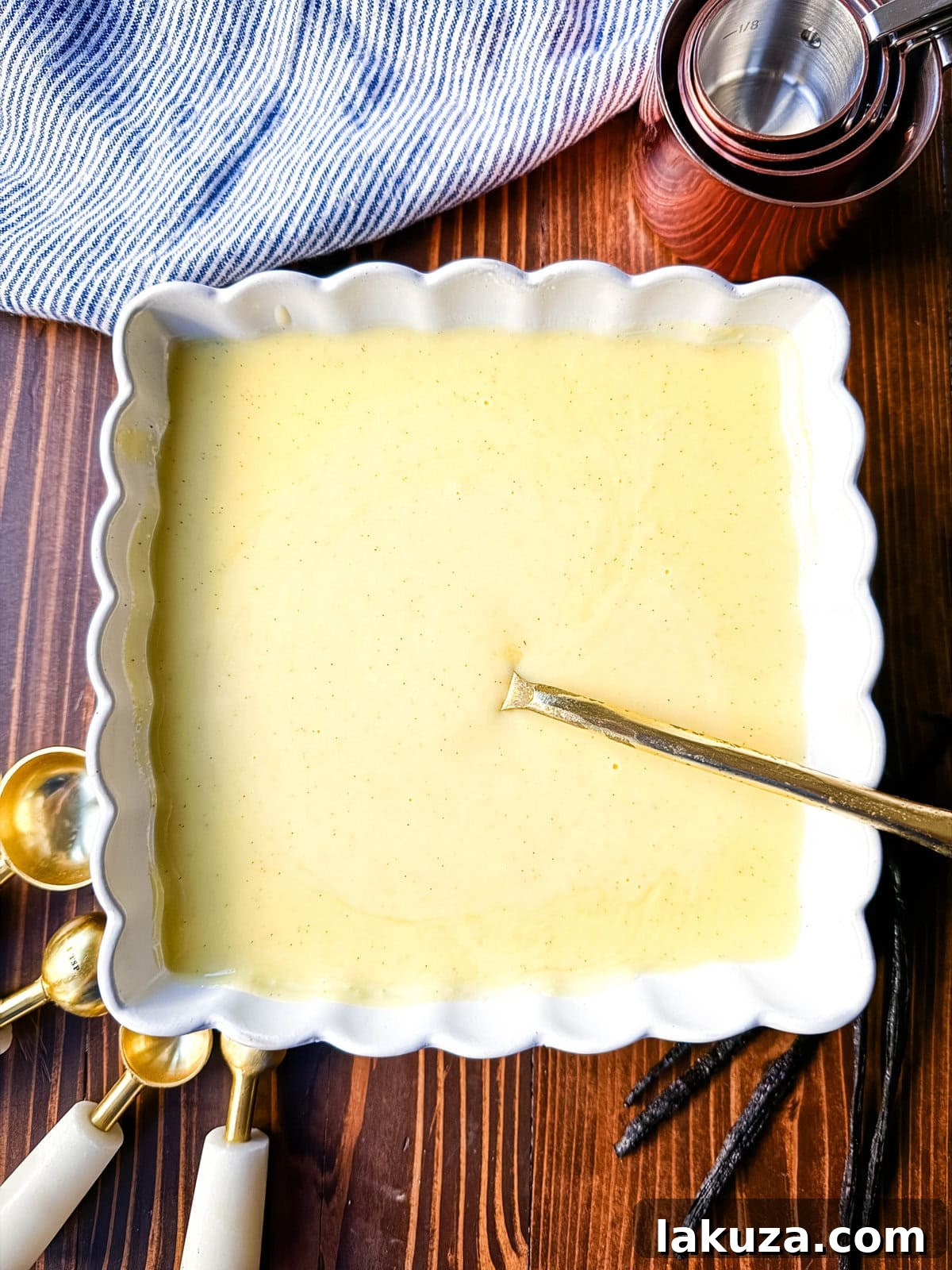
There’s an undeniable comfort and joy in a perfectly made custard or vanilla sauce. The harmonious blend of cream, milk, sugar, and eggs, infused with the aromatic essence of vanilla, creates a spoonful of happiness that’s hard to resist. I often find myself enjoying it warm, straight from the saucepan, savoring every smooth, sweet bite. It’s a versatile and beloved classic, particularly celebrated as the ultimate accompaniment to a rustic yet elegant dessert like the Best Bread Pudding Recipe. The right vanilla sauce doesn’t just add sweetness; it provides a luxurious creaminess that elevates the entire dish, making it a staple in any home baker’s repertoire.
What is Crème Anglaise? The Heart of Dessert Sauces
Crème anglaise, also affectionately known as English cream or vanilla custard sauce, is a fundamental and luxurious dessert sauce originating from French culinary traditions. At its core, it’s a pourable custard, distinguished by its silky-smooth texture and vibrant vanilla flavor. It’s made by gently cooking a mixture of egg yolks, granulated sugar, milk, and cream, all brought to life with a generous amount of pure vanilla. Unlike thicker custards, crème anglaise is designed to be a lighter, flowing sauce that beautifully complements a wide array of desserts. Its versatility shines through as it can be served warm or chilled, acting as a rich counterpoint to bread pudding, enhancing the fruitiness of tarts and fresh berries, or adding a sophisticated touch to cakes and pastries. Understanding this classic sauce is key to mastering many dessert preparations.
Why Make Your Own Vanilla Sauce? The Difference is Decadent
While store-bought options exist, creating your own homemade vanilla sauce or crème anglaise offers an unparalleled difference in quality, flavor, and texture. The process allows you to control the exact ingredients, ensuring you use only the freshest eggs, rich dairy, and, critically, the highest quality vanilla. This control means a sauce free from artificial flavors, preservatives, and unnecessary additives, resulting in a cleaner, more intense vanilla flavor that truly shines. The texture of homemade crème anglaise is also superior – a silky, flowing consistency that coats the back of a spoon beautifully, unlike the often gloopy or overly thick texture of commercial varieties. The satisfaction of whisking together simple ingredients to create such a decadent and versatile topping is immensely rewarding, guaranteeing a dessert experience that is truly a cut above.
Essential Vanilla Sauce Ingredients for the Perfect Crème Anglaise
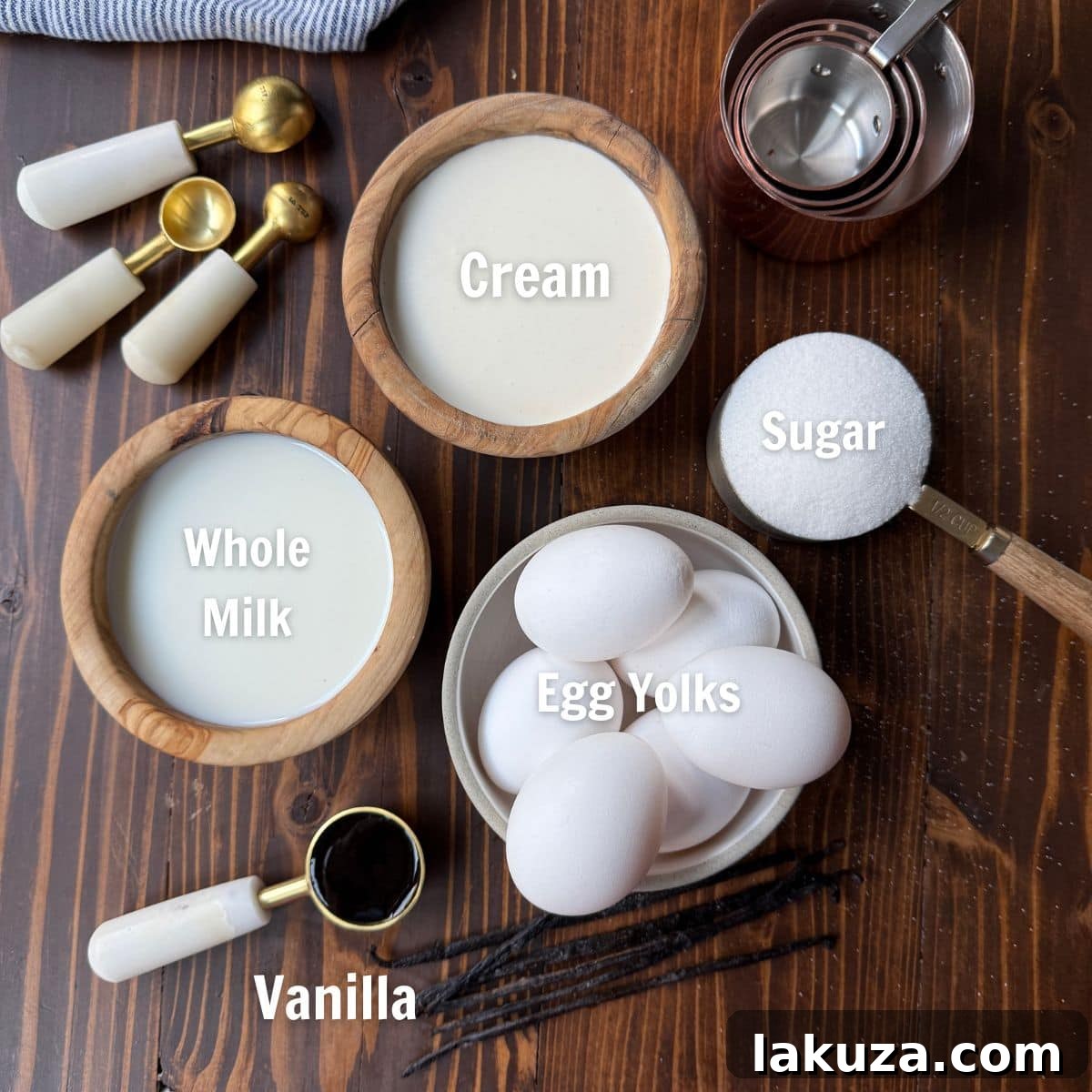
This classic vanilla custard sauce, also known as crème anglaise, is built upon a foundation of simple, accessible ingredients. The beauty lies in their quality and the careful balance in preparation. You likely have most of these staples already in your refrigerator, ready to be transformed into a luxurious dessert topping.
- Whole Milk: Using whole milk is highly recommended for its higher fat content, which contributes significantly to the sauce’s richness and creamy mouthfeel. While 2% milk can be used, it will result in a slightly lighter sauce. For an even more decadent crème anglaise, consider substituting some or all of the whole milk with half-and-half.
- Heavy Cream: This is the secret to achieving that luscious, velvety smooth, and undeniably creamy texture that defines a perfect crème anglaise. The high-fat content of heavy cream ensures a rich body that beautifully coats any dessert it accompanies.
- Egg Yolks: The star of any custard, egg yolks are crucial for both flavor and texture. They act as the primary thickener, giving the sauce its rich, creamy consistency and a beautiful pale yellow hue. For an intensely rich custard flavor, six large egg yolks are ideal. However, if you prefer a slightly less “custardy” profile, you may reduce the quantity to 4 or 5 egg yolks without sacrificing too much body.
- Sugar: Granulated sugar is the sweetener of choice for this recipe, providing the perfect balance without overpowering the delicate vanilla flavor. It’s essential to whisk the sugar thoroughly with the egg yolks until the mixture is pale and smooth before incorporating the warmed milk and cream. This step helps to dissolve the sugar evenly and prevents a grainy texture in the final sauce.
- Vanilla Bean Paste or High-Quality Vanilla Extract: Given that vanilla is in the name, its quality is paramount. Vanilla bean paste is often preferred for its intense flavor and the beautiful visual flecks of vanilla bean it provides. Alternatively, a high-quality pure vanilla extract can yield excellent results. If you have access to a fresh vanilla bean, scraping the seeds directly into the sauce offers the most authentic and aromatic experience. Always remember to add the vanilla once you remove the sauce from the heat to preserve its delicate flavor compounds, as high heat can diminish its potency.
The Vanilla Secret: Opt for Premium Quality
For a truly exceptional vanilla sauce, the choice of vanilla is critical. Prioritize using vanilla bean paste, fresh vanilla beans, or a pure, high-quality vanilla extract. These superior options provide a depth of flavor that artificial alternatives simply cannot match. Brands like Nielsen-Massey offer excellent vanilla bean paste that delivers both rich flavor and appealing visual flecks. If using a vanilla bean, remember to split it lengthwise and scrape out the fragrant seeds to incorporate into your sauce.
Essential Equipment for Crafting Crème Anglaise
Making a flawless vanilla sauce doesn’t require a lot of specialized tools, but having the right basic equipment on hand will make the process much smoother and ensure the best results. Here’s what you’ll need:
- Heavy-Bottomed Saucepan: Essential for heating the milk and cream evenly and preventing scorching. A heavy bottom helps distribute heat more consistently, reducing the risk of your sauce sticking or burning.
- Whisk: A good quality whisk is indispensable for incorporating air into the egg yolks and sugar, and for continuously stirring the sauce as it thickens to prevent curdling.
- Heatproof Bowl: A large bowl, preferably metal or glass, is needed for whisking the egg yolks and sugar, and for tempering the yolks with the hot milk mixture.
- Fine-Mesh Sieve: Crucial for straining the finished sauce. This step removes any minuscule curdled bits or stray pieces of egg, ensuring an impeccably smooth and silky texture.
- Rubber Spatula or Wooden Spoon: Ideal for scraping down the sides of the saucepan and ensuring thorough, constant stirring, especially as the sauce thickens.
- Instant-Read Thermometer: While not strictly mandatory for experienced cooks, a thermometer is highly recommended, especially for beginners. It takes the guesswork out of thickening the sauce, ensuring it reaches the ideal temperature (165-175°F or 74-79°C) without overcooking.
- Ice Bath (Optional but Recommended): A larger bowl filled with ice water can be used to quickly cool the strained crème anglaise, stopping the cooking process and preventing further thickening or potential curdling.
How to Make the Best Vanilla Sauce for Bread Pudding (Crème Anglaise)
Crème anglaise, a lusciously smooth and velvety sauce, is a truly versatile accompaniment that elevates countless desserts, from classic bread pudding to elegant fruit tarts or as a simple drizzle over fresh berries. Achieving its ideal texture and exquisite flavor is a straightforward process when you follow these key steps:
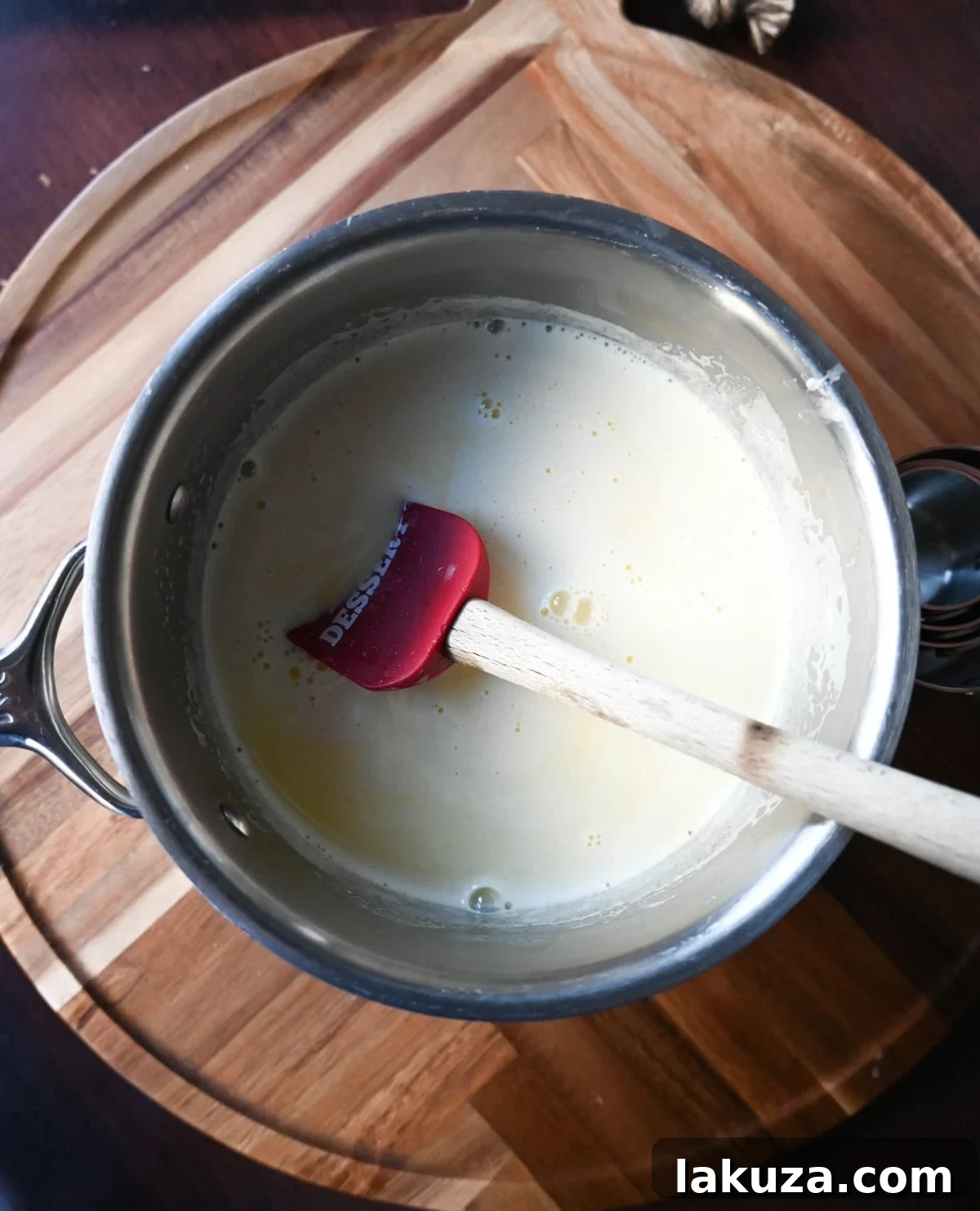
Step 1: Gently Heat Milk & Cream: Begin by combining the whole milk and heavy cream in a heavy-bottomed saucepan. Place it over medium-low heat and warm gently, stirring occasionally, until the mixture is just simmering. Look for small bubbles forming around the edges of the pan, but do not let it come to a rolling boil. Heating slowly ensures the dairy is infused with warmth without scorching, which can impart an off-flavor. The addition of heavy cream with milk enhances the overall richness and luxurious mouthfeel of the final sauce.
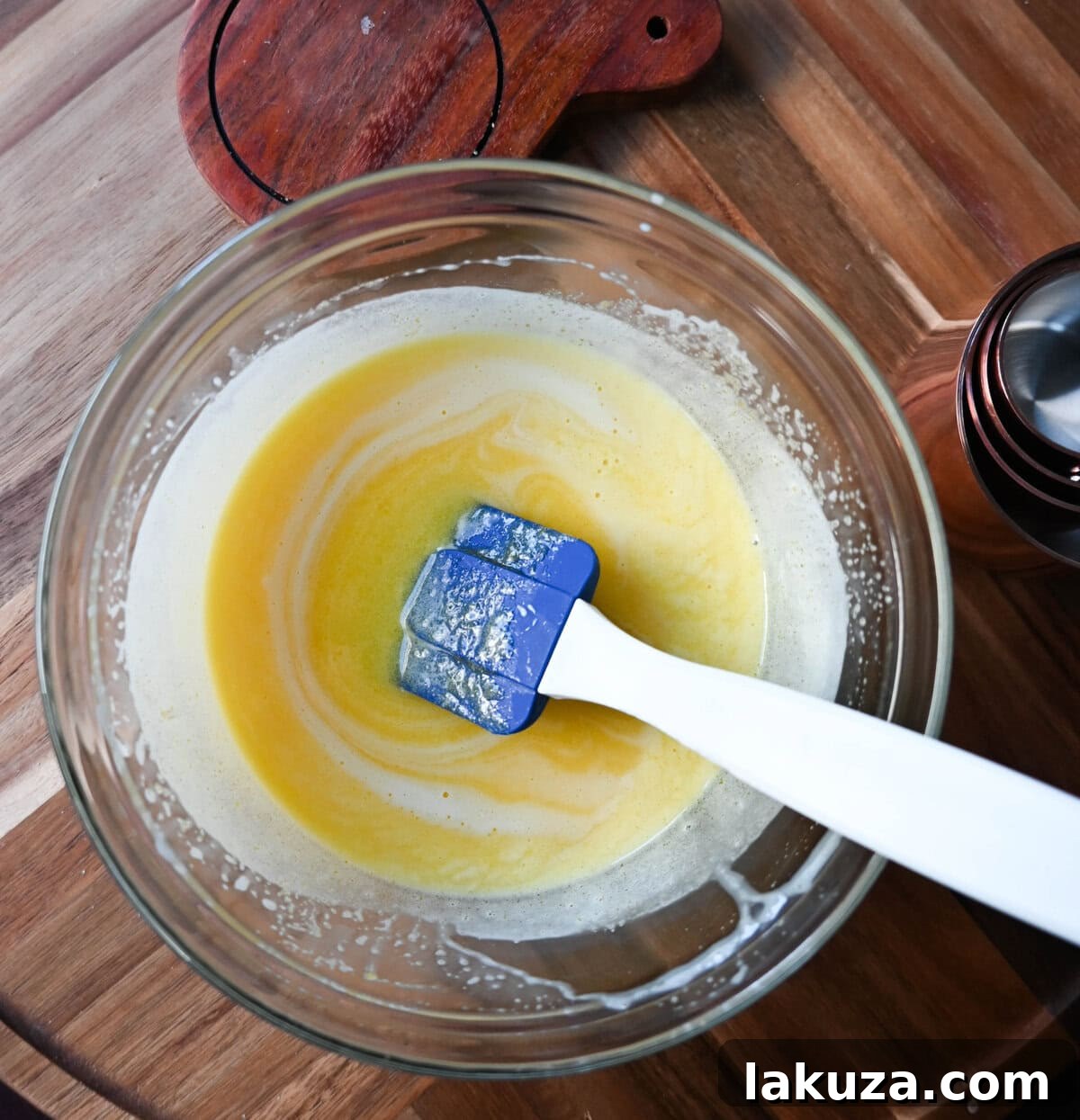
Step 2: Whisk Yolks & Sugar until Pale and Smooth: In a separate large, heatproof bowl, combine the egg yolks and granulated sugar. Using a whisk, vigorously beat the mixture until it becomes pale yellow, thickens slightly, and falls in ribbons from the whisk. This process, often called “ribboning,” helps to dissolve the sugar thoroughly into the yolks and incorporates air, creating a stable base for the custard. This step is absolutely essential to prevent the sauce from becoming grainy or developing an unpleasant texture later on.
Step 3: Tempering the Yolks to Prevent Curdling: This is perhaps the most critical step in making crème anglaise. Slowly and carefully, pour a small amount (about 1/4 to 1/2 cup) of the hot milk and cream mixture into the whisked egg yolks, whisking constantly and vigorously. The goal here is to gradually raise the temperature of the egg yolks without scrambling them. Continue to add the hot dairy in a slow, steady stream while whisking until about half of the warm mixture has been incorporated. This process effectively “tempers” the yolks, preventing them from curdling when they are finally added back to the hot saucepan.
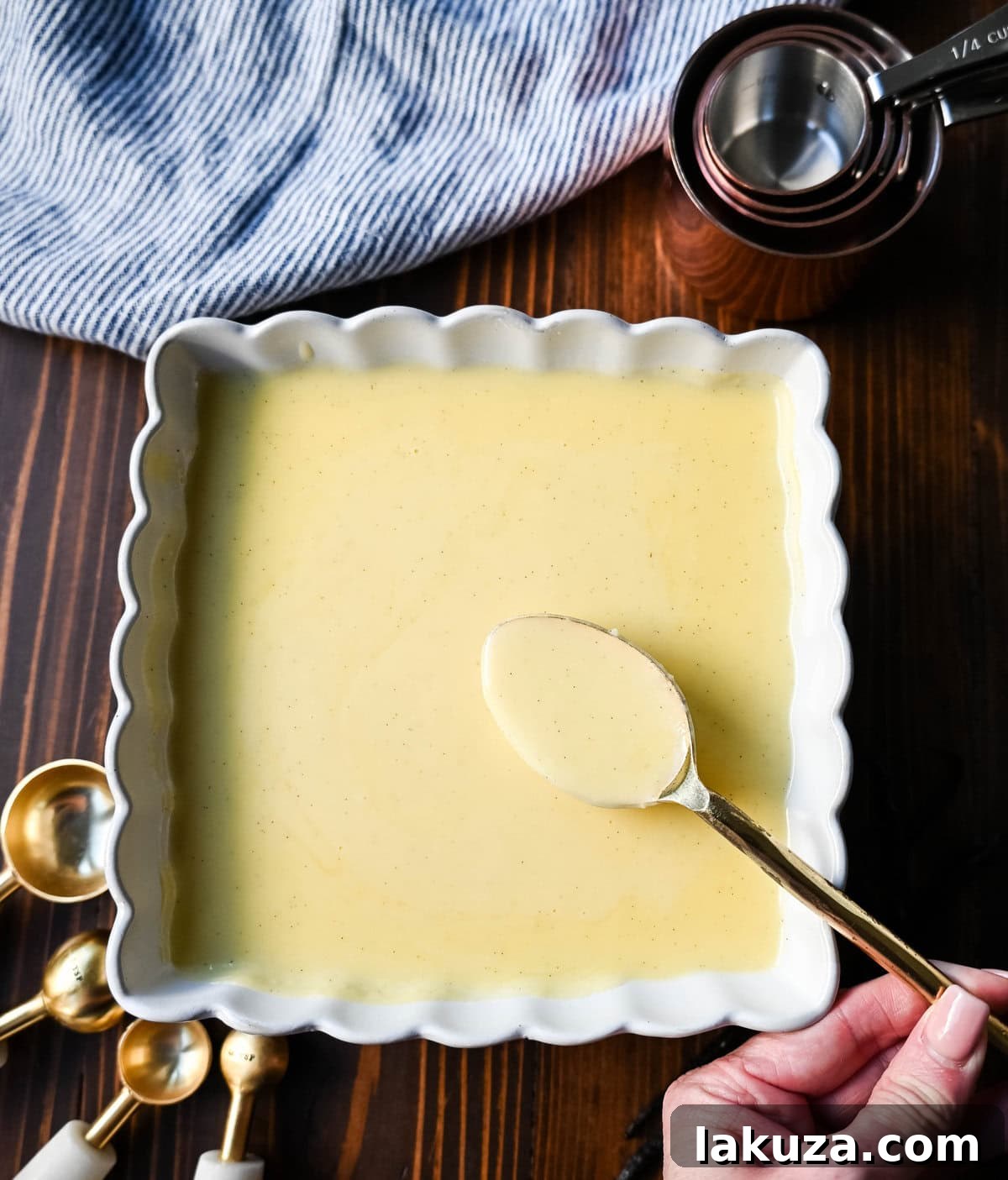
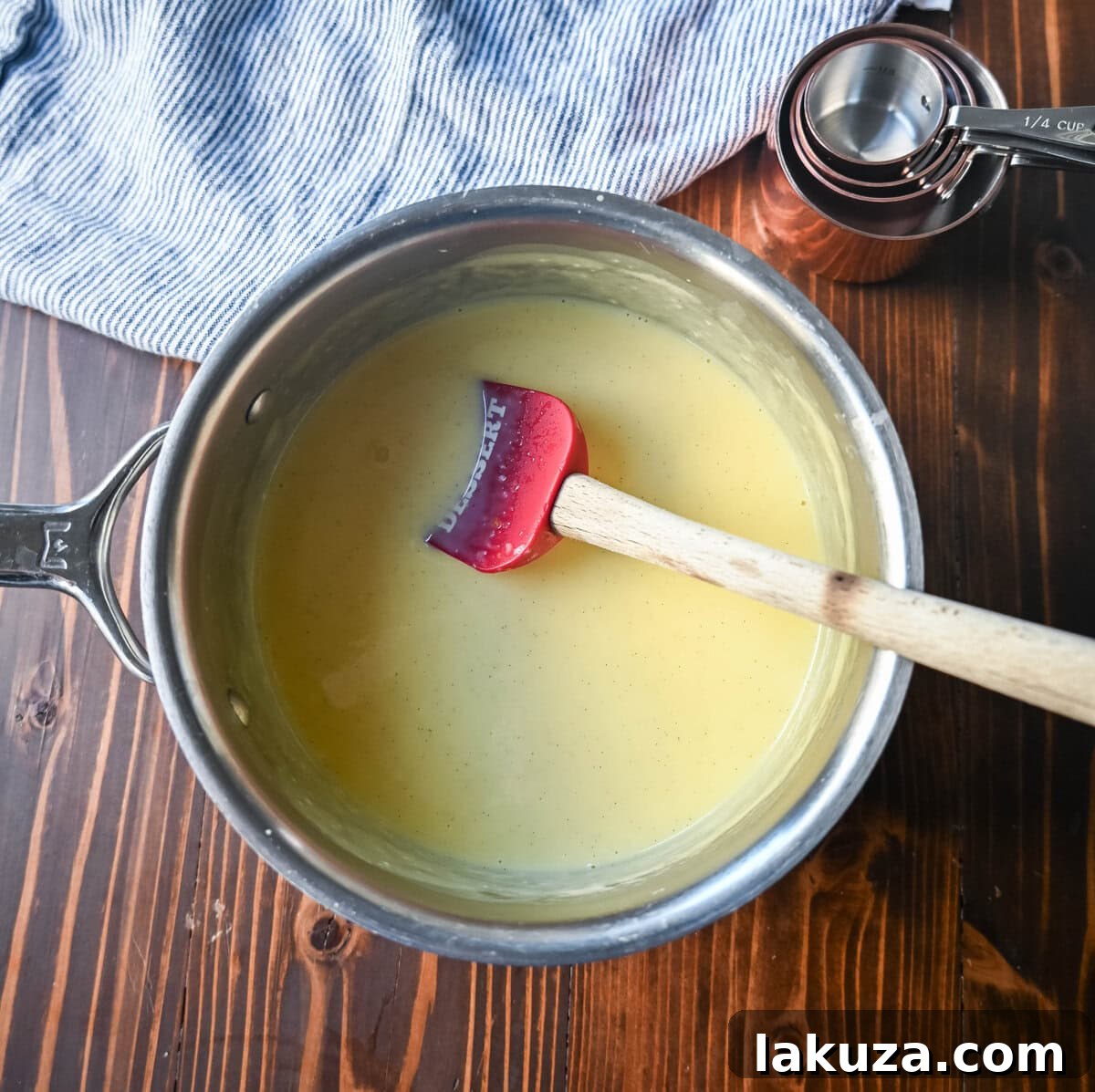
Step 4: Thicken the Sauce over Gentle Heat: Once tempered, return the entire egg yolk mixture to the saucepan with the remaining warmed milk and cream. Place the saucepan back over low to medium-low heat. Stir constantly with a rubber spatula or wooden spoon, scraping the bottom and sides of the pan to ensure even cooking and prevent sticking. Continue to cook until the sauce thickens enough to coat the back of a spoon, leaving a clear path when you draw your finger across it. This typically occurs when the sauce reaches an internal temperature of 165-175°F (74-79°C). Do not let the sauce boil, as this will cause the eggs to curdle. This stage usually takes about 5-7 minutes. Low and slow is the key to a silky finish.
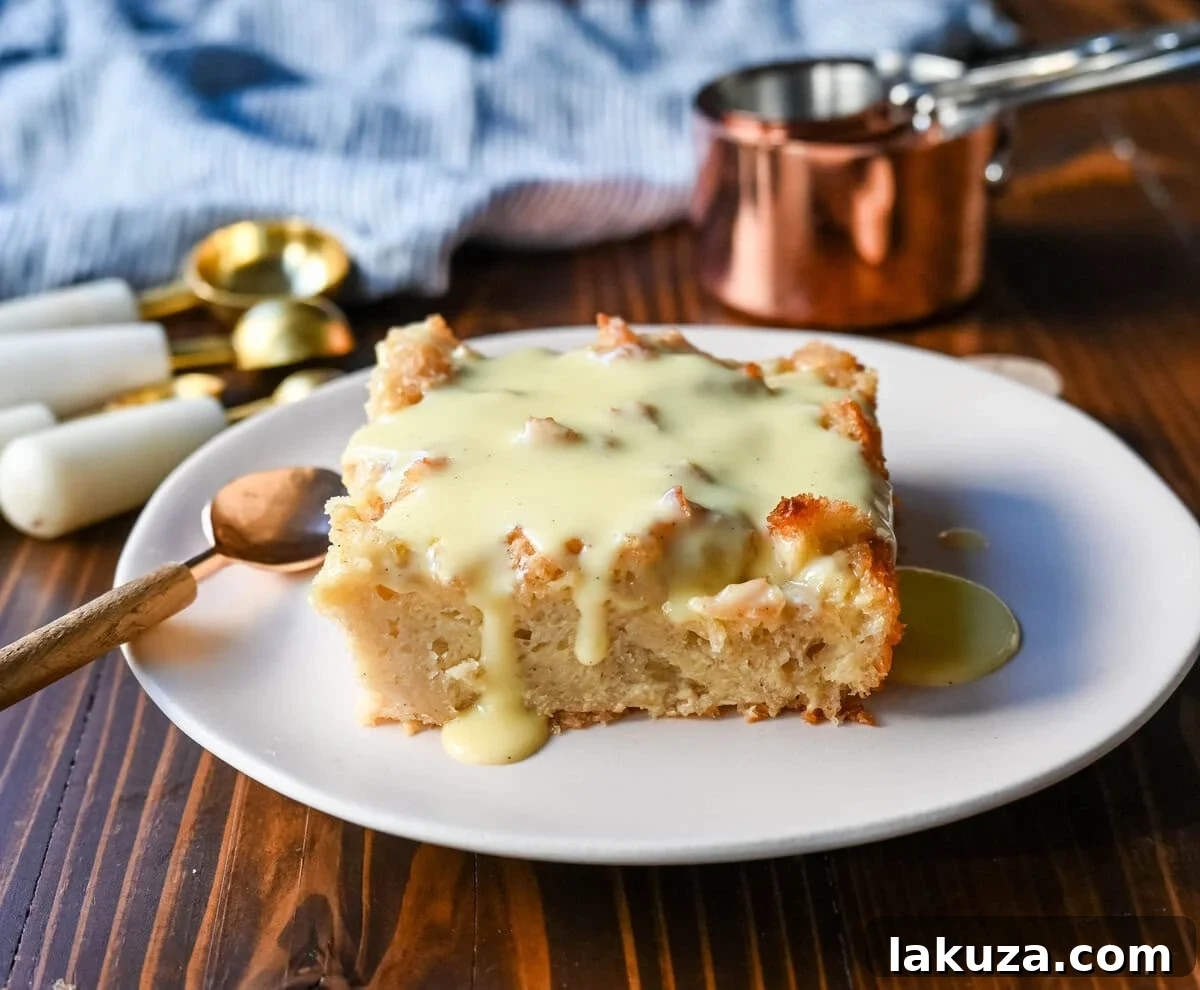
Step 5: Strain for Ultimate Smoothness: Immediately remove the saucepan from the heat and pour the vanilla sauce through a fine-mesh sieve into a clean bowl. This crucial step removes any tiny curdled bits of egg or impurities, ensuring the crème anglaise is perfectly smooth and luxurious. If you don’t have a fine-mesh strainer, an immersion blender or a regular blender can be used to smooth out any small lumps, though straining is generally preferred for a truly pristine texture.
Step 6: Incorporate Vanilla and Serve or Chill: Stir in your chosen vanilla (bean paste, extract, or scraped bean) into the strained sauce. The residual heat will be sufficient to infuse the vanilla flavor without cooking off its delicate aromatics. Your homemade vanilla sauce is now ready! Serve it warm, perhaps over a comforting slice of warm bread pudding or pie. If serving cold, allow it to cool completely before transferring to an airtight container and refrigerating. It will thicken slightly upon chilling.
Expert Tips for Perfect Crème Anglaise Every Time
Achieving a consistently perfect crème anglaise is an art, but these tips will guide you to success:
Strain for Unmatched Smoothness: Never skip the straining step. Pouring the finished sauce through a fine-mesh sieve is your insurance policy against any tiny lumps or overcooked egg particles, guaranteeing an exquisitely silky and uniform texture.
Master Temperature Control: The delicate balance of heat is paramount. Always cook crème anglaise over low to medium-low heat. Overheating is the primary cause of curdling, turning your smooth sauce into scrambled eggs. Stir constantly to ensure even heat distribution and prevent the bottom from cooking too quickly.
Embrace the Thermometer: For foolproof results, an instant-read thermometer is your best friend. Aim for a temperature range of 165 – 175 degrees Fahrenheit (74-79°C). At 165°F, the eggs are safely cooked and the sauce will be thinner; at 175°F, it will be thicker. Going above 180°F (82°C) significantly increases the risk of scrambling the eggs, so remove from heat promptly once it reaches your desired consistency within this range.
Continuous Stirring is Key: From tempering the yolks to thickening the sauce, continuous and gentle stirring prevents the eggs from settling at the bottom of the pan and cooking unevenly. Use a rubber spatula or wooden spoon to reach all corners of the saucepan.
Delightful Serving Suggestions for Your Vanilla Sauce
The beauty of homemade vanilla sauce lies in its incredible versatility. While it’s famously perfect with bread pudding, its delicate sweetness and creamy texture make it an ideal companion for a wide variety of desserts. Here are some inspired serving suggestions:
- Classic Bread Pudding: This is arguably its most iconic pairing. Serve warm crème anglaise generously over slices of warm, spiced bread pudding for the ultimate comfort dessert.
- Fresh Berries: A simple bowl of fresh strawberries, raspberries, blueberries, or a mix of seasonal berries becomes an elegant dessert when drizzled with cold crème anglaise.
- Fruit Tarts and Pies: Elevate any fruit tart, apple pie, or berry pie with a dollop or pool of vanilla sauce. Its richness beautifully complements the fruit’s tartness.
- Cakes and Puddings: Serve alongside pound cake, sponge cake, or even a simple chocolate cake. It’s also fantastic with rice pudding or sticky toffee pudding.
- Pancakes and Waffles: For a luxurious breakfast or brunch, swap out maple syrup for warm vanilla sauce. Add some fresh fruit for an extra touch.
- Ice Cream: Turn a scoop of vanilla ice cream into a more complex dessert by adding a drizzle of warm crème anglaise and perhaps some fresh fruit or toasted nuts.
- Poached Pears or Apples: The subtle sweetness of the sauce pairs wonderfully with gently poached fruits, creating a sophisticated and light dessert.
- Chocolate Lava Cakes: The cool, creamy vanilla sauce offers a beautiful contrast to the warm, gooey chocolate center of a lava cake.
Creative Variations to Elevate Your Crème Anglaise
While classic vanilla sauce is a masterpiece on its own, its simple base makes it incredibly adaptable to various flavor variations. Once you’ve mastered the basic recipe, feel free to experiment and personalize your crème anglaise:
- Liqueur-Infused: Add a splash of your favorite liqueur at the very end, after removing the sauce from the heat, just like you would with vanilla. Grand Marnier or Cointreau for an orange note, Frangelico for a hazelnut twist, rum for a Caribbean flair, or brandy for warmth can create a sophisticated adult dessert sauce.
- Citrus Zest: Infuse the milk and cream with strips of lemon or orange zest while heating. Strain out the zest before adding to the egg yolks. This adds a bright, refreshing aromatic layer that cuts through the richness.
- Coffee Crème Anglaise: Add a teaspoon of instant espresso powder or a tablespoon of strong brewed coffee to the hot milk and cream mixture for a subtle coffee flavor that pairs wonderfully with chocolate desserts.
- Spiced Crème Anglaise: For a seasonal twist, infuse the milk and cream with a cinnamon stick, a few whole cloves, or a star anise while heating. Strain before tempering the yolks. This is particularly lovely for fall and winter desserts.
- Chocolate Crème Anglaise: Stir in finely chopped dark or milk chocolate (about 2-3 ounces) to the hot, finished vanilla sauce (before adding vanilla). The residual heat will melt the chocolate, transforming it into a rich, velvety chocolate custard sauce.
- Lavender Crème Anglaise: Gently steep a small amount of food-grade dried lavender flowers in the milk and cream as it heats. Strain well before continuing with the recipe for a unique floral aroma.
Storing and Reheating Your Homemade Vanilla Sauce
One of the great advantages of crème anglaise is that it can be made ahead of time, allowing for stress-free dessert preparation. Proper storage and careful reheating are key to maintaining its luxurious texture.
Storage: Once your vanilla sauce is made and strained, allow it to cool completely. To prevent a “skin” from forming on top, press a piece of plastic wrap directly onto the surface of the sauce before covering the bowl. Alternatively, transfer it to an airtight container. Store crème anglaise in the refrigerator for up to 3 days. While it’s often best enjoyed fresh, it holds up beautifully when stored correctly. Note that it will thicken slightly as it chills.
Reheating: If you wish to serve your chilled crème anglaise warm, reheat it gently to prevent curdling. Transfer the desired amount to a clean, heavy-bottomed saucepan. Heat over very low heat, stirring constantly with a whisk or rubber spatula. Do not rush this process or allow it to boil. The goal is to warm it through until it reaches your desired temperature, typically just warm to the touch, not piping hot. If it seems too thick after reheating, you can whisk in a tablespoon or two of warm milk or cream to reach the desired consistency.
Freezing: While technically possible, freezing crème anglaise is generally not recommended. The dairy and egg components can separate during thawing, resulting in a grainy or watery texture that is difficult to fully recover, even with blending. It’s always best to enjoy it fresh or within a few days of refrigeration.
FAQ’s on Making Perfect Vanilla Sauce:
Here are some detailed answers to frequently asked questions when crafting a homemade crème anglaise sauce:
Why is tempering the egg yolks so important?
Tempering is a crucial step that gradually introduces heat to the egg yolks, slowly raising their temperature. This process prevents the yolks from cooking too quickly and scrambling when they are combined with the hot milk and cream mixture. By pouring the hot liquid slowly into the yolks while constantly whisking, the heat disperses evenly, allowing the eggs to gently warm and integrate into the sauce base without curdling. I always suggest adding the warm milk one tablespoon at a time at the beginning of the tempering process, gradually increasing the amount as the egg mixture slowly warms up.
What should I do if my vanilla custard sauce curdles?
Don’t despair! If you notice your sauce starting to curdle (small lumps appearing), remove the pot from the heat immediately. First, strain the sauce through a fine-mesh sieve into a clean, cold bowl to remove the larger scrambled bits. Then, use an immersion blender to blend the sauce until smooth. If you don’t have an immersion blender, carefully transfer the sauce to a regular blender and blend until smooth. This often works wonders in salvaging a slightly curdled sauce, though the texture might be marginally thinner than a perfectly made one.
How long can crème anglaise be stored?
When properly stored in an airtight container with plastic wrap pressed directly onto its surface, crème anglaise can be safely kept in the refrigerator for up to 3 days. While it’s undeniably best enjoyed fresh for the optimal texture and flavor, it remains delicious and perfectly usable for a few days. It can be served cold directly from the fridge or gently reheated following the instructions above.
Is there a way to thicken vanilla sauce without eggs?
Yes, you can create a custard-like sauce thickened with cornstarch or arrowroot powder instead of eggs. To do this, create a slurry by mixing a small amount of cornstarch with a cold liquid (milk or water) before whisking it into the hot milk and cream mixture. However, it’s important to note that while this method will thicken the sauce, the flavor and texture will differ slightly from a traditional egg-based crème anglaise. Egg yolks provide a unique richness and silken mouthfeel that starches cannot fully replicate.
Can I make crème anglaise with dairy-free milk?
While traditional crème anglaise relies on dairy for its richness, you can experiment with dairy-free alternatives. Full-fat coconut milk or a creamy oat milk can provide a good base. Be aware that the flavor profile will change, and the sauce might not achieve the exact same velvety texture as its dairy counterpart. You might need to adjust the amount of egg yolks slightly or add a touch more starch for stability.
Troubleshooting Tips for Your Crème Anglaise:
Even experienced cooks can encounter hiccups. Here are solutions to common issues you might face when making vanilla sauce:
Sauce Too Thin? If your crème anglaise isn’t thickening sufficiently, continue cooking it over very low heat, stirring constantly, for a few more minutes. Ensure you are scraping the bottom and sides of the pan. The key is patience; it can take time for the eggs to reach their thickening point. If it’s still too thin after chilling, consider increasing the number of egg yolks slightly (e.g., from 5 to 6) in your next batch for a richer, thicker sauce. A touch of cornstarch slurry (1 tsp cornstarch mixed with 1 tbsp cold milk) can also be whisked in while it’s hot, but be careful not to add too much.
Sauce Too Thick? If your crème anglaise becomes too thick, especially after chilling, it’s an easy fix. Simply whisk in a small amount of warm milk or cream, one tablespoon at a time, until you reach your desired pouring consistency. Gently reheat it over low heat while stirring if you’re serving it warm.
Sauce Curdled? As mentioned in the FAQs, curdling often happens due to overheating or insufficient tempering. If you notice it, immediately remove the pot from the heat and strain the sauce through a fine-mesh sieve. Then, use an immersion blender or a regular blender to blend the sauce until smooth. While it might not be perfectly smooth as a non-curdled sauce, this can often save the batch. To prevent future curdling, always cook on low heat, stir constantly, and use a thermometer.
The Enduring Appeal of Homemade Vanilla Sauce
In conclusion, mastering the art of homemade vanilla sauce, or crème anglaise, is a rewarding endeavor that unlocks a world of dessert possibilities. Its delicate balance of sweet, creamy, and aromatic notes, derived from simple, high-quality ingredients, makes it a truly indispensable component in classic and contemporary kitchens alike. From its humble origins to its sophisticated applications, this versatile custard sauce promises to elevate any dish it graces, offering a touch of comforting decadence. By understanding its key ingredients, following careful preparation steps, and utilizing helpful troubleshooting tips, you too can create a flawless crème anglaise that will impress and delight. Embrace the joy of crafting this culinary staple, and savor the rich, smooth perfection it brings to every dessert.
Explore Our Bread Pudding Recipes:
Salted Caramel Bread Pudding
Croissant Bread Pudding
Pumpkin Praline Bread Pudding
Best Bread Pudding
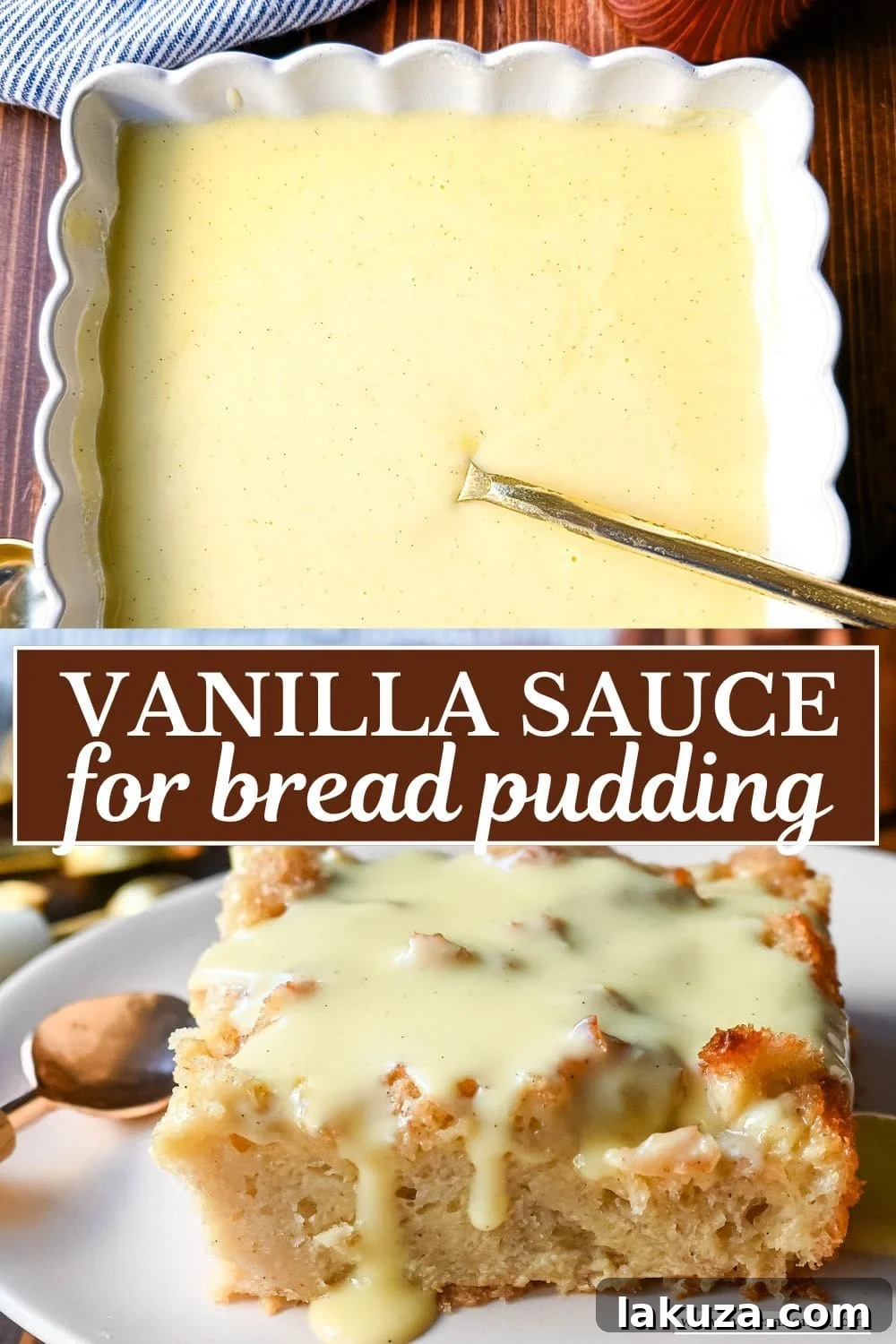
Vanilla Sauce for Bread Pudding (Creme Anglaise)
Ingredients
- 1 cup Whole Milk
- 1 cup Heavy Cream
- 6 large Egg Yolks
- 2/3 cup Sugar
- 2 teaspoons Vanilla Bean Paste or Vanilla Bean Extract
Instructions
-
Heat Milk & Cream: In a heavy-bottomed saucepan over medium-low heat, combine milk and cream. Warm gently until just simmering, watching for small bubbles around the edges. Do not boil.
-
Whisk Yolks & Sugar: In a large bowl, vigorously whisk egg yolks and sugar together until the mixture is pale, smooth, and forms a ribbon when lifted.
-
Temper the Yolks: Slowly pour a small amount (about 1/4 to 1/2 cup) of the hot milk mixture into the whisked yolk mixture while whisking constantly. Continue adding the hot liquid gradually until about half of it has been incorporated, ensuring the yolks are gently warmed.
-
Thicken the Sauce: Return the tempered yolk mixture to the saucepan with the remaining warm milk. Cook over medium-low heat, stirring constantly with a spatula, until the sauce thickens and coats the back of a spoon (165-175°F or 74-79°C). Avoid boiling to prevent curdling. This usually takes 5-7 minutes.
-
Strain: Immediately remove from heat and pour the sauce through a fine-mesh sieve into a clean bowl for an ultra-smooth consistency.
-
Add Vanilla & Serve: Stir in the vanilla bean paste or extract. Serve the vanilla sauce warm over desserts like bread pudding, or allow it to cool completely before chilling for later use.
Notes
Adjusting Egg Yolk Flavor: If you prefer a less pronounced egg custard flavor, you can reduce the number of egg yolks from 6 to 4-5 large yolks. This will result in a slightly thinner sauce.
Serving Suggestion: This crème anglaise is the perfect accompaniment to the Best Bread Pudding Recipe.
Nutrition
Nutrition information is automatically calculated, so should only be used as an approximation.