
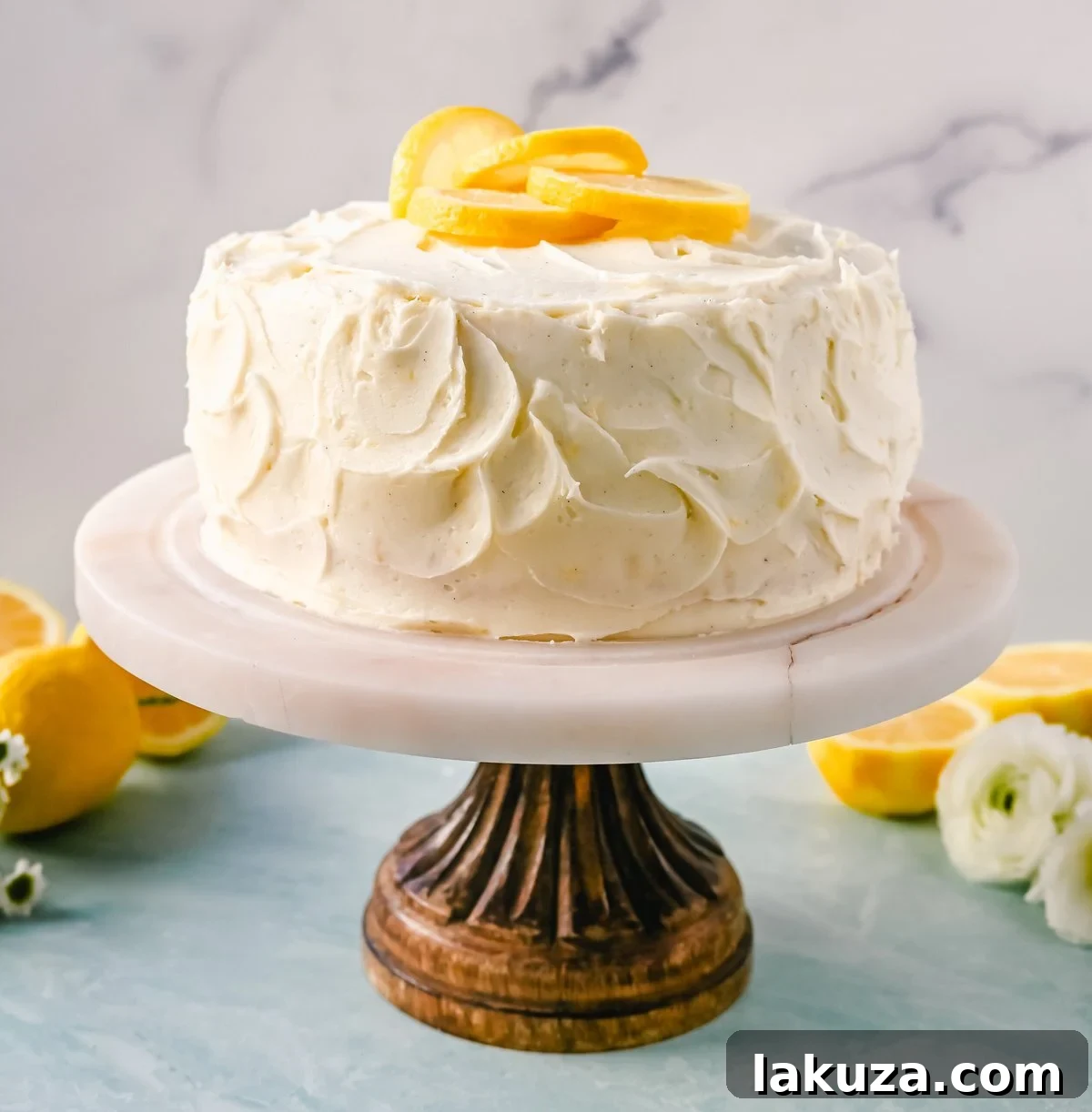
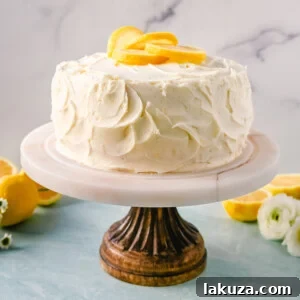
Welcome to the ultimate guide for creating the most exquisite Lemon Layer Cake! This isn’t just any lemon cake recipe; it’s a culinary journey to a dessert that is consistently moist, incredibly light, and delicately fluffy. Infused with the bright zest and vibrant juice of fresh lemons, then generously layered with tangy lemon curd and crowned with a rich, creamy lemon cream cheese frosting, this cake truly embodies pure citrus perfection. Prepare to delight your senses with a treat that promises to be the lemon cake of your most delightful dreams.
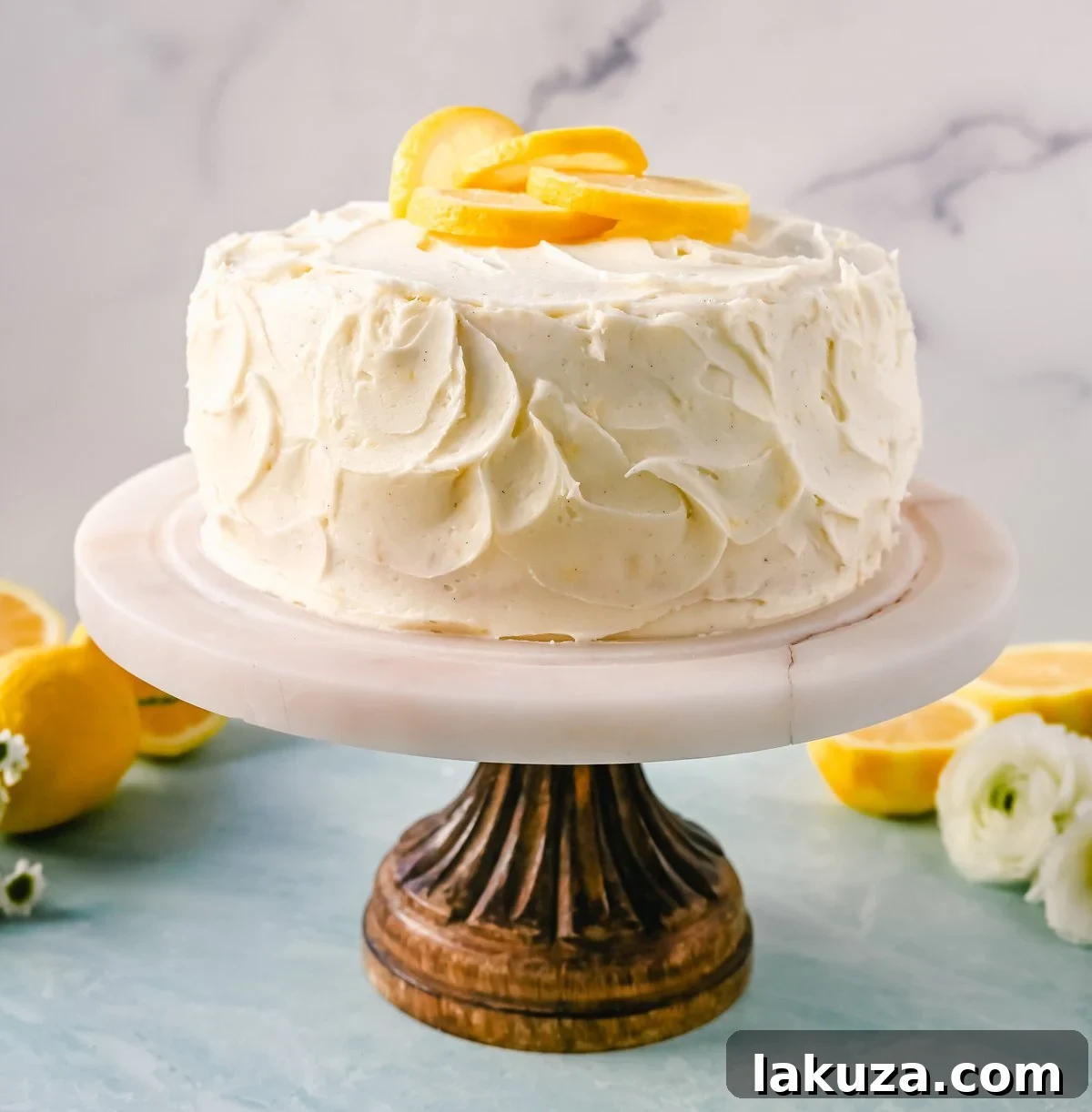
There’s something uniquely satisfying about baking a cake from scratch, especially when it’s destined to be the centerpiece of a celebration or a comforting indulgence. While my cake recipes prioritize authentic flavors and fresh ingredients over overly complicated techniques, the results are always extraordinary. This lemon cake, in particular, is designed to be approachable for bakers of all skill levels, ensuring a rewarding experience that culminates in a dessert so delicious, you might just be tempted to enjoy the frosting with a spoon!
Why This Lemon Layer Cake Will Become Your Go-To Recipe
This isn’t merely a cake; it’s an experience. Our Lemon Layer Cake stands out for several compelling reasons, making it an instant favorite:
- Unmatched Texture: Expect nothing less than a light, fluffy, and exceptionally moist lemon cake. The careful balance of ingredients ensures a tender crumb that practically melts in your mouth, far from any dry, dense disappointments.
- Dynamic Lemon Flavor: We harness the power of fresh lemons, incorporating both zest and juice into the cake layers, the lemon curd, and the frosting. This multi-layered approach guarantees a bright, authentic, and utterly refreshing citrus punch throughout every bite.
- Creamy Indulgence: The star of the show, beyond the cake itself, is undoubtedly the creamiest lemon cream cheese frosting. Its velvety texture and harmonious blend of sweet and tangy notes perfectly complement the cake’s vibrant flavor.
- Layers of Delight: The addition of luscious lemon curd between the cake layers is a game-changer. It introduces an extra burst of concentrated lemon flavor and a wonderfully smooth, slightly tart contrast that elevates the entire dessert.
This cake is not just a dessert; it’s a celebration of fresh, vibrant flavors and a testament to the simple joy of homemade baking.
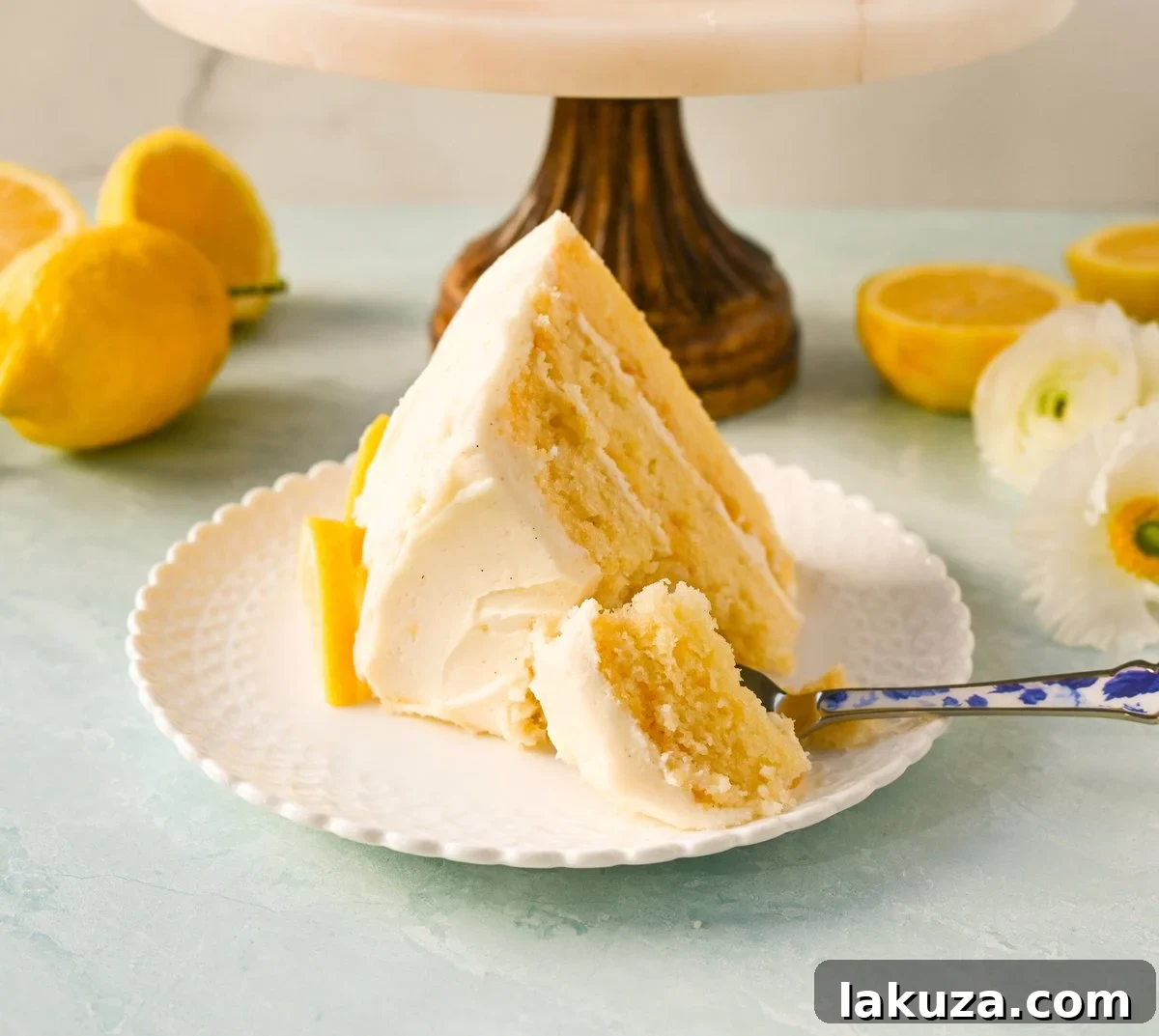
Essential Ingredients for a Divine Lemon Cake
Crafting the perfect lemon cake begins with selecting the right ingredients. Each component plays a vital role in achieving the desired texture, flavor, and overall excellence. Here’s a detailed look at what you’ll need and why:
For the Perfect Lemon Cake Layers:
- Oil: The secret to an exceptionally moist cake often lies in using oil. Opt for a neutral-flavored oil such as canola, vegetable, refined coconut oil, or a light olive oil. Ensure your oil is fresh; older oil can impart an undesirable flavor. Oil contributes to a lighter, more tender crumb compared to butter, which can sometimes make cakes denser.
- Granulated Sugar: Beyond sweetness, sugar contributes to the cake’s moisture and tender texture. It also helps to achieve that beautiful golden-brown crust during baking.
- Large Eggs: Eggs are crucial for structure, richness, and emulsification in baking. Always use large-sized eggs at room temperature for optimal results, as they incorporate more evenly into the batter.
- Fresh Lemon Juice: This is non-negotiable for a truly vibrant lemon cake. Freshly squeezed lemon juice offers a bright, natural acidity and a complex flavor profile that bottled juice simply cannot replicate. It’s the essence of the cake’s citrus identity.
- Lemon Zest: The aromatic oils in the outer peel of the lemon provide the most intense lemon flavor. Using a fine grater or zester to extract just the bright yellow part (avoiding the bitter white pith) will infuse your cake with an incredible depth of lemon aroma. It’s truly a flavor enhancer.
- Buttermilk or Whole Milk: The choice between these two liquids significantly impacts the cake’s texture and taste.
- Whole Milk: Provides a rich, moist crumb, contributing to a classic cake texture.
- Buttermilk: Adds a delightful tangy flavor and exceptional tenderness. Its acidity reacts with baking soda, promoting a lighter, fluffier crumb and a more complex flavor profile. If you don’t have buttermilk, you can easily make a substitute by adding 1 tablespoon of lemon juice or white vinegar to a liquid measuring cup, then filling it to 1 1/3 cups with whole milk. Let it sit for 5-10 minutes until it slightly curdles.
- All-Purpose Flour: This forms the foundational structure of the cake. You can use standard all-purpose flour, or for an even more tender crumb, consider using cake flour or a mixture of both. Sifting your flour helps prevent lumps and aerates it, contributing to a lighter cake.
- Baking Soda, Baking Powder, and Salt: These are the essential leavening agents that give the cake its lift and airy texture. Baking soda requires an acid (like buttermilk or lemon juice) to activate, while baking powder is double-acting. Salt, often overlooked, balances the sweetness and enhances all the other flavors.
Luscious Lemon Curd for Layers:
This creamy, tart-sweet spread, typically made with fresh lemon juice, sugar, eggs, and butter, is the vibrant heart of our lemon layer cake. It adds a wonderful burst of intense lemon flavor and a silky texture between the cake layers. You can either embark on the rewarding journey of making homemade lemon curd, or opt for the convenience of a high-quality store-bought version. Many gourmet grocery stores offer excellent options; for instance, the lemon curd found at Trader Joe’s is a popular choice for its balanced flavor.
Heavenly Lemon Cream Cheese Frosting Ingredients:
This isn’t just any frosting; it’s a velvety smooth, sweet yet fresh and tangy lemon buttercream made with:
- Sweet cream Butter (softened to room temperature for smooth creaming).
- Full-fat Cream Cheese (also softened, which is crucial for a lump-free frosting).
- Confectioners’ (Powdered Sugar) for sweetness and that signature smooth consistency.
- More fresh Lemon Juice and Lemon Zest to amplify the bright, zesty notes and cut through the richness.
- A touch of Vanilla Bean Paste (or extract) to add a subtle warmth and depth, rounding out the lemon flavor beautifully.
The combination creates an irresistible frosting that perfectly complements the zesty cake layers and tangy lemon curd.
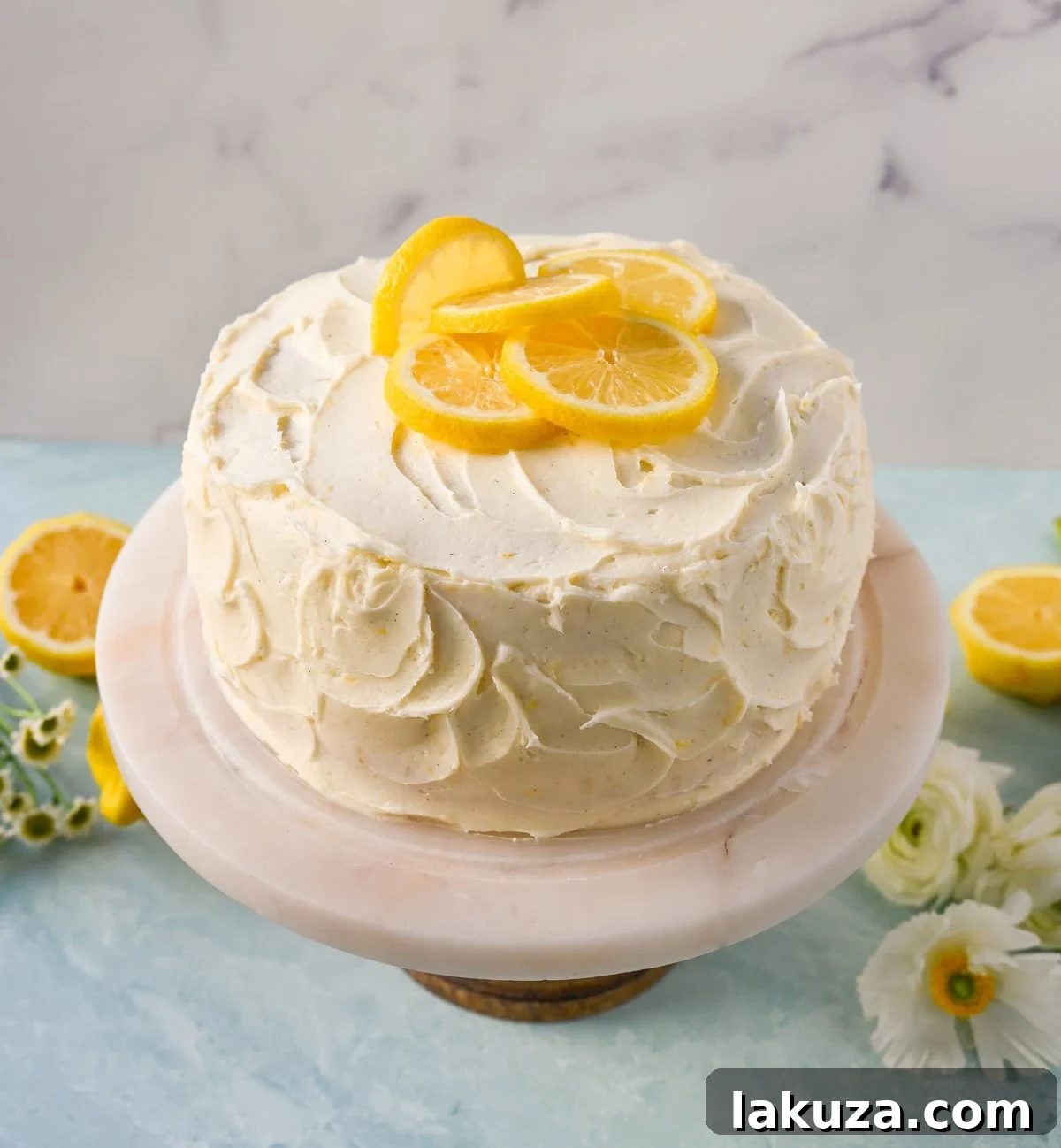
Frosting Perfection Tip:
Achieving a flawlessly frosted cake can sometimes be a challenge, but here’s a professional secret: freeze your cooled cake layers for 30 minutes to 1 hour before frosting. When cake layers are slightly firm and cold, they become much easier to handle. This stability significantly reduces the likelihood of crumbling or breaking apart as you apply the frosting, providing a solid, smooth canvas for your beautiful decoration. This step ensures clean lines and a professional finish every time.
Step-by-Step Guide to Baking the Best Lemon Cake
Creating this magnificent lemon cake is a straightforward and enjoyable process. Follow these steps for baking success:
Preparing the Cake Layers:
- Prepare Your Oven and Pans: Preheat your oven to 325 degrees Fahrenheit (160 degrees Celsius). This lower temperature ensures a more even bake and helps prevent dry edges. Next, generously prepare your cake pans. For this recipe, I recommend using two 9-inch round cake pans or three 8-inch round cake pans. Spray them thoroughly with nonstick cooking spray, making sure to coat the bottom and sides evenly. For extra security against sticking, you can also line the bottoms with parchment paper circles.
- Combine Wet Ingredients: In a large mixing bowl, combine the oil, large eggs, whole milk or buttermilk, fresh lemon juice, and vibrant lemon zest. Using an electric mixer, cream these ingredients together on medium speed for about 2 minutes. This ensures everything is well combined and aerated.
- Combine Dry Ingredients: In a separate large bowl, whisk together the granulated sugar, all-purpose flour, baking powder, baking soda, and salt. This step is important for evenly distributing the leavening agents and preventing lumps in the final batter.
- Combine Wet and Dry: Gradually add the dry ingredients to the wet mixture, mixing on low speed until just combined. Use a spatula to gently fold the ingredients, being careful not to overmix. Overmixing can develop the gluten in the flour too much, leading to a tough, dry cake. Mix only until no streaks of flour remain.
- Fill Pans and Bake: Divide the batter evenly among your prepared baking pans. If using three 8-inch pans, bake for approximately 20-26 minutes. If you opt for two 9-inch pans, the baking time will be slightly longer, around 30-36 minutes. To check for doneness, insert a toothpick into the center of a cake; it should come out clean or with a few moist crumbs attached.
- Cooling: Once baked, allow the cakes to cool in their pans on a wire rack for about 10-15 minutes before inverting them onto the rack to cool completely. This crucial step prevents the cakes from breaking apart and ensures they are firm enough to handle.
Crafting the Silky Lemon Cream Cheese Frosting:
While your cake layers are cooling, prepare the rich and zesty cream cheese frosting:
- In a large mixing bowl, combine the softened butter and softened cream cheese. Using an electric mixer, cream these two ingredients together on medium-high speed for 4-5 minutes, until the mixture is light, fluffy, and completely smooth. Be sure to scrape down the sides of the bowl frequently to ensure even mixing.
- Gradually add the powdered sugar, a cup at a time, mixing on low speed until fully incorporated. Once all the sugar is in, add the fresh lemon juice, vanilla bean paste, and lemon zest. Beat on medium-high speed for another 1-2 minutes until the frosting is velvety smooth and well combined.
- Chill the Frosting: Cream cheese frosting can be quite soft, especially in warm environments. Chill the frosting for 15-30 minutes before assembling the cake. This will make it easier to spread and hold its shape.
Assembling Your Masterpiece: The Layering Process:
- Prepare Cakes for Assembly: Once your cake layers are completely cool (and ideally, slightly chilled from the “Frosting Perfection Tip”), carefully remove them from their pans. (Refer to the detailed tips below for successful cake release).
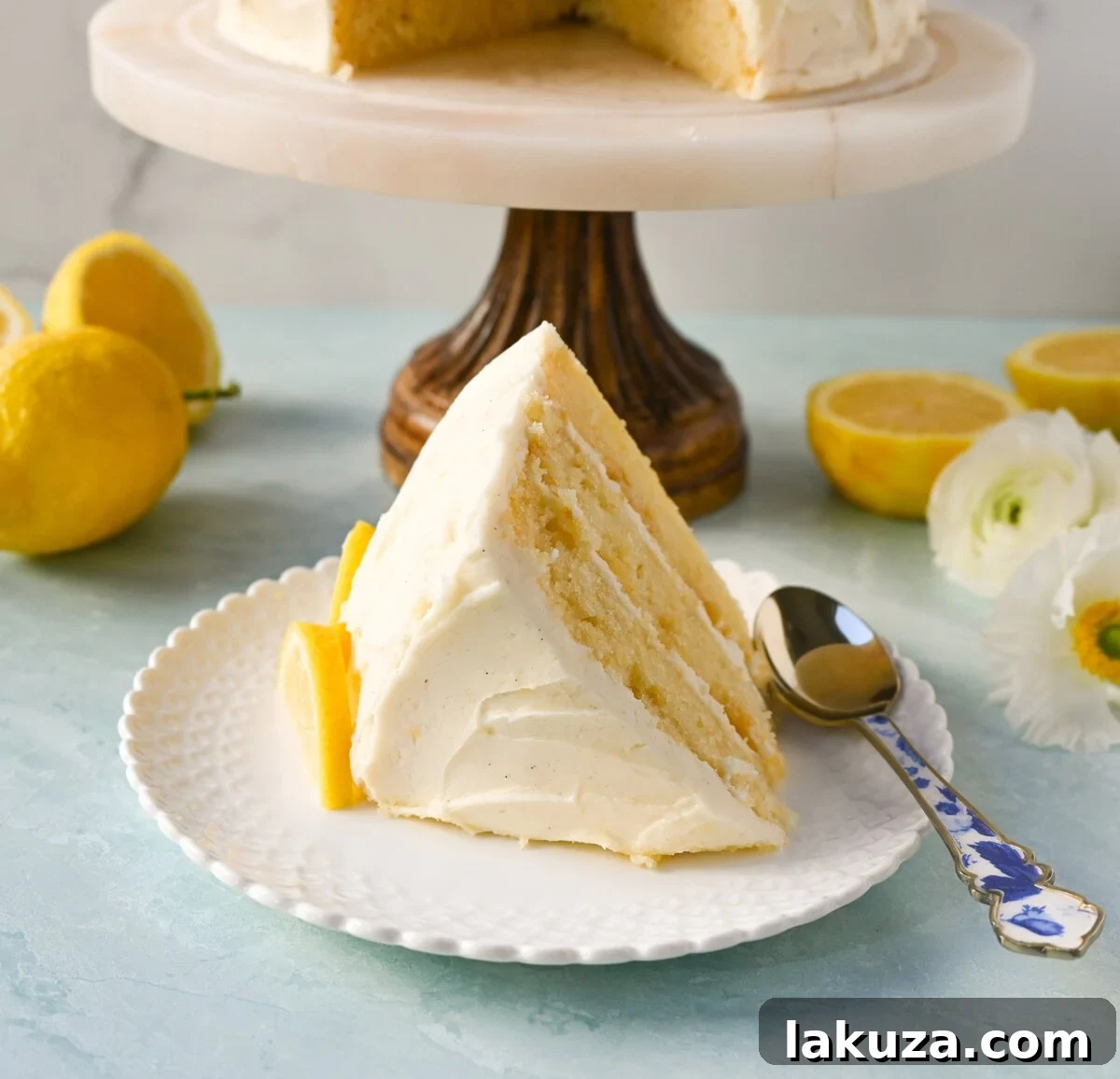
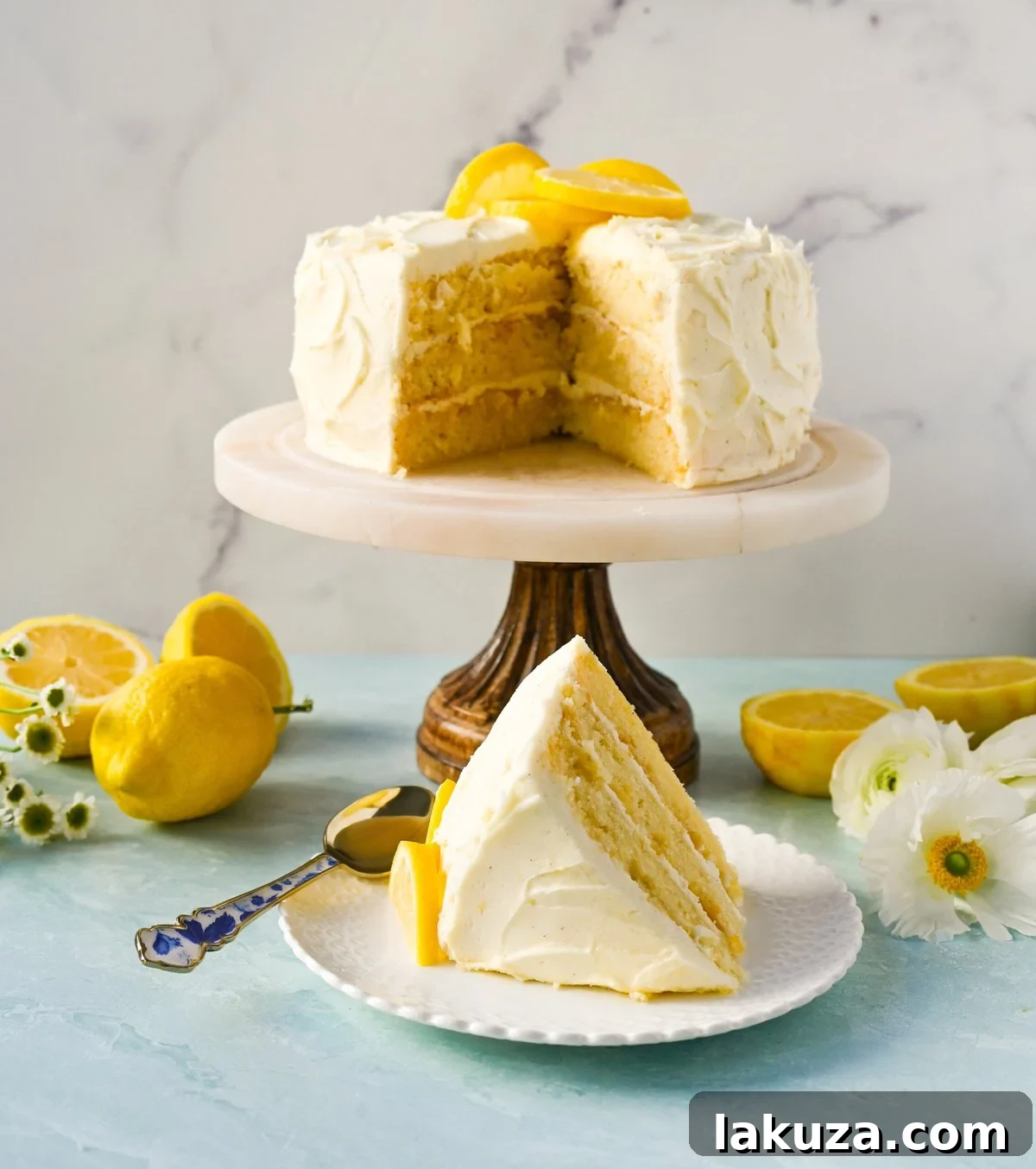
- Layer One: Place your first cooled cake layer on your serving plate or cake stand. Spread an even, generous layer of lemon curd over the top of this cake layer. Follow with a layer of the chilled lemon cream cheese frosting, spreading it smoothly over the lemon curd.
- Layer Two and Three (if applicable): Carefully place the next cake layer on top. Repeat the process: a layer of lemon curd, followed by a layer of frosting. If you have a third layer, repeat again.
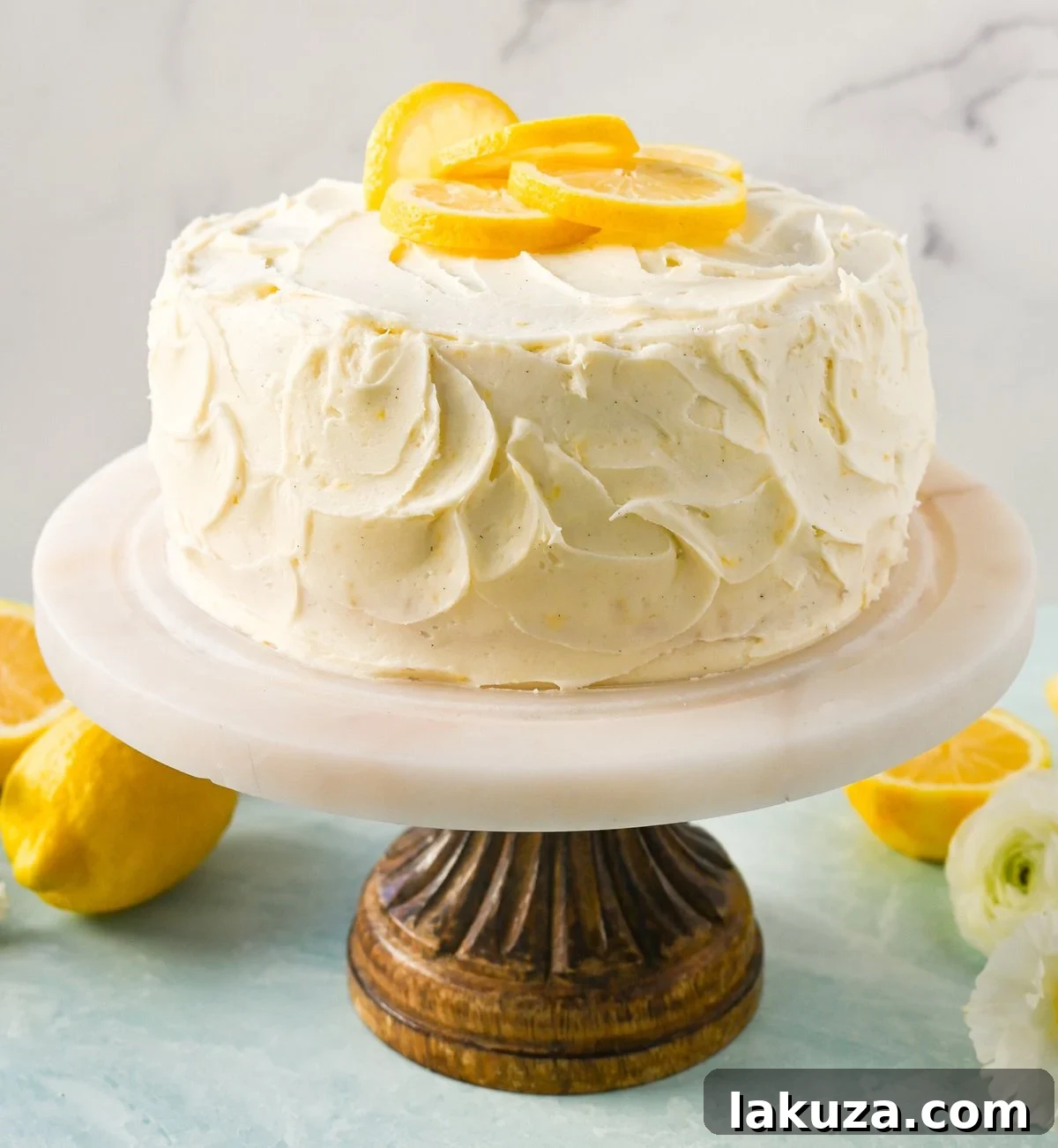
- Final Frosting: Once all layers are stacked, apply the remaining lemon cream cheese frosting to the top and sides of the entire cake. Use an offset spatula or bench scraper to achieve a smooth, professional finish.
- Chill to Set: For optimal stability and to allow the frosting to firm up, let the assembled cake chill in the refrigerator for at least 20-30 minutes before serving.
Garnishes:
Elevate the visual appeal and enhance the fresh flavor of your lemon cake with beautiful garnishes. A few simple additions can transform your dessert into a showstopper. Consider topping your finished cake with:
- Thin slices of fresh lemon or delicate dried lemon slices for an elegant touch.
- Edible flowers for a burst of color and sophistication.
- Colorful sprinkles, especially in yellow or white, for a playful presentation.
- Delicate white chocolate shavings or curls for a touch of creamy sweetness and refined texture.
- Fresh blackberries or raspberries, whose tartness beautifully complements the lemon.
Pro Tips for Lemon Cake Perfection
Achieving a truly perfect lemon cake goes beyond just following the steps. Here are some expert tips to ensure your baking experience is smooth and the final result is exceptional:
The Art of Knowing When Your Cake is Done:
Knowing precisely when your lemon cake is perfectly baked is critical for achieving that ideal, moist texture. An underbaked cake can be gooey and collapse, while an overbaked cake will be dry and crumbly. The most reliable method is the toothpick test: gently insert a toothpick or a slender cake tester into the very center of the cake. It should come out clean or with just a few moist crumbs attached. If the toothpick is wet with raw batter, the cake needs more time in the oven. Resist the urge to overbake, as even a few extra minutes can strip the cake of its precious moisture.
Choosing the Right Cake Pan Size:
The size and number of cake pans you use will impact baking time and the final height of your layers. For this lemon cake recipe, I highly recommend using either (3) 8-inch round cake pans or (2) 9-inch round cake pans. If you opt for three 8-inch cake pans, your cake layers will be thinner, resulting in a slightly faster baking time and more distinct layers. Using two 9-inch pans will yield thicker layers and require a bit more time in the oven. Always adjust baking times based on your specific oven and pan configuration.
Mastering Cake Pan Preparation and Removal
One of the most common anxieties in baking is the fear of a cake sticking to the pan. Ensuring your cake layers come out cleanly and perfectly intact is fundamental to a beautiful finished product. Here are comprehensive tips to help you achieve a flawless cake release every time:
- Properly Grease and Flour the Pans:
- Begin by thoroughly greasing the bottom and sides of your cake pans. Use either softened butter (which adds a nice flavor) or a good quality non-stick cooking spray. Be meticulous, ensuring every nook, cranny, and edge is coated.
- Next, “flour” the greased pans. Add about 1-2 tablespoons of all-purpose flour to each greased pan, then shake and rotate the pan to ensure an even coating of flour adheres to the grease. Invert the pan and tap out any excess flour. This creates a protective, non-stick barrier between the cake batter and the pan surface. For chocolate cakes, you can use cocoa powder instead of flour for a seamless look.
- Utilize Parchment Paper for the Bottom:
- For an extra layer of assurance, cut circles of parchment paper to perfectly fit the bottom of each cake pan. After greasing and flouring the sides, place the parchment circle directly on the greased bottom. You can even lightly grease and flour the parchment paper itself for ultimate non-stick protection. This virtually guarantees the bottom of your cake will release perfectly.
- Invest in High-Quality Non-Stick Pans:
- While proper preparation is key, the quality of your bakeware matters. Non-stick pans are specifically designed for easier release. If you frequently encounter sticking issues, consider investing in high-quality, light-colored non-stick pans. Lighter pans help prevent overbrowning of the crust. Many professional bakers swear by brands like USA cake pans for their durability and reliable non-stick performance.
- Allow Cakes to Cool Properly in the Pan:
- Patience is a virtue! After removing your cakes from the oven, resist the urge to immediately invert them. Let them cool in their pans on a wire rack for approximately 10-15 minutes. During this crucial cooling period, the cake’s structure sets, and it slightly contracts from the sides of the pan, making it much less prone to breaking apart when removed.
- Run a Thin Knife Around the Edges:
- After the initial cooling period, if the cake hasn’t visibly pulled away from the edges of the pan, carefully run a thin, flexible knife or an offset spatula around the perimeter of the cake. Gently press the knife against the pan wall, moving slowly to loosen any sticky spots without damaging the cake.
- Invert the Pans Carefully:
- Place a wire cooling rack directly on top of the cake pan. Holding both the pan and the rack firmly together, confidently invert them. The cake should gently slide out onto the wire rack. If you’ve used parchment paper, the release will be even smoother.
- Gentle Tap if Needed:
- If the cake seems reluctant to release, gently tap the bottom of the pan with your hand. Sometimes, a gentle jolt is all it takes to encourage the cake to drop onto the cooling rack.
Storage and Freezing Tips for Your Lemon Cake
To keep your delicious Lemon Layer Cake tasting fresh and delightful for as long as possible, proper storage is essential, especially given its creamy, perishable frosting.
- Refrigeration: Since this cake is made with a rich cream cheese frosting, it’s best to store it in the refrigerator. Cover the cake loosely with plastic wrap or place it in an airtight cake carrier to prevent it from drying out or absorbing other odors from the fridge. Stored this way, it will remain fresh for up to 4-5 days. For the best flavor and texture, allow slices to come to room temperature for about 20-30 minutes before serving.
- Freezing for Longer Storage: For extended enjoyment, this lemon cake freezes beautifully.
- Whole Cake: If freezing the entire cake, ensure it’s fully chilled and the frosting is firm. Wrap the whole cake tightly in several layers of plastic wrap, then an additional layer of aluminum foil. This double-layer protection is crucial to prevent freezer burn.
- Individual Slices: For convenience, you can also freeze individual slices. Place slices on a baking sheet and freeze until firm, then wrap each slice individually in plastic wrap and foil.
- Thawing: To thaw a frozen cake or slices, transfer them to the refrigerator and let them defrost overnight or for several hours. Once thawed, you can bring slices to room temperature for optimal flavor and texture before serving. Freezing can extend the cake’s shelf life for up to 1-2 months.
Frequently Asked Questions About Lemon Cake
Here are answers to some common questions you might have while baking this delightful lemon cake:
- Q: Can I use bottled lemon juice instead of fresh?
A: While it might seem convenient, I strongly advise against using bottled lemon juice. Freshly squeezed lemon juice is crucial for the vibrant, authentic lemon flavor that makes this cake truly special. Bottled juice often contains preservatives and lacks the bright, complex notes of fresh lemons. - Q: Can I turn this recipe into cupcakes?
A: Absolutely! This recipe adapts beautifully to cupcakes. Simply divide the batter into lined muffin tins, filling each about two-thirds full. Bake at the same temperature (325°F/160°C) for a shorter duration, typically 18-25 minutes, or until a toothpick inserted comes out clean. The frosting recipe is also perfect for piping onto cupcakes. - Q: How far in advance can I make this cake?
A: You can bake the cake layers up to 2-3 days in advance, wrap them tightly, and store them at room temperature (or freeze them for longer). The lemon curd can be made up to a week in advance and stored in the refrigerator. The frosting is best made closer to assembly, but can be made a day ahead and stored in the fridge, then re-whipped briefly before use. The assembled cake is best enjoyed within 4-5 days, stored in the refrigerator. - Q: What if my cream cheese frosting is too thin or too thick?
A: If your frosting is too thin, it’s likely due to overly warm butter or cream cheese, or too much liquid. Try chilling it for 30 minutes, then re-whipping. If it’s still too thin, gradually add more powdered sugar (1/4 cup at a time) until the desired consistency is reached. If it’s too thick, add a small amount of milk (1 teaspoon at a time) until it’s spreadable. Ensure your butter and cream cheese are softened, not melted, for the best consistency. - Q: What kind of oil is best for this cake?
A: A neutral-flavored oil like canola, vegetable, or even a light olive oil (not extra virgin, which can be too strong) is ideal. These oils contribute significant moisture without imparting a distinct flavor, allowing the lemon to shine.
Popular Lemon Dessert Recipes:
Lemon Olive Oil Cake
Lemon Raspberry Cake
Lemon Blueberry Cake
Lemon Cupcakes
Lemon Cake
Ingredients
For the Cake:
- 1 cup Oil (canola, vegetable, coconut, or olive)
- 3 large Eggs
- 1 1/3 cups Buttermilk or Whole Milk
- 2 Tablespoons Fresh Lemon Zest
- 1 Tablespoon Fresh Lemon Juice
- 2 cups Granulated Sugar
- 2 cups All-Purpose Flour
- 1 teaspoon Baking Powder
- 1/2 teaspoon Baking Soda
- 1 teaspoon Salt
For the Frosting:
- 1 cup Salted Butter (softened)
- 1 (8-ounce) pkg. Cream Cheese (softened)
- 4 1/2 to 5 cups Powdered Sugar
- 1 teaspoon Fresh Lemon Zest
- 1 to 2 Tablespoons Fresh Lemon Juice
- 1 teaspoon Vanilla Bean Paste
For Assembling:
- 8 ounces Lemon Curd
Instructions
Cake Preparation:
-
Preheat oven to 325 degrees F (160 C). In a large mixing bowl, add oil, eggs, whole milk or buttermilk, lemon juice, and lemon zest. Cream for 2 minutes. In a separate large bowl, add sugar, flour, baking powder, baking soda, and salt. Stir into the wet egg mixture and fold until just combined.
-
Generously spray two 9-inch or three 8-inch cake pans with nonstick cooking spray. Refer to the blog post above for detailed tips on how to prepare the pans and remove the cake once it is done baking.
-
Divide the batter evenly into the prepared baking pans. If using three 8-inch pans, bake for 20-26 minutes or until a toothpick comes out clean. If using two 9-inch pans, bake for 30-36 minutes. Cool completely on a wire rack.
Frosting Preparation:
-
In a large bowl, cream together softened butter and softened cream cheese for 4-5 minutes until light and fluffy, scraping the sides of the bowl often. Gradually add powdered sugar, fresh lemon juice, vanilla bean paste, and lemon zest, creaming until smooth and well combined. Chill the frosting for 15-30 minutes before use.
To Assemble the Cake:
-
Remove cooled cake layers from pans. Spread an even layer of lemon curd on top of the first cake layer. Then, spread a layer of the prepared lemon cream cheese frosting over the lemon curd. Place the next cooled cake layer on top and repeat with another layer of lemon curd and frosting. Continue for all layers. Finish by frosting the top and sides of the entire cake.
-
Let the assembled cake chill in the refrigerator for 20-30 minutes to allow the frosting to set up. Garnish as desired with fresh lemon slices, zest, or berries.
-
Store the covered cake in the refrigerator.
Notes
How to know when the lemon cake is done baking?
Knowing when your lemon cake is perfectly baked is crucial to achieving the ideal texture. Use a toothpick or cake tester inserted into the center of the cake – it should come out clean or with a few moist crumbs attached. If it is completely wet, the cake needs to bake longer. Avoid overbaking, as this can lead to a dry cake.
Frosting Tip:
To make this lemon cake easier to frost, I suggest freezing the cake layers for 30 minutes to 1 hour before frosting. When a cake is frozen, it becomes firmer and more stable. This makes it less likely to crumble or break apart while you’re applying the frosting. The firmness provides a solid foundation for the frosting to adhere to.
Nutrition
Nutrition information is automatically calculated, so should only be used as an approximation.
Additional Info
There you have it – a comprehensive guide to baking the best lemon cake you’ve ever tasted. With its moist layers, zesty lemon curd, and dreamy cream cheese frosting, this cake is sure to become a beloved classic in your home. Happy baking!