
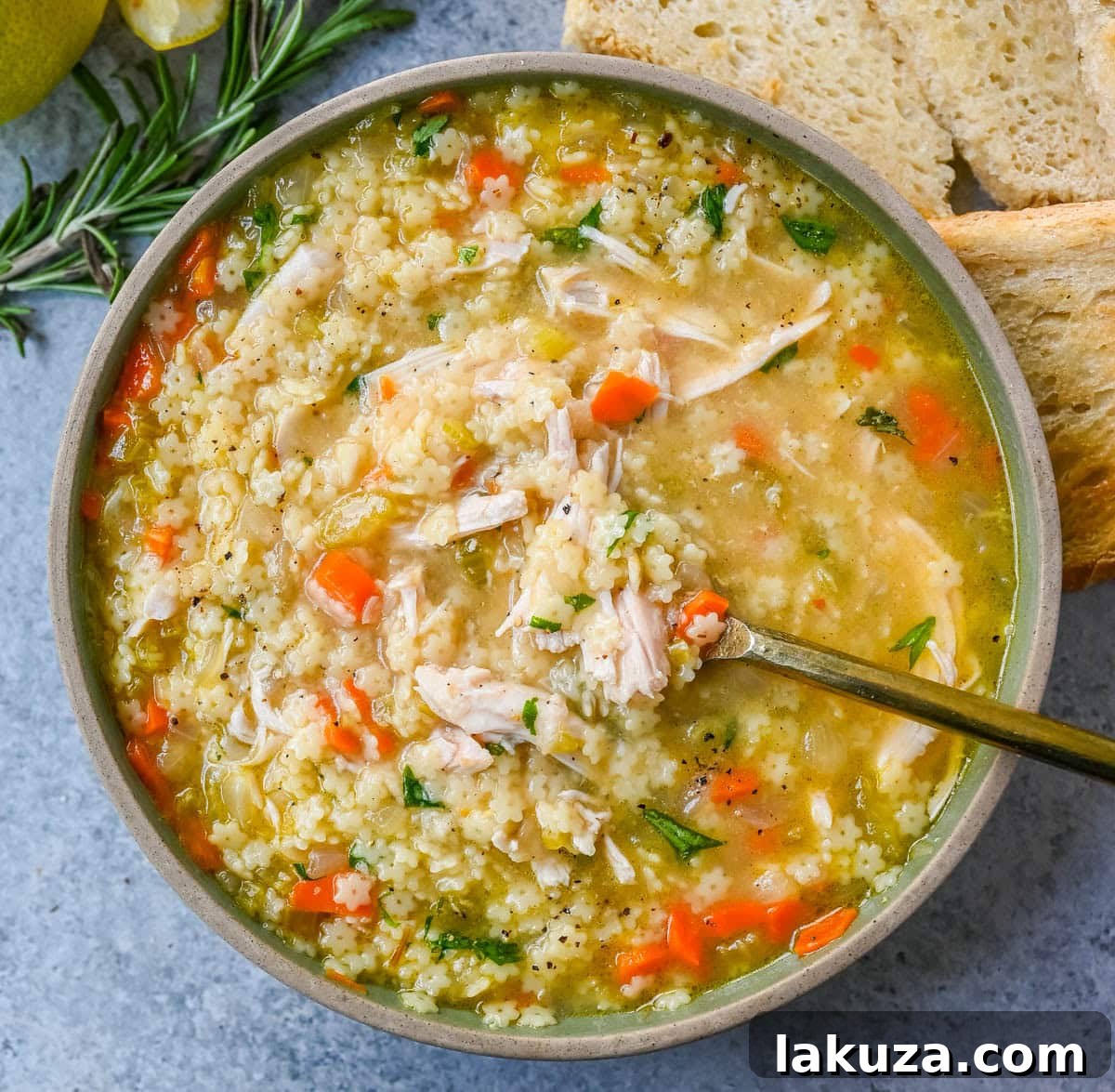
Welcome to the heartwarming world of **Italian Pastina Soup**, a timeless culinary embrace often lovingly dubbed “Italian penicillin.” This isn’t just any soup; it’s a cherished classic, woven into the fabric of Italian family traditions, offering unparalleled comfort with its delicate tiny pasta, nourishing broth, and simple yet profound flavors. Whether you’re seeking solace on a chilly evening, a gentle meal during recovery, or a nostalgic taste of home, this simple recipe, passed down through generations, promises to deliver maximum coziness and a soothing touch to both body and soul. Prepare to discover the best homemade Italian soup recipe that transcends mere sustenance, becoming a true expression of care and warmth.
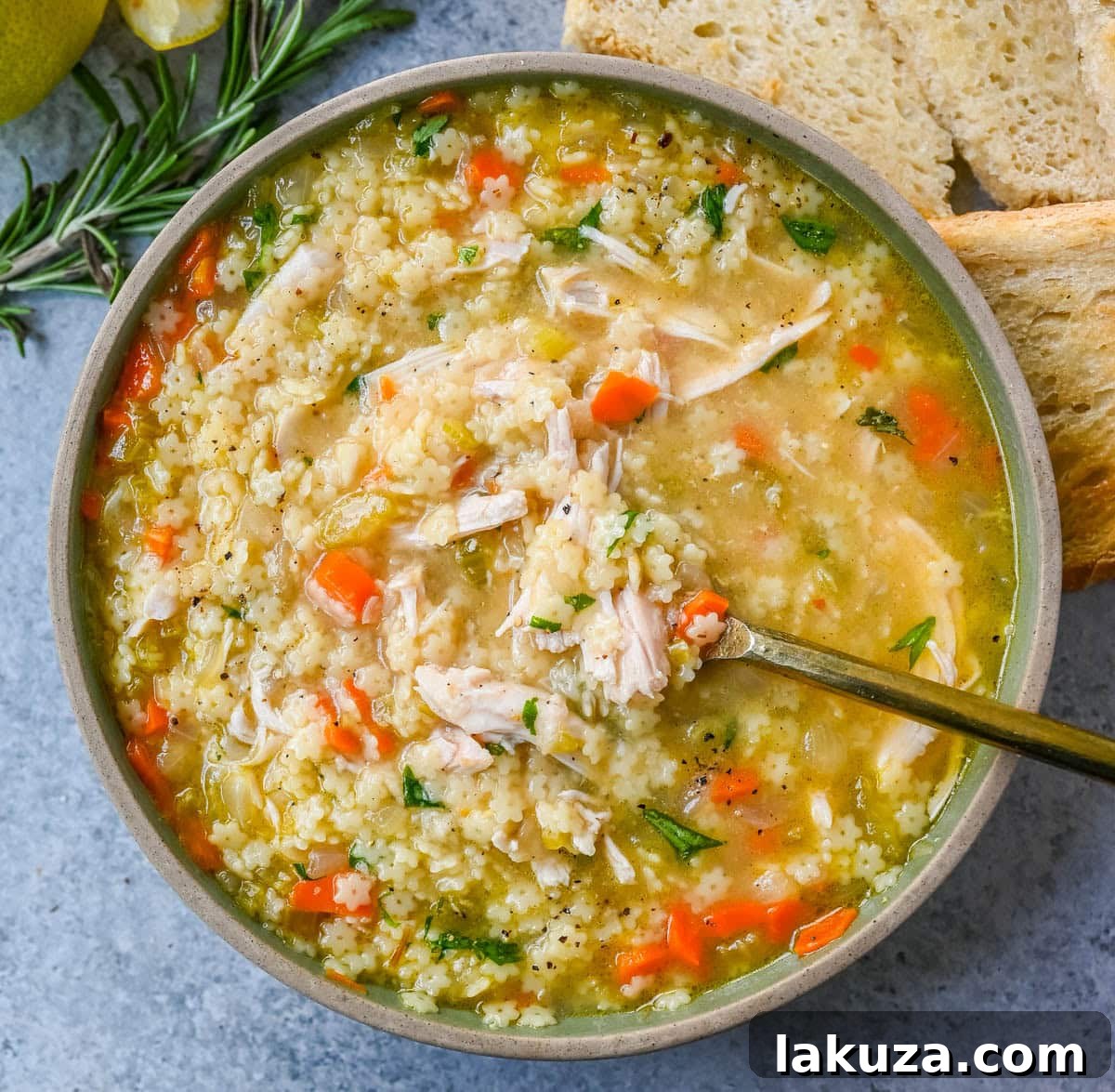
As the chill of winter sweeps across the nation, bringing ice storms and frigid temperatures, there’s a universal craving for warmth and comfort. During these times, a generous bowl of nourishing soup isn’t just a meal; it’s often exactly what the doctor ordered. We hope you and your loved ones are staying warm and safe wherever you are!
In our home, when sickness inevitably makes its rounds, my go-to remedy is to stock the refrigerator with healing soups. These culinary elixirs are specifically crafted to warm the body, alleviate congestion, and provide a much-needed immune boost. I always make sure to incorporate immunity-enhancing ingredients like fresh garlic and onions, alongside rich chicken bone broth for an extra protein punch. And among all the comforting concoctions, my **Italian Pastina Soup**, affectionately known as “Nonna’s Italian Penicillin,” stands out as the ultimate cure-all, hitting just the right spot every single time.
Beyond its healing properties, Pastina soup holds a special place in Italian households as one of the most beloved comfort foods. Its appeal lies in its inherent simplicity: tiny pasta, a flavorful warm broth, and a handful of minimal ingredients magically combine to create a dish that delivers maximum comfort. It’s a culinary hug, perfect for those days when you’re feeling under the weather, an ideal meal for picky eaters or young children, or simply when you’re yearning for something deeply cozy and nostalgic. This makes Pastina soup an indispensable go-to recipe in any kitchen.
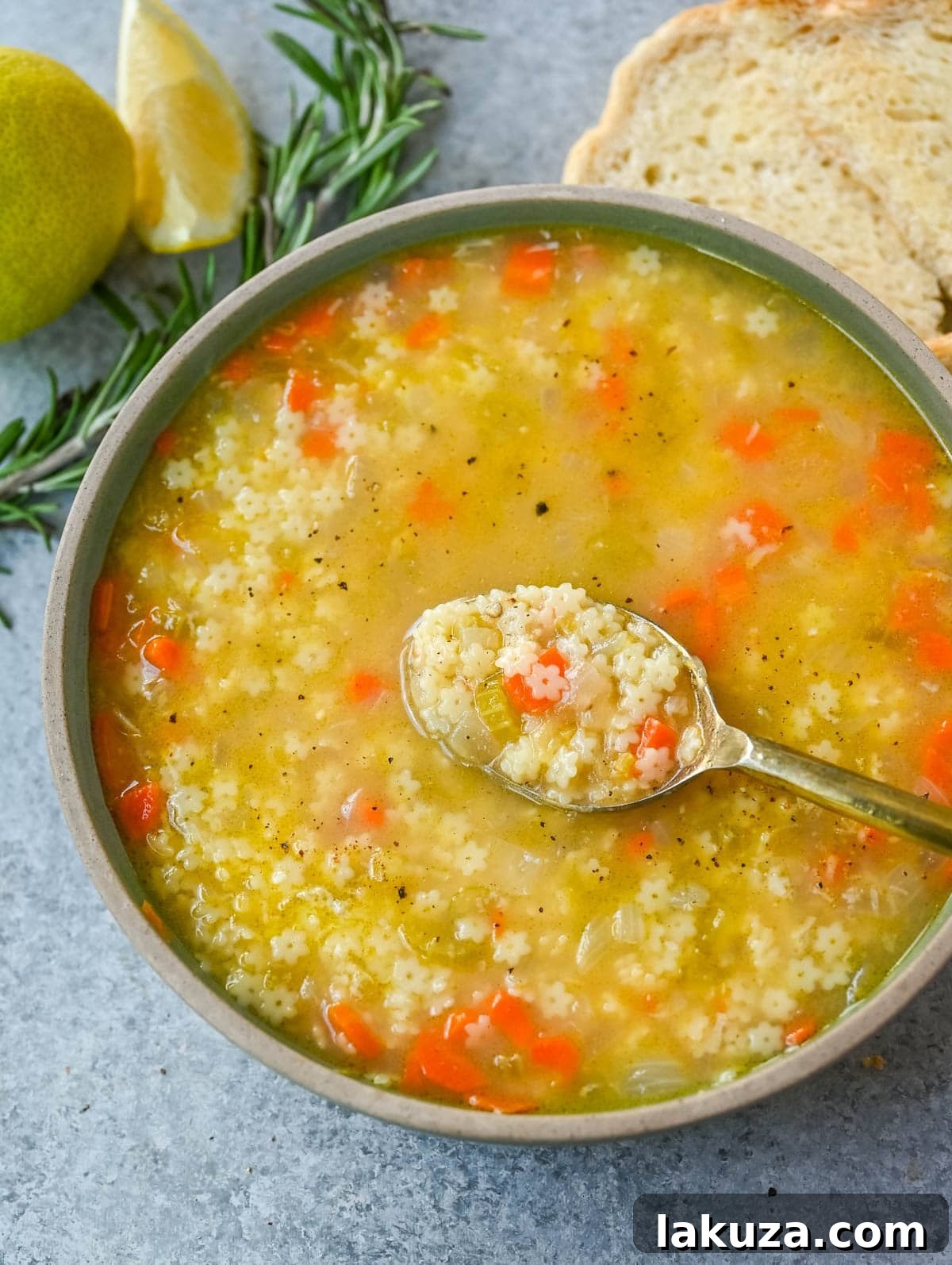
The Enduring Popularity of Pastina Soup
Pastina soup’s immense popularity stems from a confluence of factors that make it an unparalleled comfort food. It’s incredibly gentle on the stomach, making it ideal during illness. Its affordability and quick preparation time ensure it’s accessible to everyone, while its easy digestibility makes it suitable for all ages. It’s truly the perfect choice when you’re feeling under the weather or simply need a soothing meal.
In Italian culture, Pastina holds a unique significance. It’s often one of the very first solid foods introduced to babies and toddlers, a testament to its mildness and ease of consumption. Furthermore, it is traditionally prepared for adults and children alike whenever they are battling a cold or flu, experiencing an upset stomach, or simply seeking warmth on brisk winter nights.
Countless Italian families share fond memories of growing up with Pastina, lovingly prepared by their parents or grandparents, becoming a warm ritual synonymous with care and recovery during times of sickness.
Why is Pastina Soup Considered a Healing Elixir?
The widespread belief that Italian stelline soup possesses healing qualities is rooted in its fundamental components and their beneficial effects on the body. The warm broth, a cornerstone of any good soup, plays a crucial role in promoting hydration, which is vital when battling illness. It also helps to thin mucus and clear congestion, offering relief from stuffy noses and sore throats.
The simple carbohydrates found in Pastina pasta are easily digestible, providing gentle energy without taxing a delicate digestive system. This makes it an excellent choice when appetite is low or the stomach is sensitive.
Moreover, the inclusion of aromatic vegetables like onions, carrots, and garlic isn’t just for flavor; these ingredients are well-known for their immune-boosting properties. Onions and garlic contain compounds that can help fight off infections, while carrots are rich in Vitamin A, crucial for immune health.
To further enhance its nutritional profile, optional additions like egg, butter, or cheese can significantly boost protein and calorie content, providing much-needed energy and building blocks for recovery. These additions transform a simple broth and pasta into a more substantial and restorative meal, truly living up to its “Nonna’s Italian Penicillin” moniker.
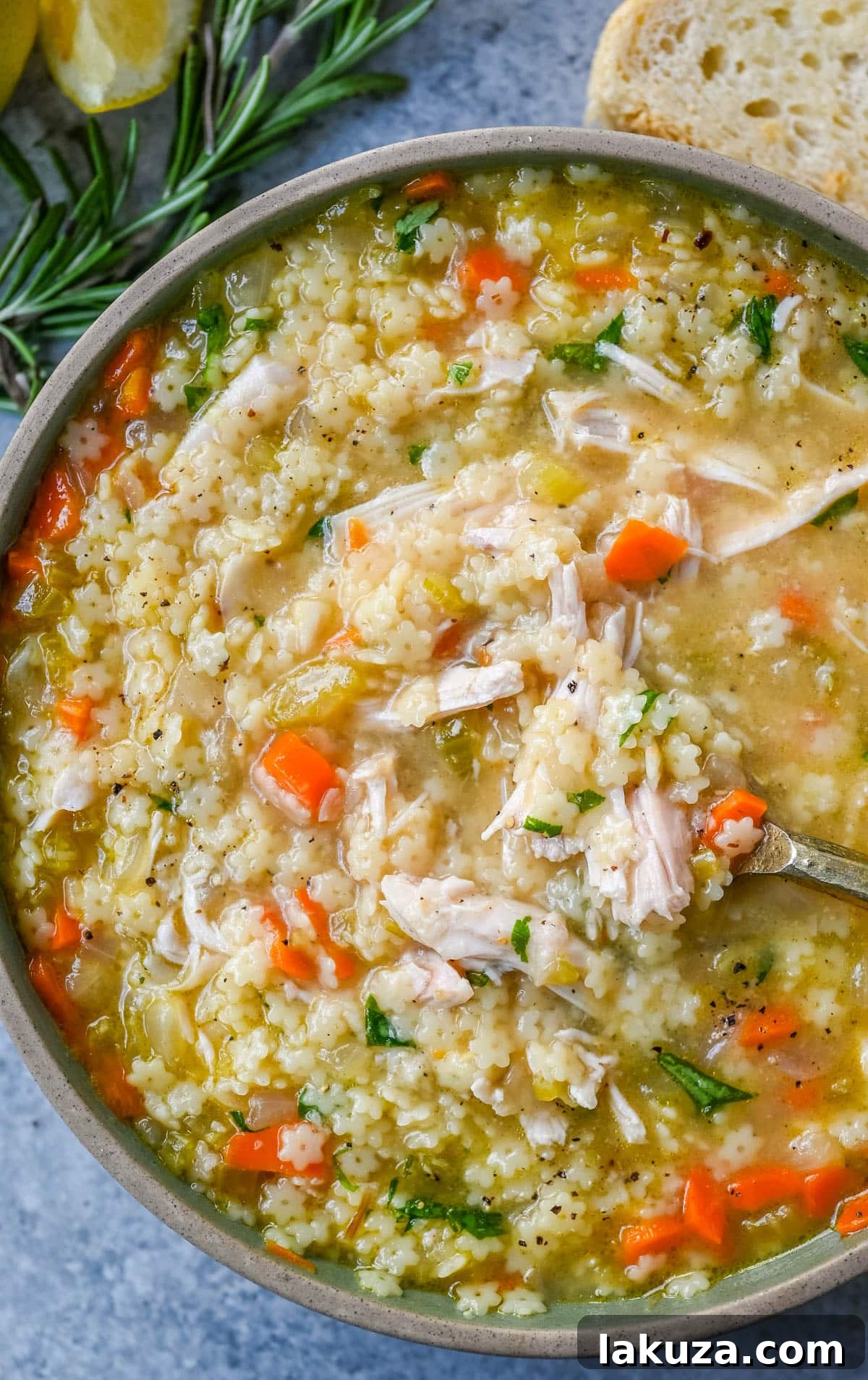
Essential Ingredients for Your Healing Bowl of Pastina Soup:
- Olive Oil: Opt for good quality extra virgin olive oil. It adds a wonderful depth of flavor and is essential for sautéing the foundational vegetables, imparting a rich, authentic Italian taste to the soup.
- Onion, Carrots, Celery: This classic trio forms the aromatic backbone of countless soups, known as soffritto in Italian cuisine. Finely dicing them allows them to melt into the broth, building a profound savory flavor. These vegetables also contribute vital nutrients and a natural sweetness.
- Garlic: Freshly minced garlic cloves are highly recommended for their potent immune-boosting properties and intense flavor. However, in a pinch, a good quality garlic powder can be used, though it won’t offer the same depth.
- Chicken Broth: The heart of this comforting soup. A high-quality chicken broth or bone broth creates a savory, deeply comforting base. Bone broth, in particular, adds extra nutrients and collagen, further enhancing the “healing” aspect of the soup.
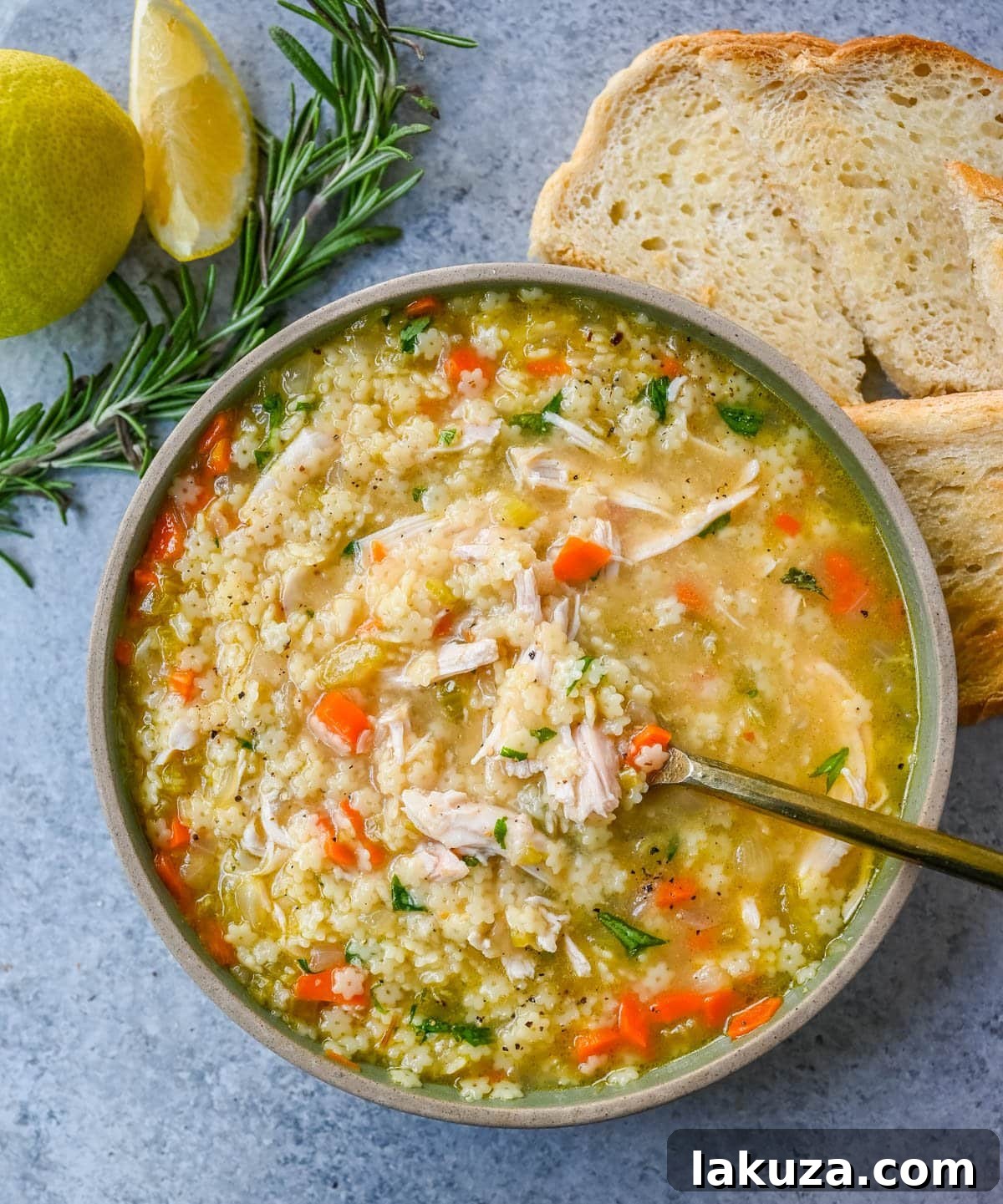
- Pastina Pasta: The star of the show! Pastina refers to tiny pasta shapes. Stelline (little stars) are the most traditional and beloved choice for this soup, but other grain-sized varieties like acini di pepe or orzo also work beautifully. Their small size makes the soup hearty yet easy to eat, especially for children or those with sensitive stomachs.
- Parmesan Cheese: Freshly grated Parmesan cheese is non-negotiable. It melts beautifully into the hot broth, adding a salty, umami-rich creaminess and a delightful sharpness that elevates all the flavors. Always grate it fresh for the best results.
- Optional: Fresh Lemon Zest or Juice: A squeeze of fresh lemon juice or a sprinkle of its zest can remarkably brighten the entire soup. It cuts through the richness, adds a touch of acidity, and provides a fresh, uplifting finish.
- Salt & Pepper: Essential seasonings to taste, these enhance all the individual flavors and bring balance to the soup. Start with a smaller amount and adjust as needed.
- Parsley (optional): Freshly chopped Italian parsley is a fantastic garnish. It adds a burst of vibrant green color, a peppery freshness, and brightens the overall profile of the soup, making it even more inviting.
- Rotisserie Chicken (optional): For a more substantial and protein-packed meal, shredded rotisserie chicken is an excellent addition. It’s convenient, already cooked, and adds lean protein without much extra effort.
Unveiling Pastina: More Than Just “Little Pasta”
The word “Pastina” charmingly translates to “little pasta” in Italian, a fitting name for these incredibly tiny and versatile pasta shapes that are a staple in Italian cuisine, particularly in comforting soups. While often associated with childhood or sick-day meals, Pastina represents a diverse category of small pasta forms, each with its own unique charm and texture.
- Stelline (little stars): Arguably the most iconic Pastina shape, these tiny stars are synonymous with classic Italian Pastina soup, especially for children. Their playful shape adds a whimsical touch to the meal.
- Acini di pepe (peppercorns): These resemble tiny peppercorns and offer a delicate, slightly firmer bite than stelline, making them another popular choice for brothy soups.
- Orzo (barley): Though shaped like grains of rice, orzo is indeed a pasta. It’s slightly larger than stelline or acini di pepe but still small enough to be considered Pastina, offering a chewier texture.
- Ditalini piccoli (small thimbles): These miniature tube-shaped pasta pieces are robust enough to hold up well in heartier soups but are still small enough to be easily digestible and comforting.
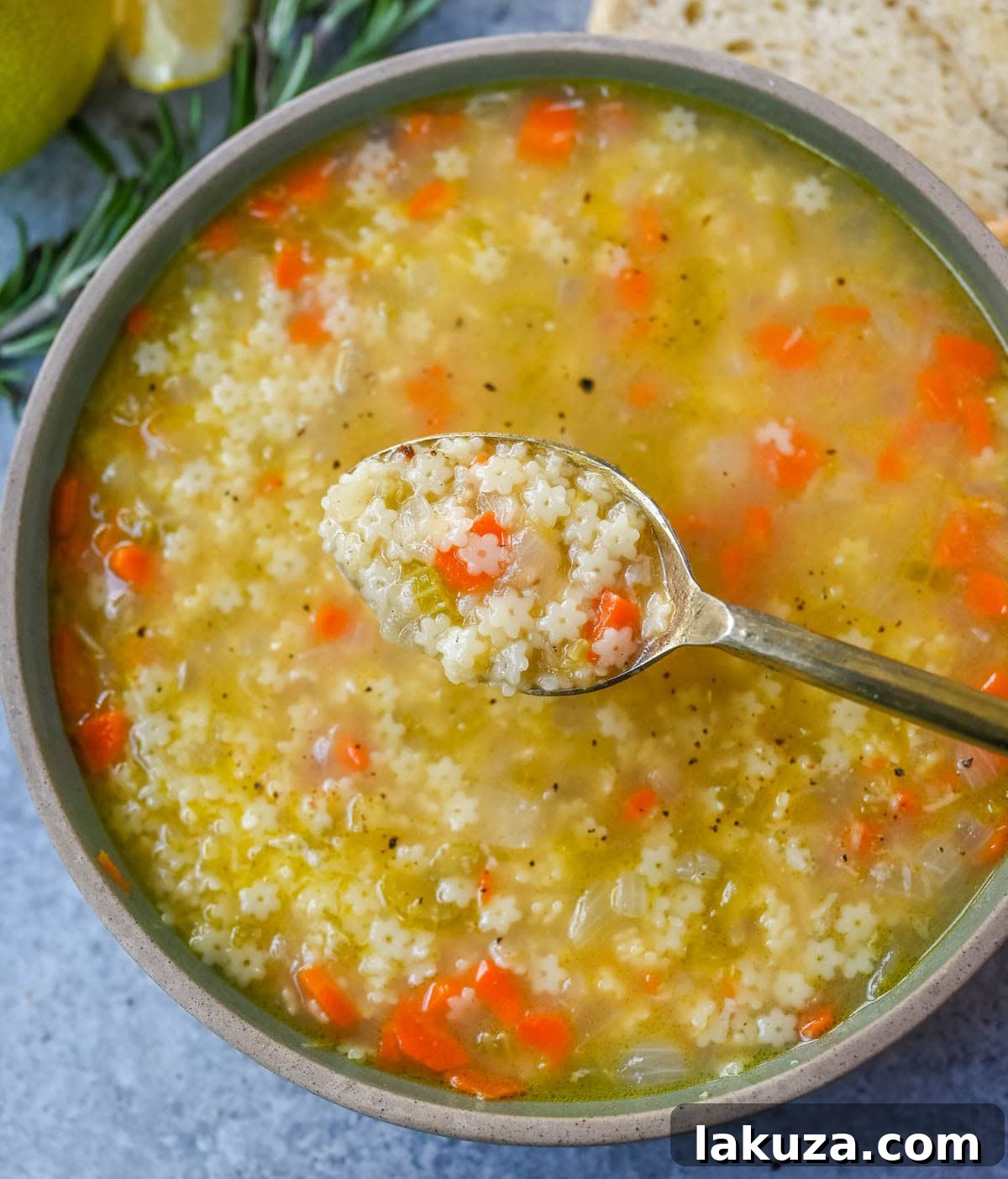
Among these delightful variations, Stelline pasta remains the quintessential choice for authentic Italian Pastina soup, beloved for its ability to create a creamy, comforting texture. You can often find Stelline pasta readily available at most major supermarkets, including stores like Target, or in the international aisle.
No cozy Italian soup experience is truly complete without the perfect accompaniment of freshly baked bread. In my opinion, there is nothing quite as satisfying as a slice of no-knead homemade bread, with its crispy crust and soft, airy interior. This rustic bread pairs exceptionally well with the delicate flavors of classic Italian Pastina soup. For those who prefer a softer, chewier option, my soft French bread recipe is another excellent choice, perfect for soaking up every last drop of the savory broth.
Beyond these, other delightful bread pairings that elevate your soup experience include fluffy knotted rolls, indulgent cheesy garlic bread, and aromatic homemade garlic butter rolls. Each of these options adds another layer of comfort and flavor, transforming a simple soup meal into a truly memorable feast.
How to Make the Best Italian Pastina Soup: A Step-by-Step Guide
Crafting a bowl of the best Italian Pastina Soup is a simple and rewarding process. Follow these detailed steps to create a comforting and flavorful masterpiece that tastes just like Nonna used to make:
- Prepare Your Aromatics (Soffritto): Begin by heating a large, heavy-bottomed pot or Dutch oven over medium heat. Add 1 to 2 tablespoons of extra virgin olive oil. Once shimmering, add your finely diced onion, carrots, and celery. Cook these vegetables gently for 8-9 minutes, stirring occasionally, until they become tender and translucent, releasing their sweet aromas. This slow sautéing is crucial for building a deep flavor base.
- Infuse with Garlic: Stir in the finely minced garlic cloves and cook for just 1 minute more. Be careful not to burn the garlic, as it can turn bitter very quickly. The garlic should become fragrant, filling your kitchen with an inviting aroma.
- Build the Broth: Pour in 6 to 8 cups of chicken broth or chicken stock. The amount of broth depends on your preference: use 8 cups for a more brothy, traditional soup, or reduce to 6 cups for a thicker, creamier consistency. Increase the heat to medium-high and bring the broth to a gentle boil.
- Cook the Pastina: Once the broth is boiling, add the Pastina (or stelline) pasta. Cook the pasta for approximately 10 minutes, or according to package directions, until al dente. It’s crucial to stir the soup frequently during this stage, as the tiny pasta shapes have a tendency to stick to the bottom of the pot.
- Season and Finish: Once the pasta is cooked, reduce the heat to low. Season the soup with 1/2 to 1 teaspoon of salt and 1/2 to 1 teaspoon of pepper, adjusting to your taste. Then, gradually stir in the freshly grated Parmesan cheese, a little at a time, to prevent it from clumping. The cheese will melt into the broth, adding a luxurious creaminess and rich, savory flavor.
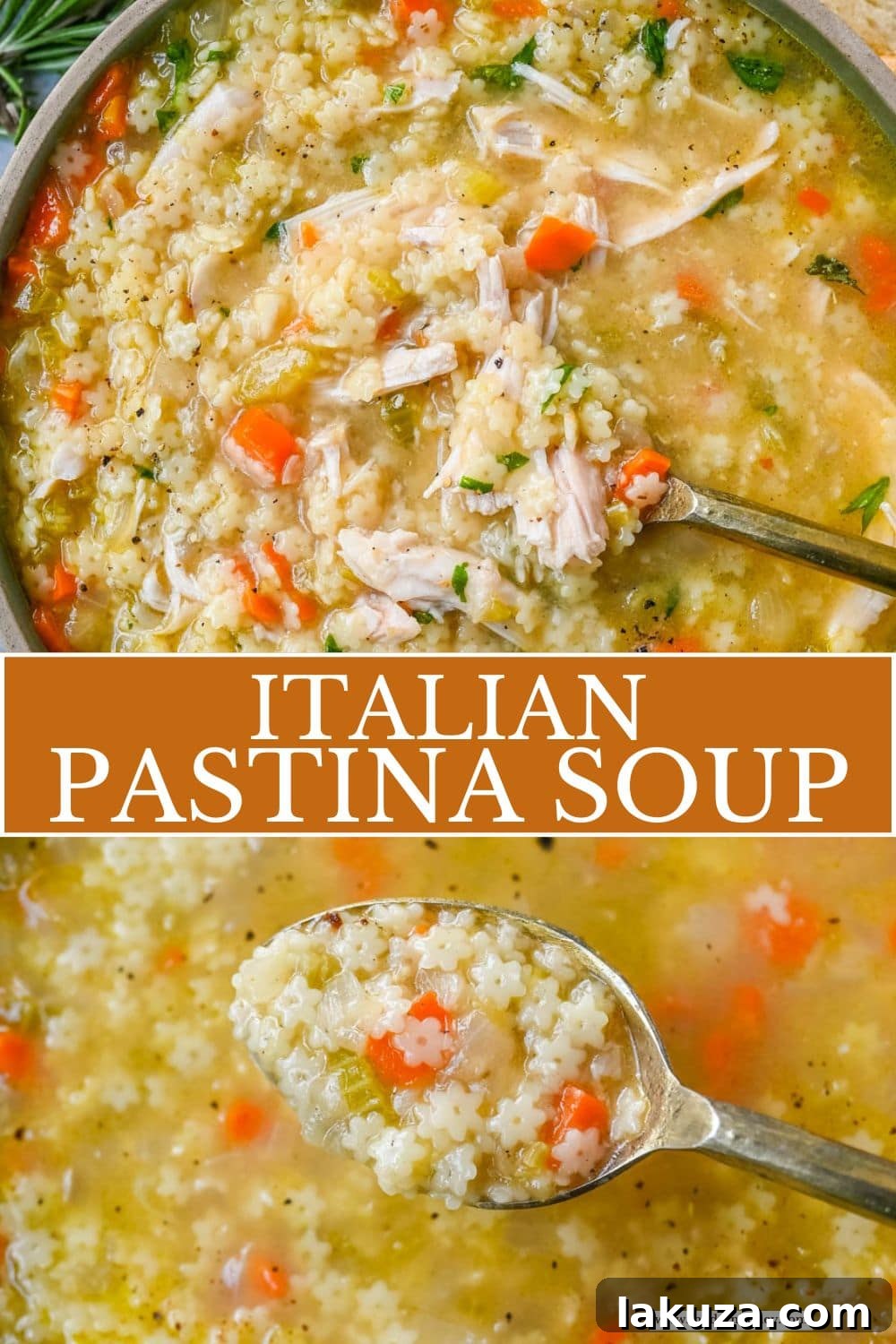
- Optional Brightness and Garnishes: For an extra layer of brightness, stir in 1-2 tablespoons of fresh lemon zest or lemon juice. This simple addition can truly awaken the flavors of the soup. Finally, for serving, you can optionally top each bowl with fresh chopped Italian parsley or basil for a vibrant finish, or stir in shredded rotisserie chicken for added protein and heartiness.
Chef’s Tip for Perfect Pastina Soup: For ultra-finely diced vegetables that almost melt into the soup, consider using a food processor. Simply pulse the onion, carrots, and celery until they reach your desired small size. This technique creates a smooth, velvety base for your broth.
Frequently Asked Questions (FAQ’s) About Pastina Soup:
- What exactly is Pastina?
Pastina refers to a category of very small Italian pasta shapes. The most common and beloved for soups are stelline (little stars), but it also includes tiny grains like acini di pepe, orzo (rice-shaped), and ditalini (small tubes). You can generally find Pastina in the pasta aisle of most grocery stores or even conveniently online, for example, on Amazon. - Can I use a different type of pasta if Pastina isn’t available?
Absolutely! While stelline is traditional, other small pasta shapes work wonderfully as substitutes. Excellent choices include orzo, small ditalini, or acini di pepe. Even broken spaghetti, a common practice in some Italian regions, can be used. - Will the Pastina absorb liquid if the soup sits for a while?
Yes, it’s very common for Pastina, like most small pasta, to continue absorbing liquid as it sits, especially when stored. This can make the soup thicker. When reheating leftovers, simply add an extra splash or two of chicken broth (or water) to reach your desired consistency. - Can I incorporate additional protein into my Pastina soup?
Certainly! Adding protein is a fantastic way to make the soup more filling and nutritious. Shredded rotisserie chicken is a convenient and popular choice. Other delicious options include cooked and crumbled Italian sausage, chicken sausage, or even small meatballs. - Is Pastina soup suitable for babies and toddlers?
Yes, Pastina soup, particularly with finely diced vegetables and a smooth consistency, is often one of the first solid foods introduced to babies in Italian culture due to its easy digestibility and mild flavor. Always ensure the pasta is cooked very soft and the vegetables are pureed or very finely diced for young children. - Can I make this soup vegetarian or vegan?
Yes! To make it vegetarian, simply substitute chicken broth with a high-quality vegetable broth. For a vegan version, use vegetable broth and omit the Parmesan cheese (or use a dairy-free Parmesan alternative).
Substitutions and Creative Variations for Your Pastina Soup:
This classic recipe is incredibly versatile and can be easily adapted to your preferences or what you have on hand. Don’t hesitate to experiment!
Pasta Substitutions:
If you can’t find stelline or simply want to try something different, these tiny pasta shapes are excellent alternatives:
- Acini di pepe: Resembling tiny peppercorns, these provide a slightly different texture.
- Orzo: Rice-shaped pasta that’s a bit larger but still works beautifully in brothy soups.
- Small ditalini: Miniature tube pasta that adds a bit more bite.
- Broken spaghetti: A resourceful and traditional substitution in some Italian households, adding a unique texture.
- Risoni: Similar to orzo, small and rice-shaped.
Broth Options:
The broth is the foundation of your soup’s flavor. Choose one that suits your dietary needs or taste preferences:
- Chicken broth (most common): Offers a classic, comforting flavor profile.
- Vegetable broth: An excellent choice for a vegetarian or vegan version, ensuring a rich plant-based flavor.
- Bone broth: Packed with extra nutrients, collagen, and a deeper savory flavor, ideal for a truly healing soup.
- Chicken stock: Often richer and more concentrated than broth, providing a more robust base.
Delicious Add-ins to Customize Your Soup:
Personalize your Pastina soup with these delightful additions to boost flavor, texture, and nutrition:
- Shredded chicken: Easily incorporate leftover roasted or rotisserie chicken for a hearty protein boost.
- Fresh spinach or kale: Stir in a handful of fresh greens during the last few minutes of cooking for added vitamins and a touch of color. They will wilt beautifully into the hot soup.
- Lemon zest and/or juice: A squeeze of fresh lemon or a sprinkle of its zest just before serving can brighten the entire dish and add a lovely zing.
- Extra vegetables: Feel free to add other finely diced vegetables like zucchini, green beans, or even diced potatoes for more body and nutrients.
- Fresh herbs: Beyond parsley and basil, consider a touch of fresh thyme or oregano for an aromatic twist.
- Egg drop (stracciatella style): For an even richer and more traditional “Italian penicillin” touch, gently whisk one or two eggs and slowly drizzle them into the hot, simmering soup while stirring. They will cook into delicate ribbons, adding protein and a silky texture.
- A knob of butter: Stirring in a small pat of butter at the very end can add a luxurious richness and smooth mouthfeel.
Storage and Reheating Tips for Leftover Pastina Soup:
To maintain its freshness and flavor, store any leftover Pastina soup in an airtight container in the refrigerator. It will keep well for up to 4 days. It’s important to remember that as the soup cools and sits, the Pastina pasta will continue to absorb the broth, causing the soup to thicken considerably. Therefore, when you’re ready to enjoy it again, make sure to add an extra splash or two of chicken broth or water during reheating to restore it to your preferred consistency. Reheat the soup gently on the stovetop over low to medium heat, stirring occasionally, or warm it up in the microwave in individual portions.
Explore More Cozy Soup Recipes:
Mama’s Best Chicken Soup
Zuppa Toscana Soup (Olive Garden Copycat Recipe)
Lemon Chicken Orzo Soup
Slow Cooker Creamy Chicken Tortilla Soup
Italian Pastina Soup
Ingredients
- 1 to 2 Tablespoons Extra-Virgin Olive Oil
- 1/2 to 1 Onion (finely diced)
- 2 Carrots (finely diced)
- 2 Celery Stalks (finely diced)
- 4 Garlic Cloves (finely minced)
- 6 cups Chicken Broth (use 8 cups for brothy soup)
- 3/4 cup Pastina Pasta (stelline or stars pasta)
- 1/2 to 1 teaspoon Salt
- 1/2 to 1 teaspoon Pepper
- 1/4 cup Parmesan Cheese (freshly grated, plus more for garnish)
Optional:
- 1 to 2 Tablespoons Fresh Lemon Juice (or zest from 1 lemon)
- Fresh Italian Parsley or Basil
- Shredded Chicken
Instructions
- Heat a large pot over medium heat. Add extra virgin olive oil, finely diced onion, carrots, and celery, and cook for 8-9 minutes or until the vegetables begin to soften. Stir in garlic and cook for 1 minute.
- Stir in chicken broth or chicken stock. If you want this to be a soup, add more broth. If you want it to be creamier and less brothy, use less chicken broth. Increase heat to medium-high.
- Add in pastina (or stelline) pasta. Cook for about 10 minutes, stirring often since the pasta will stick to the bottom of the pot.
- Once the pasta is done cooking, reduce heat to low and add in salt and pepper. Stir in freshly grated parmesan cheese, a little at a time, to avoid clumping.
- If you want to brighten the flavors in the soup, add a touch of lemon zest or lemon juice. Optional — top with fresh Italian parsley or basil or stir in shredded rotisserie chicken.
Notes
I found stelline pasta at Target.
Nutrition
Nutrition information is automatically calculated, so should only be used as an approximation.